Search This Blog

Showing posts with label queer. Show all posts

Tuesday, June 20, 2023

BODY AND SOUL: Thomas Ford: For love of Black queer identity

Thomas Ford (photo: Angelo Soriano)

A person with brown skin wears a gray cap and a gray sleeveless shirt tucked into black athletic pants. His torso bends to the side, and ears hang over his shoulder in the same direction. The fingers of his right hand gently reach to the camera, while his knees bend and legs spread in a wide position.

In today's episode of Body and Soul podcast, dance artist and writer Thomas Ford reflects on his research into the violent colonial history at the root of homophobia in Black families and community.

Listen to Ford's talk here.

Thomas Ford is a dance artist, writer and scholar whose research examines the mechanisms of identity and culture through an exploration of embodiment, choreography, and Black, queer, critical and performance studies. https://www.thomasfordnyc.com/

Friday, March 27, 2020

Artists Reach Out: Yo-Yo Lin

Dear friends,

Welcome to Artists Reach Out: reflections in a time of isolation. I dreamed this series of interviews out of grief for my work both as a documenting arts writer and curator of live performance. In this time of social distancing, we are called to responsibly do all we can to safeguard ourselves and our neighbors. It is, literally, a matter of life and death.

But there's no distancing around what we still can share with one another--our experiences, thoughts, wisdom, humor, hearts and spirit. In some ways, there are more opportunities to do so as we pull back from everyday busyness out in the world and have time to honor the call of our inner lives.

So, let me introduce you to some artists I find interesting. I'm glad they're part of our beautiful community, and I'm eager to engage with them again (or for the first time) in years to come.

--Eva Yaa Asantewaa, InfiniteBody


Yo-Yo Lin

Yo-Yo Lin
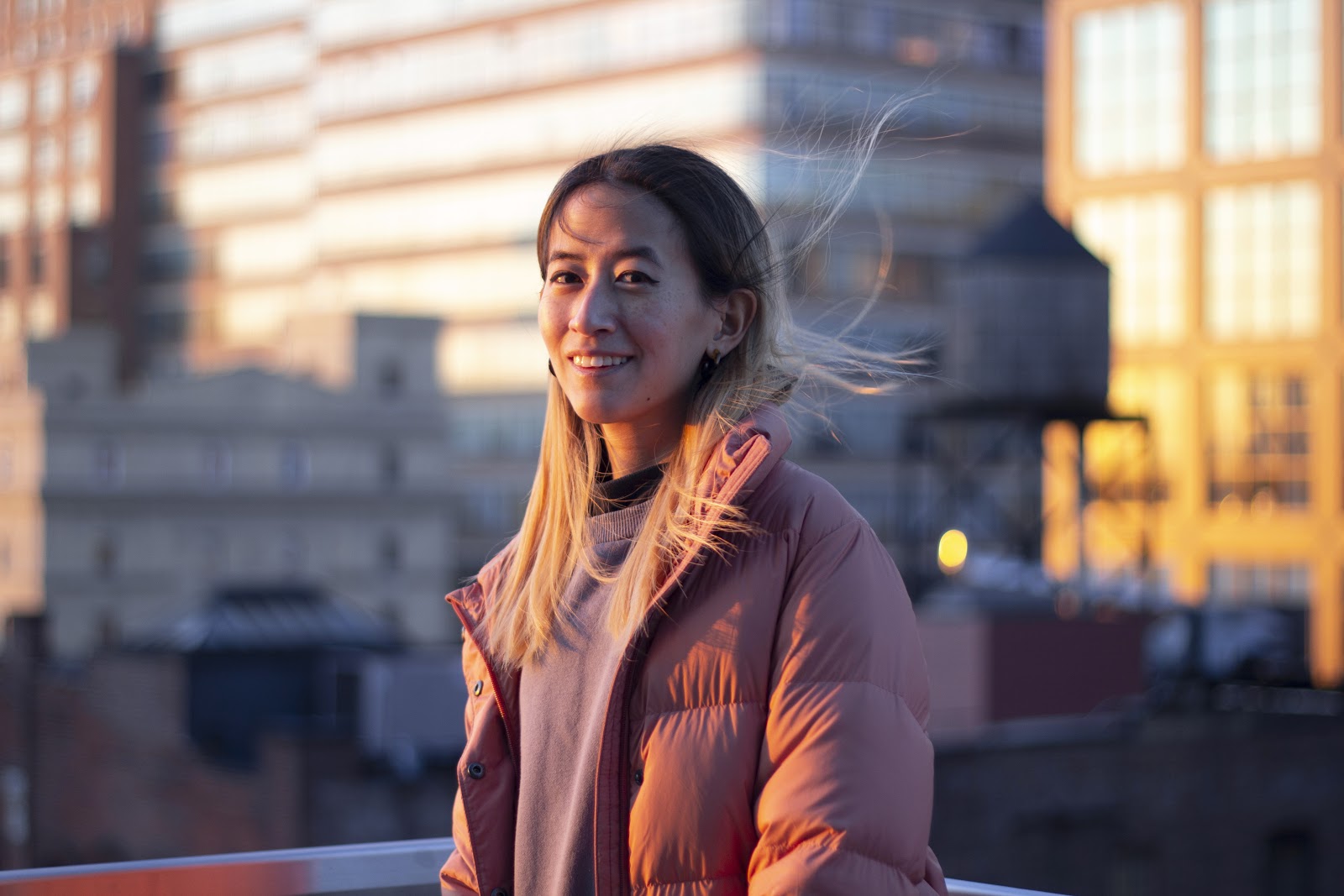
(photo: Zack Filkoff)

Yo-Yo Lin is a Taiwanese-American interdisciplinary media and performance artist who explores the possibilities of human connection in the context of emerging, embodied technologies. Through an on-going exploration into ‘soft’ illness data, body sonification, and impairment-generated dance, she is researching and developing methodologies in reclaiming and processing chronic health trauma. Her latest solo performance the walls of my room are curved premiered last winter at Gibney. Recently, Yo-Yo co-facilitated a four-part movement workshop series “Modes of Embodiment: An Expressive Toolkit for Chronically Ill and Disabled Bodies” at Movement Research. Born and raised in Los Angeles, Yo-Yo now lives and works in New York City. More info at www.yoyolin.com.

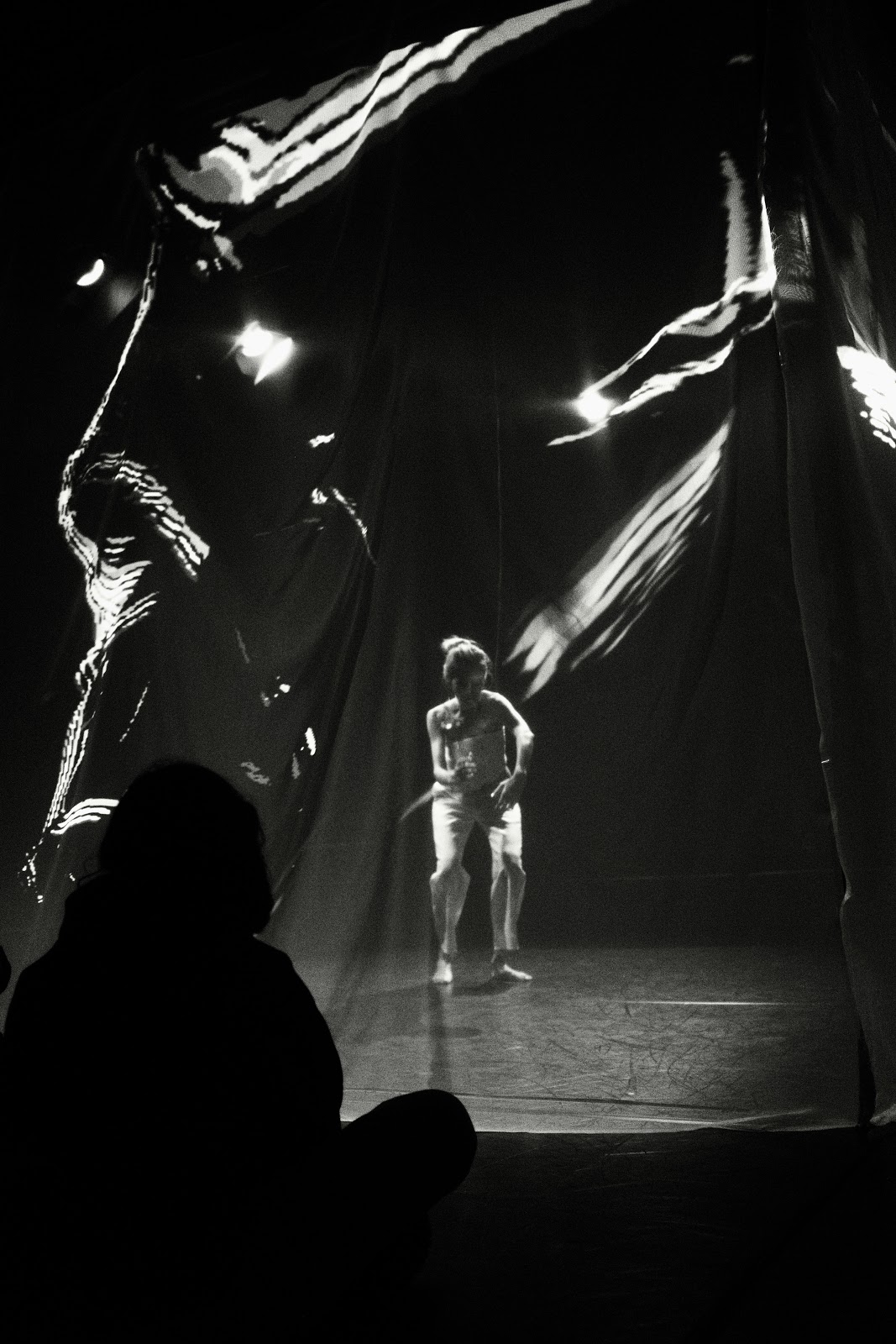
Yo-Yo Lin's the walls of my room are curved
(photo: Steve Dabal)

Do you have a current or planned project whose progress is affected by the pandemic?

I had planned on showcasing the performance the walls of my room are curved at two gallery openings this spring, both of which are now postponed indefinitely. the walls of my room are curved is a movement-generated sonic performance of the body living with a connective tissue disorder. The performance uses several microphones attached to my moving body, capturing the live sounds of creaking and crackling bones and joints as they shift, transfer, extend, and rotate. As I dance, an electronic musician samples, processes, synthesizes the sounds of my body into a musical score in real-time. I also have a group show currently up at the Jewish Community Center, entitled Rituals, that is now closed as well. Curated by Ezra Benus, the show addresses living experiences of illness and disability in abstract, ritualistic forms. I had planned on doing a durational performance based off of my data-tracking framework called The Resilience Journal but am now re-imagining it to be done remotely.

Briefly, tell me about how you got involved in the arts and in your particular practice.

I began with drawing and painting, then started making my drawings move. I was interested in moving images as a sculptural element--often taking these moving images and projecting them onto different surfaces. This led me into using real-time technologies--tools that would allow me to live-manipulate the visuals, map them onto 3D shapes, and sync with body movement. Naturally, live performance was the venue for these explorations. I often work collaboratively with musicians, dancers, and other performing artists in turning their visions into reality. As of recent, I’ve been combining my media art based practice with an emerging performance practice. I’ve been doing research into somatics, internal arts (including Tai Chi), and illness/ disability aesthetics in dance.

In a more specific way, what are you practicing? And what are you envisioning?

I am practicing a revealing and re-valuing of realities. Living with an invisibilized illness has prompted me to question the realities of my body in relation to time and space. I am discovering that illness is relativity. Notions of how the ill bodymind can be generative sources for creative expression--in visuals, sound, tactility, shape, space, movement--has coupled with my explorations in time-based media art and technologies, creating works that seek to make the invisibilized not just visible but felt, embodied, and honored in its complexity. These works span from ‘soft’ data visualization to soundscapes made from bone sounds, to impairment-generated dance scores, to extended reality nightlife spaces. These explorations sometimes echo the complicated relationship between the body and technology, often precarious, discomforting, and transformative all at once. But ultimately, these works reveal a yearning for a deeper understanding and vision of the self, reflected back in its wholeness.

How does your practice and your visioning align with what you most care about?

My practice belongs to a lineage of immigrant, ill/ disabled QTPOC womxn artists, all of whom have created art from necessity and with what they had. I find that “necessity” has produced the most honest, provocative art. I have been recently practicing with this idea in mind, unlearning the excess in technology-based art, acquainting myself with my body and the living planet, and holding space for grief and pleasure. I have been doing this not alone but with many others--creating and facilitating spaces for looking inward, safer discussions, and collective growth. Last fall, dancers Lara Marcin, Pelenakeke Brown and I facilitated a four-part movement workshop series entitled, “Modes of Embodiment: An Expressive Toolkit for Chronically Ill and Disabled Bodies” at Movement Research, where we sought to create an access-centered dance-making space. We dream of continuing to create communal space to honor the trauma in the bodyminds we own and building tools and methodologies to do so.

How does your practice function within the world we have now?

My practice continues to function, perhaps ever more urgently, in the world we have now. I see the able-bodied workforce employ techniques that chronically-ill and disabled folks have long asked for and use as a form of access. Suddenly what was deemed “impossible” to do for a disabled person--such as tele-communication, healthcare benefits, paid leave, virtual events--are suddenly possible. I would like to dwell in this reality we live in right now, to hold space for the grief, fear, and anger we feel as chronically-ill and disabled folks in a time where we see ableism in full-force. I also call upon the wisdom we have developed over generations of mutual aid, resilience, and crip magic. For us, illness is nothing new. We’ve been on our own before. In my practice, I hope to further highlight the generative nature of illness by utilizing tools I have to my disposal while in quarantine, and taking this time to rest, listen, and serve the most impacted.

If you can, please donate to: https://www.gofundme.com/f/crip-fund.

******

DISCLAIMER: In addition to my work on InfiniteBody, I serve as Senior Curatorial Director of Gibney. The postings on this site are my own and do not necessarily reflect the views, strategies or opinions of Gibney.

******

Subscribe in a reader

Friday, January 31, 2020

Can I get a witness? Viewing mayfield brooks at JACK

Performance artist mayfield brooks
(photo: Amar Puri)

Letters to Marsha with Viewing Hours (a diptych)
by mayfield brooks
JACK
January 30-February 1

In the tiny storage room, where the pungent aroma of earth and rose petals prickles your nostrils, I stand in a single line of people skirting the edge of a funereal bier covered in colorful decaying foliage. I see a bare foot sticking out from this cover, even as I hear mayfield brooks' voice on a looping recording (calling for "a witness") and tamp down a feeling of being trapped. I notice a thin, dry stalk, its end lightly poking the sole of brooks' foot, and I wonder if brooks feels it, is irritated by it. I wonder if I shouldn't pluck it away. But I dutifully stand, like everybody else, listening, looking in this solemn enclosure. Finally, I carefully--so as to not startle brooks or draw anyone else's attention--reach for the stalk and pull it off brooks' flesh.

In small groups, the audience will cycle through that opening viewing room then gradually assemble in a larger but still intimate space nicely set up to encourage comfort and seating choice. This feels more like a funeral parlor than a performance space. Merging two of brooks' works, Letters to Marsha with Viewing Hours (a diptych) is every bit as much a memorial service, a participatory ritual, a raucous channeling and a party with festive cakes (by Susannah Simpson) as it is a performance.

Attend and you will have ample time to gaze or move around the space and commune with the dead (brooks' and yours). Inspired primarily by the late Black gay activist and Stonewall veteran Marsha P. Johnson, this evening introduces us to brooks' ongoing practice of writing heartfelt letters to this role model and would-be mentor and gently suggests we take up a similar practice with our own ancestors of blood or mind.

Will you also see strong, compelling performance in this space? Oh, yes. brooks' collaborating team--a water bearer, a tea maker, a florist, a guide and various viewing hours caretakers--establishes and eases us into the fluidity of the space, but brooks rules the space and gives a master class in commitment, responsiveness, fervent aliveness.

The evening, nearly two hours of sensory richness, is well worth the sometimes frustrating task of navigating subway travel to, from and around Brooklyn. (As of last night, the "C" in C train stands for "cusswords.") Maybe just give yourself at least 15 minutes more than you think you might need to get there, then don't fret because the opening of the piece is experienced in shifts. Relax with some tea in the lobby.

Technical Director/Creative Consultant: Niko Tsocanos

Curated by Stacy Grossfield as part of her IMAGES // LANDSCAPES series and JACK's Reparations365 series.

Letters to Marsha with Viewing Hours (a diptych) continues with 8pm performances tonight and tomorrow. For information and ticketing, click here.

JACK
18 Putnam Avenue, Clinton Hill, Brooklyn
C to Clinton-Washington or Shuttle to Franklin Avenue

******

DISCLAIMER: In addition to my work on InfiniteBody, I serve as Senior Curatorial Director of Gibney. The postings on this site are my own and do not necessarily reflect the views, strategies or opinions of Gibney.

******

Subscribe in a reader

Saturday, June 1, 2019

Taking Pride! La MaMa's Squirts Festival


Congratulations to Dan Fishback (Director of Helix Queer Performance Network) for another evening of exceeding already high expectations with his annual La MaMa's Squirts festival of queer performance. Fishback, a valiant writer and performer, says the standard Pride Month hooplah--magnified this year with the 50th anniversary of the Stonewall rebellion--makes him a bit queasy. But he found his happy place at La MaMa in these gatherings of some of our community's most scintillating talents.

"This," he declares now, "is the queer world I always wanted to live in."

Convened by a sharp team of invited curators, Squirts performers span performance genres, generations, races and cultures; this year, it is, says Fishback, "100% curated by transwomen!" Also new this year: 100% free admission. And, honey, you get a lot for that nice price.

Last evening's weekend opener was curated and hosted with unmatched charm by storyteller, actress and health activist Cecilia Gentili. Her sometimes poignant, sometimes humorous entr'acte patter both introduced us to her personal story--living under dictatorship in her native Argentina; embracing the freedom in New York she had envied from afar; learning hard lessons about the dangers transwomen face in the U.S.--while smoothly ushering in one after another of her performers. Most compelling on the bill were Linda LaBeija, delivering spoken word, and Afro-Latin rapper Auset Bennu, each representing Bronx aesthetics in their own commanding, sharp-edged way.

Squirts curators mean business. (I know. I was one last year.) So, I suggest you find out what's up this evening (curated by Charlene Incarnate) and Sunday evening (curated by Mizz June).

One note of caution: The weather outside might be warmish this weekend, but take a sweater and maybe even a cap. La MaMa, for reasons I could not fathom, A/C'ed its theater like a meat locker. Chilled to the bone, I finally, reluctantly and most regretfully fled before the show ended. Still recovering from a wicked cold that had knocked me out since the previous (holiday!) weekend, I was in no shape to withstand La MaMa's deep freeze.

La MaMa's Squirts continues tonight and tomorrow with performances at 7pm. Click here for information and tickets.

La MaMa's Ellen Stewart Theatre
66 East 4th Street (between Bowery and Second Avenue), Manhattan

******

DISCLAIMER: In addition to my work on InfiniteBody, I serve as Senior Curatorial Director of Gibney. The postings on this site are my own and do not necessarily reflect the views, strategies or opinions of Gibney.

******

Subscribe in a reader

Saturday, December 22, 2018

Get ready for '(W/HOLE)" at Invisible Dog


AORTA Films and the A.O. Movement Collective proudly present (W/HOLE), an artful work of queer-feminist--if otherwise uncharacterizable--porn commissioned by The Invisible Dog and sure to be a highlight of its season.

Directed by Mahx Capacity, this evening-length film is handsome in choreography, performance and camera work, sometimes sunlight bright, sometimes dungeon dark, with robust poetry and wit. From a symphony of f-bombing in all its expressive permutations to an extended sex scene where watchful attendants--as elusive as black-clad kuroko--hold glass spray bottles at the ready, keeping the lovers moist and dewy. The way the cast affirms that every body, and everything about the body, is erotic can be both amusing and profound. Leave it to dancers to come up with something like this.

(W/HOLE) runs at The Invisible Dog on Friday, January 4 (9pm), Saturday, January 5 (7pm) and Sunday, January 6 (2pm and 7pm). Hurry for tickets, though. They're selling fast. Click here.

The Invisible Dog
51 Bergen Street (between Smith Street and Boerum Place), Brooklyn
(map/directions)

******

DISCLAIMER: In addition to my work on InfiniteBody, I serve as Senior Curatorial Director of Gibney. The postings on this site are my own and do not necessarily reflect the views, strategies or opinions of Gibney.

******

Subscribe in a reader

Friday, November 2, 2018

prettygirl264264 checks in from Abrons Arts Center

Ashley R.T. Yergens
in character for prettygirl264264
(photo: Fred Attenborough)

What you focus on increases. Or, maybe it's, What you focus on expands. Or what...ever.

That favored quote of New Agey savants came to mind at last evening's world premiere of prettygirl264264, when I gauged the distance--physical and otherwise--between trans performance artist Ashley R.T. Yergens and a flat screen television displaying appearances by singer Cher, the late Sono Bono and their trans son Chaz Bono. My interest in Sonny and Cher had faded out quite early, with their pop star heyday and my youth, and has not made a miraculous recovery in the current age of celebrity tv and Twitter. So, I was content to train nearly undivided attention on the present moment and the live action before us at Abrons Arts Center where the Underground Theater's floor was nearly blanketed by a cheery layer of party balloons. Yes, party balloons for something Yergens billed as his "premature funeral."

The service served an atypical "In Loving Memory Of" funeral card in lieu of a program. The dearly not-quite-yet-departed took a while to appear, the buildup to that appearance including a standout, if painful, performance of "It's All Coming Back to Me Now" by lily bo shapiro, dolled up in gleaming, cherry pink unitard and oversized, rhinestone-encrusted glasses. Yes, a Celine Dion anthem at a premature funeral where evocation of Judy Garland's connection to blackface, Sonny Bono's death by skiing into a tree, and a full-out dance duet routine to La Bouche's "Be My Lover" are not only inevitable but completely appropriate.

Not too long ago, I read a New York Times obituary that told the story of how the late actor James Karen asked his buddies, unbeknownst to one another, to draft his obit long before he actually passed. His wife finally revealed to one friend, George Clooney, that Karen had a habit of doing this so that he'd be around to enjoy what people thought of him. Not a terrible idea. And, in his way, Yergens is doing the same--inviting us in to indulge one trans man's moment of celebration and to contemplate how rare acknowledgement and celebration can be at the end of many trans lives.

If neither the celebs onscreen (one, a "gay icon" who is cisgender and straight; the other, an early, selective and reluctant object of mainstream media spotlight on trans lives) can fairly represent the range of trans experience, neither can Yergens, keenly aware of his white, able-bodied visibility and privilege. prettygirl264264--the title comes from an old AOL handle--speaks from a particular sliver of experience and sensibilities, bringing wry lightheartedness in a time of serious political struggle. And, yes, we need that contribution, too.

Video: Rena Anakwe

Performers: Sydney Boyu, Nico Brown, lily bo shapiro, Mur, Kristopher K.Q. Pourzal, Ashley R.T. Yergens

Lighting: Jennifer Fok

Original Music: Trashed My Living Room and ErasedMur

prettygirl264264 continues tonight and Saturday evening with performances at 7:30pm. 50% of ticket sales benefit trans rights organizations. Although both performances have sold out, Abrons promises to get some walkups in. So try for it! For information, click here.

Abrons Arts Center
466 Grand Street (at Pitt Street), Manhattan
(Plan your visit.)

******

DISCLAIMER: In addition to my work on InfiniteBody, I serve as Senior Curatorial Director of Gibney. The postings on this site are my own and do not necessarily reflect the views, strategies or opinions of Gibney.

******

Subscribe in a reader

Wednesday, June 27, 2018

"THEM" returns to its East Village birthplace

Johnnie Mercer Cruise and Hentyle Yapp
dance in THEM at Performance Space New York.
(photo: Rachel Papo)

Michael Watkiss and Alvaro Gonzalez Dupuy
(photo: Rachel Papo)


THEM

Conceived, directed, and performed by:

Chris Cochrane (music/sound)
Dennis Cooper (text/spoken word performance)
Ishmael Houston-Jones (movement)

at Performance Space New York (East Village Series)


*****


Tilt in the direction of a memory, starting anywhere. With sound: a deepening drone. With light: splashed across a man's back and legs otherwise engulfed by semidarkness. With bodies: still, lining the margins, covered in shadows.

THEM (made at and for Performance Space 122, premiered in 1986, now revived for Performance Space New York) is a way of remembering the AIDS epidemic and the lives downtown artists led and lost. With Chris Cochrane's electric guitar--caustic shredding, blurting, pounding dissonance. With Dennis Cooper's text--direct and revealing, vulnerable, delivered from off to one side, with isolating distance and longing observation. With dancers, led and gathered by Ishmael Houston-Jones, who toss themselves across the space and at each other with fiery abandon, who occupy the expanse, crafting a world necessary for themselves and their kind. With rites of gesture and behavior. With exploration through touch. With play. With aggression. With a visceral sense of the overpowering, inescapable presence of death...and Death.

The theater at Performance Space New York has just the right degree of plain-and-grim to help this memory work. Houston-Jones's score has been improvised by each of his dancers; the current revival's vigorous cohort includes Alvaro Gonzalez Dupuy, Johnnie Cruise Mercer, Michael Parmelee, Jeremy Pheiffer, Kensaku Shinohara, Michael Watkiss, and Hentyle Yapp. (Mercer and Yapp are especially headstrong, cogent performers, alone or together.) A spare, functional design--here a simple white mattress; there a menacing plank of wood--makes human movements and energies pop in the space, setting the stage for the emergence of a nightmare buried deep in the work and the blaring sirens (invoking, at once, a speeding ambulance and a city under threat) with which Cochrane drags the work to its end.

THEM continues tonight (7:30pm) and Thursday (7pm) with a post-show talk with Visual AIDS on Thursday. For information and tickets, click here.

Performance Space New York
150 First Avenue, 4th Floor (between 9th and 10th Streets), Manhattan

Subscribe in a reader

Wednesday, May 30, 2018

June 8-10: La MaMa’s Squirts: Generations of Queer Performance

Madison Krekel, left, with musician Isaiah Singer (photo: Nina Fleck)
and (below) Bessie-winner Jasmine Hearn (photo: Scott Shaw)
will appear in this year's La MaMa's Squirts festival, June 8-10


I'm thrilled to announce that I've curated one of this year's La MaMa's Squirts shows, and I want you to come out, represent and support!

The annual festival of queer performance, created by Dan Fishback's Helix Queer Performance Network, will feature three evenings curated by Linda LaBeija, Shannon Matesky and myself, performed at La MaMa's The Downstairs theater, Friday-Sunday, June 8-10, all at 7pm.

I'm showing up for all three shows, because they're going to rock, and I hope to see you there!

Here are your details:

Friday, June 8, 7pm: Q(here)magiQUE

curated by Eva Yaa Asantewaa

Q(here)magiQue is an evening of improvisation, manifesting multidimensional queer space for queer spirituality, casting spells through dance and the word.

Featuring:

Antonio Ramos
iele paloumpis
Jasmine Hearn
Madison Krekel (with Isaiah Singer)


Saturday, June 9, 7pm: The LaBeija Showcase

curated by Linda LaBeija

You can glimpse the House of LaBeija in great films like The Queen and Paris Is Burning but, in The LaBeija Showcase, peek into the life and history of the House and where it is today, with an evening of collaborative, devised theater. Through vogue and modern movement, original music, and lip sync performances, bear witness to the performative talents and fashions of this iconic collective. Learn who they are and learn what they stand for. Learn it and learn it well!

Commentator/Co-Director: Leggoh LaBeija
Choreographer and Dancer: Monster LaBeija
Sound Director: Skyshaker

Featuring:

Rozay LaBeija
NYC Father Legendary Freddie LaBeija
Krystal LaBeija
Egyptt LaBeija
and more!

Sunday, June 10, 7pm: Four Questions

curated by Shannon Matesky

Shannon Matesky, creator and curator of Queer Abstract, curates an evening of theatrical performances highlighting queer artists as they grapple with four pivotal questions in honor of Nina Simone's “Four Women."

Featuring:

Regie Cabico
Gary Champi
Aviva Jaye
Ni'Ja Whitson
Shannon Matesky

For information and tickets--including your 3-performance 50% discount pass!--click here.

La MaMa (The Downstairs)
66 East 4th Street (between 2nd Avenue and Bowery), Manhattan

Subscribe in a reader

Friday, April 13, 2018

mayfield brooks: improvising while Black at GIBNEY

mayfield brooks
(photo: Amar Puri)


I spent some time this week drifting back into that intriguing realm that Reggie Wilson's Danspace Project platform opened a few weeks ago (Dancing Platform Praying Grounds: Blackness, Churches, and Downtown Dance). Back with native people of stolen lands and enslaved people of the Middle Passage, back beneath the physical and psychic layers that make up present day Manhattan--this time, though, instigated and guided by mayfield brooks who calls her/their dance practice Improvising While Black.

With the three-part IWB: Dancing in the Hold, brooks opened a new series at GIBNEY called Gathering Place: Black Queer Land(ing), curated by Marýa Wethers as a place of "intersection among blackness, queerness and indigeneity." This series will continue with performances by jumatatu m. poe (Apr 19–21) and I Moving Lab (Apr 26–28).

The design of brooks's IWB: Dancing in the Hold breaks the framework for presentation. It is not one thing; it is different things. People gather not to just watch people do stuff but possibly do stuff themselves. Anything originally planned for one point in time might easily show up in another. And we all bring ourselves to it because it can't exist without us. In essence, this truly is Black space.

IWB: Dancing in the Hold is a performance in three parts investigating mayfield brooks’ ongoing project, Improvising While Black (IWB), which uses dance improvisation as a tool to create atmospheres of care and inquiry while listening to ancestral whispers of the middle passage.

Part I, P(a)rLAY, is an invitation to Black-identified artists to participate in an improvisational dance workshop and performance exploring IWB’s improvisatory techniques including speaking in tongues, wandering practices, somatic awakenings and partner work.

Part II, Dancing in the Hold, is an evening-length performance exploring underwater textures like shipwrecks and contaminated seaweed while embracing Black queer ancestors, Black rage, brilliance and joy.

Part III, Process(Ion), is a durational performance installation exploring gestures of Black revolt, poetics of oceanic abyss, spontaneous readings of Afropessimist scholarly texts and a procession to the African Burial Ground in Lower Manhattan.

P(a)rLAY was my second time taking a workshop with brooks--the first, hosted by Movement Research at Abrons Arts Center. Once again, I was amazed by how one gifted teacher's gentle invitations can quickly lead to profound revelations.

brooks has been spending time visiting, contemplating and drawing inspiration from the nearby African Burial Ground memorial. We visited as well, on a windy late afternoon, the twelve of us, and took away impressions for the work we would do together back in the Black Box studio. We also wrote letters to ancestors known and unknown, and learned meaningful things in the writing that perhaps we would never have attained any other way.

I will not be able to attend the durational event, Part III, tomorrow. However, I did return to GIBNEY's Black Box last night for Part II, Dancing in the Hold. I witnessed the entirety of it through a shroud of silver. Because I was a spirit. Because brooks asked nicely. Because two of us from the P(a)rLAY workshop showed up/said yes. So, into the depths where inky dark and screams and whimpers are broken by bioluminescence. Where a switched-on, unrestrained brooks is joined in liberation by South Africa's outstanding Mlondi Zondi.

It's late in the day now, but tickets might remain for tonight's show. Try for them!

For information and tickets for mayfield brooks's events tonight and tomorrow, click hereFor information, tickets and series passes for Gathering Place: Black Queer Land(ing), click here.

GIBNEY
280 Broadway (enter at 53A Chambers Street), Manhattan
Subways: 4/5/6 to Brooklyn Bridge-City Hall; N/R/W to City Hall; 2/3 to Park Place

Subscribe in a reader

Thursday, April 5, 2018

For Jack Ferver, "Everything Is Imaginable"

Choreographer Jack Ferver
premieres Everthing Is Imaginable
this week at New York Live Arts.


So...where are we?

Sometimes, that's a useful way to begin looking into a dance.

Jeremy Jacob's visual design frames, while never neatly containing, Jack Ferver's Everything Is Possible--a bifurcated evening at New York Live Arts. The first part of the work features an old-timey set, theatrically artificial and cartoonish in its vague pastel flourishes. For the second, Jacob substitutes an unpainted model of the set which Ferver--petite as he is--looms over. The indistinct look of both sets and the Alice in Wonderland-like shift in size open the possibility that we have quit daytime reality and fallen into a queer space where time dissolves, where things and identities overlap, intersperse or become malleable.

The first act features four solos built around the childhood icons of each of their dancers, starting with ballet star James Whiteside's take on the beloved Judy Garland--resplendent in her spangled dress, physically expansive and exuberant just short of flying to pieces. She looks as some of us will remember her on tv in the early '60s. Cole Porter's "I Happen to Like New York," especially Judy's version, strikes just the right clunky note of intensity--sort of "I'm telling you I like it, but I'm gonna break it--and you--before it breaks me." But Whiteside ends up flopped on his back, as will all the dancers to come.

Martha Graham dancer Lloyd Knight--in a shapely standout performance--gives us an exquisite portrait of Graham over the dance rebel's voice--for instance, her thoughts on how "spontaneity" and "simplicity" in dance require years of grueling work, "costing no less than everything." Garen Scribner invokes figure skater Brian Boitano--an Olympics champ from the '80s who came out as gay in 2013. Ferver slows down or fragments or zooms in on details of a skating routine; Scribner's energy reflects the mix of exhilaration and amusement his viewers might feel. And Reid Bartelme, in a bizarre--if still adorable--twist, trots out as the lavishly pink-maned My Little Pony.

The end of intermission brings on apprehension. We've learned that, during an accident in rehearsal, Ferver tore his calf. Now, turned from the audience and towards the model of Jacob's set, he relates that story, painful to hear. It's worse to watch him make his way through revised choreography; though avoiding jumps and other demanding moves, he really dances far more than anyone might have expected and looks grimly determined as he keeps talking. The injury brings up memories of betrayal, trauma and loneliness, transparently shared. His long exposition throws a different light on the earlier solos; it renders damage and lingering vulnerability all too imaginable.

Costumes: Reid and Harriet Design
Lighting: Lauren Libretti

Everything Is Imaginable continues with performances tonight, Friday and Saturday at 8pm; and Friday at 10pm. For information and tickets, click here.

New York Live Arts
219 West 19th Street (between 7th and 8th Avenues), Manhattan
(map/directions)

Subscribe in a reader

Friday, January 19, 2018

Kyoung's Pacific Beat presents "PILLOWTALK"

JP Moraga and Basit Shittu,
the stars of Kyoung H. Park's PILLOWTALK
(photo: andytoad)

If PILLOWTALK were a streamable series, I would so binge-watch it. This short two-hander written and directed by Kyoung Park (Kyoung’s Pacific Beat) has that all-essential factor that gets me every time--people I can give a damn about. That would be Buck (JP Moraga), an Asian-American journalist just fired from the job he hates anyway and who avoids telling this news to his super-practical husband Sam (Basit Shittu), a Black man and former competitive swimmer now working for a bunch of Republicans, the only job he says he was able to find. From beginning to end, and even through the inevitable tension and dissension, Moraga and Shittu subtly radiate the genuine, consistent humanity and appeal in their characters. The romance of Buck and Sam, two contemporary Brooklynites, reflects true complexity and sweet affection in equal measures. I believe in them and root for them.

Co-presented by Park's company and The Tank for The Exponential Festival, the show delves into issues of racism--even inside relationships between people of color--as well as economics, gentrification and political strategy. Most notably, Park probes the issue of how the fight for marriage equality might have robbed queer marginality of its unique, revolutionary bite. His tight, energized writing, deftly linking political and personal issues, contains no waste material. It's all hard at work all the time, and keeps both the actors and us viewers on our toes.

Setting up in the smaller of The Tank's two spaces contributes to our sense of the couple's vulnerability. The tiny black box space and its ingenious, minimalist decor (by Marie Yokoyama) suggest the cramped existence of real-life New Yorkers similar to Sam and Buck. When challenges emerge in this marriage, the men retreat to an even narrower slot of territory on opposite sides of the space, or one might flee the space entirely. Their apartment's un-cozy spatial constraints are as real a worry as the external, invading pressures from community and society. But we also feel the spirit of love in the air. And that's underscored by the final sequence, a pas de deux choreographed by Katy Pyle (of Ballez fame).

Moraga, whose character longs for a new career as a ballet dancer, more clearly resembles someone with ballet training (those feet, that line). I don't know about Shittu, and neither man's bio reveals a history with dance. But Pyle's work as the creator of the inclusive, queer-friendly ballez approach to classical dance upends what we expect, re-purposing and opening up all of ballet's strengths, beauty and fun to people of all genders. Her sequence for Sam and Buck strips away all the external and internal static and reveals what matters and what endures at the heart of this relationship.

Live music: Helen Yee
Sound design: Lawrence Schober
Scenic and lighting design: Marie Yokoyama
Costume design: Andrew Jordan
PILLOWTALK’s Long Table Series is curated by Shannon Matesky and Kyoung H. Park and each event will follow 15 minutes after each listed performance date. Last Long Table:
LOVE’S POWER/MICROINVISIBILITY (Thursday, January 25, 8pm) sheds light on the aggressions and invisibility of QPOC love. What are the spiritual and material dimensions of QPOC love? What are our acts of radical love? Facilitated by Stephanie Hsu with Guest Speakers Nic Kay, Kirya Trabor and more to be announced.
PILLOWTALK continues through Saturday, January 27. For information and tickets, click here.

The Tank
312 West 36th Street (between 8th and 9th Avenues), Manhattan
(directions)

Subscribe in a reader

Friday, December 15, 2017

Your Christmas alternative: "Gemini Stars/Scorpio Stars"

 Daniel Diaz (above) and Fleur Voorn on video (below)
in Gemini Stars/Scorpio Stars
(photos: Theo Cote)


Pull up a chair, sip some white wine and kick back with Gemini Stars/Scorpio Stars, your all-queer Christmas fête from writer/director Gian Marco Lo Forte and the Pioneers Go East Collective at La MaMa/The Downstairs. This 70-minute music-theater show dips into YouTube's vlogging trend to explore LGBTQ identity, culture, struggles, triumphs and the joy--and sheer relief--of being surrounded by family-of-choice at holiday time.

Our technology grows slicker by the minute, but humans remain a species eager to tell and consume stories--a truth manifest in phenomena like StoryCorpsThe Moth and YouTube vlogs. Gemini Stars//Scorpio Stars features personal stories contributed and shared by its performers--Daniel Diaz, Jess Barbagallo, Fleur Voorn, Michaela Reggio, Niko Tsocanos and Ryan Leach, all live; Julia Dobner-Pereira and Chloe Li Piazza on video. Not all of its tales land with equal effectiveness. But there is often charm, humor and poignancy enhanced by spirited, if easy-going, presentation along with music, movement and decor.

Best of the batch: The hilarious Diaz has vivid recall of meeting a hunky firefighter near the muumuu racks in the musty basement of a vintage clothing store; Barbagallo and Reggio amusingly and affectionately reflect on a road trip that sounds like their relationship in microcosm. And you probably shouldn't miss the tender ballad performed by musical guest Ombro de Oro and dedicated to one "Blanca Ivanka."

Perversely, all of this made me flash back to those Andy Williams  Christmas tv shows in the 1960s. You remember Williams, right? Smooth-singing Republican who, nevertheless, championed Bobby Kennedy and George McGovern? Whose politics corroded with age--foe of Obama ("a Marxist!"), fan of Limbaugh and Beck? I'm trying to imagine what might have been--some alternative much like Gemini Stars/Scorpio Stars.

Gemini Stars/Scorpio Stars continues through December 17 with performances tonight and Saturday at 7pm and on Sunday at 2pm. For information and tickets, click here.

La MaMa (The Downstairs)
66 East 4th Street (between 2nd Avenue and Bowery), Manhattan
(map/directions)

Subscribe in a reader

Friday, October 20, 2017

Sharing, surviving: Black men dance at Danspace Project

Damon Green performs at Danspace Project in
Working on Better Versions of Prayers: Volume 1
by Chicago dancemaker J'Sun Howard
(photo: Ian Douglas)

Ricarrdo Valentine, above,
and below with Orlando Zane Hunter, Jr.
of Brother(hood) Dance!
in how to survive a plague
(photos: Ian Douglas)

Demonstrations, marches, sit-ins/die-ins/love-ins, rallies, prayer: are there alternatives to these forms of protest that we can employ to generate positive change? 

For his presentation at Danspace Project, Chicago's J'Sun Howard asks this question and offers a possible answer in a trio for Black queer men entitled Working On Better Versions of Prayers: Version 1. Is Howard's result actually a better version of prayer?  Of protest? That's never clear but, choreographically, this dance is easy on the eyes.

Dancers D. Banks, Damon Green and Will Harris mark off an uncluttered space in which, from the start, we can focus on the lyrical fluidity of their movement--a flowing reach and unfurling, a cursive squiggling and twirling and twining that, while accelerating or embracing flourishes of basketball or hip hop or voguing or West African movement, never loses control or its through line. Howard writes with an aesthetically conservative hand. He is a lover of beauty and of the beauty in these dancers, presenting them subtly, sympathetically and with utopian vision--the world he wants to see.

One moment alone appears disruptive--a dancer's brief, frustrated interaction with part of the decor and his partner's intervention. This second dancer's role presents interesting questions: Is he helping his mate? Or is he restraining him? And then, near Howard's conclusion, comes the mystery figure (Green) emerging with face obscured, head enveloped in a leafy bush strung with Christmas lights--a remarkable, if cryptic, image.
In a “reverential gesture to lost ancestral artistic dreams,” Hunter and Valentine seek to venerate the Black African bodies that were exiled from the urgency of care and shunned by their communities and government [during the HIV/AIDS pandemic].
Orlando Zane Hunter, Jr and Ricarrdo Valentine--the Black gay couple who are Brother(hood) Dance!--now have built how to survive a plague, a popular feature of Danspace’s Platform 2016: Lost & Found, into a work of enhanced, operatic proportions. Their aesthetics call for so much sensory engagement--and, yes, overload--you might expect the generous sights and sounds to be joined by offerings of food and libations. No such luck. But we did get to sample the aromatherapeutic artistry by Nicole Wilkins. I thought I caught a waft of something minty at one point, and then something else, pleasant enough but unidentifiable.

Ultimately, the sexy and ecstatic ritual of how to survive a plague is, I think, an invitation to take what we need by way of self-care. In that context, what works for one, in one moment, might not work for another, and many things will compete for your attention. You will find exuberant dance (with superb technique, always) overlapped with poetry and humor and glorious singing and visuals and kooky-fun costuming and booming voiceovers and, for a precious few, a chance to get up and shake your body. Trickster Eshu and Mother Kali share and dance this Carnaval, neither exactly shy and retiring types. I thank these deities--and more--for the audacity of Hunter and Valentine and look forward to whatever they bring us next.

Vocals: Starr Busby
Costume design: Shane Ballard
Lighting Design: Carol Mullins

Shared Evening: Brother(hood) Dance! & J'Sun Howard continues tonight and tomorrow at Danspace Project with performances at 8pm. For information and tickets, click here.

SPECIAL NOTE:
Nicole Wilkins recommends arriving hydrated for the best possible experience [of the aromoatherapy]; water will also be available during the show. If you have any questions or concerns please call the Danspace Project office at (212) 674.8112.
Danspace Project
St. Mark's Church-in-the-Bowery
131 East 10th Street (at Second Avenue), Manhattan
(map/directions)

Subscribe in a reader

Saturday, July 15, 2017

D'Lo bears witness--and gets laughs--at Dixon Place

Dixon Place presents comic performer D'Lo
in To T, or Not to T,
a highlight of the 2017 Hot! Festival,
DP's annual celebration of queer arts and culture.
(photos: Ryan Harper Gray)
Bearing witness is the only way I know to be alive. -- D'Lo


From the outset, D'Lo literally trampolines and pogo-sticks into our hearts and, if you haven't seen him perform before--and I hadn't--you figure that's cute. But where will he go after this wacky first impression?

To T, or Not to T--a Dixon Place commission for this summer's Hot! Festival--hooks in and never lets you go. Just over an hour in length, this one-trans show is, by turns, hilarious, tender and sharp. D'Lo's so talented and smooth, he makes it all look effortless, but you know a hellawork went into getting all this material to line up and flow this well.

To T, or Not to T traces D'Lo's experience being raised as a girl in a Tamil-Sri Lankan family in Lancaster, California ("aka Sri Lancaster, California") and gradually coming to terms with his true gender identity. He has now been on testosterone for two years. Right there, that's a whole lot of content. Heavy-going, you say? Oh, no. Not one bit.

What gives D'Lo and his narrative so much lift and embraceable charm is how strongly it is rooted in his observation of and complete delight in his family--a family that wrestled with challenges but ended up cheering him on in the most heartwarming way. Which makes me think: Despite the idiot in the White House and his delusional supporters, we're actually living a moment in America where D'Lo's relatives and friends could easily find themselves the subject of a quality tv sitcom. And I would watch it. Every last episode.

To T, or Not to T continues tonight and July 21-22, all performances at 7:30pm. For information and tickets, click here.

For a full Hot! Festival schedule (through August 4), click here.

Dixon Place
161A Chrystie Street, Manhattan
(map/directions)

Subscribe in a reader

Wednesday, September 21, 2016

Queer NY presents Mamela Nyamza's "HATCHED"

South African dance artist Mamela Nyamza
in her solo, HATCHED, at Abrons Arts Center
 (photos: John Hogg)

Did I hear right?

It took several years of effort for Shay Wafer's 651 Arts--now co-presenting with Queer New York International Arts Festival--to finally bring South African dancer Mamela Nyamza to New York?

And for only one night?

Curated by Marýa Wethers, Nyamza's HATCHED introduced an artist I wish more New Yorkers could have experienced. Attendance was sparse. Every seat in Abrons Arts Center's Playhouse theater should have been claimed.


(photo: John Hogg)


Abrons has smaller, less formal and more flexible spaces well-suited to alternative dance and performance. But Nyamza pointedly mixed the classically formal (tutu, pointe work, port de bras, Saint-Saëns) with the unexpected (blood-red laundry, looking, for all the world, like flayed flesh or butcher cuts, that she hung to dry on a line strung between the wings). She needed honest-to-god proscenium space for the razzle dazzle of her visual imagery and lighting. She created a jarring, split-awareness for audience members first to take their seats before the show began. We listened to The Dying Swan and gazed out on Nyamza's bare back, shaved head, waves of crimson fabric engulfing her white tulle as, beyond the hall's flung-open doors, stragglers continued their loud chatter.

From the outset, HATCHED announces itself as both forbidding and irresistible--and sacred--very much in its own space, which we must focus to approach.

And it was no surprise when, during the post-show Q&A with Wethers, Nyamza revealed that, in performance, she goes into her "zone," communing with her deceased mother and other ancestors, and that she aims to welcome us into the work while maintaining an unbreachable distance.

Dramatically reflecting the tension between Nyamza's ballet training--with which she maintains a complicated relationship--and her Xhosa heritage and artistry, the solo suggests a search for her true self beyond all external structures, expectations, appearances. Her work is sourced in her life. Married and a mother, Nyamza left her husband for a woman and now exults in her life as an out lesbian. The personal is the political is the poetic.

Let's hope for more chances to see what Nyamza, an artist of arresting skill and a woman of much charm, might have to offer. I hope it will not take long for her to return to New York's venues.

HATCHED is closed, but for other events in the 2016 Queer New York International Arts Festival--running through October 2 at various venues--click here.

Get your free email subscription
to InfiniteBody.

Saturday, July 9, 2016

Seeking a friend for the end of the world: Monstah Black's HOT!

Clockwise from bottom left:
Shiloh Hodges, Monstah Black, Benedict Nguyen,
Alicia Dellimore and Joey Cuellar (center)
(photo: Peter Yesley)

The world is coming to an end!

(No kidding!)

So, what do you do?

Well, if you're Monstah Black, you grab your pals, slap on wigs and stilettos, shake your cocktails and throw a fabulous dance party. Hyperbolic! (the last spectacle)--running Fridays and Saturdays through July 23 for Dixon Place's 25th Anniversary HOT! Festival--takes place by the light of a mushroom cloud and suggests nothing more complicated than what a lot of us have been saying lately in the wake of one bad, unacceptable piece of news after another.

Wherever you go, there you are.

You bring to each crisis precisely who and what you are and do what you were sent to Earth (from, you know, wherever Sun Ra hailed from) to do. So, let's just get the funk on with it!

When we first meet Black and company, they most bring to mind the Wicked Witch of the West--after she's been slain by a flying house, that is. Dressing room chairs and clothing racks have already toppled, pinning them against the floor. Glittery pools of blood-like fabric spread away from their poor heads.

It's August 11, 2033, and only Tucker (Joey Cuellar) appears to have survived the fashion apocalypse, perched on a bed, curly white wig dangling from fingertips. But, like creatures arising from Michael Jackson's "Thriller" ("Midnight hour is close at hand...."), the others soon spring to life, as preoccupied as ever with their usual pursuits.

Johnnie "Cruise" Mercer's character, for instance, can't get enough of his phallic selfie stick. Really, really, really can't get enough. Others obsess over their mirrored reflections, and Black--addressing us from a balcony--frets about how to fit a huge shoe collection into one suitcase.

What's important is important. "I'm going to make sure I look good if the world is coming to an end," one dancer declares. And Black--who designed the amazing costumes--certainly made sure everyone looks smashing, not only in these clubbing outfits but also the show's brisk, cartoonish movement stylings.

A lot of disciplined teamwork went into this production, you can tell, and the creative, performance and production team is sizable and complex--even with multi-talented Black appearing numerous times in the credits. The end result is far more amusement and glamour than you'd expect from catastrophe. But, then again, that's why we have queer artists.

Hyperbolic! (the last spectacle) continues Fridays and Saturdays, July 9, 15, 16, 22 and 23 at 7:30pm.  For information and tickets, click here.

Dixon Place
161A Chrystie Street (between Rivington and Delancey Streets), Manhattan
(map/directions)

Get your free email subscription
to InfiniteBody.
Click here!

Friday, May 13, 2016

Ni'Ja Whitson: The seed knew itself from the beginning

Dance artist Ni'Ja Whitson in day (photo: Flybird Photography)


This year, Park Slope's BAX (Brooklyn Arts Exchange), founded by executive director Marya Warshaw, celebrates its 25th anniversary of commitment and service to the arts and social equity. BAX AIR, the multifaceted organization's Artist in Residence program, has earned an international reputation for nurturing emerging artists through provision of practical assistance, supportive community and the time and space to take risks. Alumni of the two-year program include Katy Pyle, luciana achugar, Abigail Browde, Dan Fishback, Young Jean Lee, Faye Driscoll and Dean Moss--some of New York's most distinct, most influential voices in dance, theater and performance.

Dance-choreographer Ni'Ja Whitson joined the 2015-2016 cohort of BAX AIR artists and has been developing, A Meditation on Tongues, a dance adaptation of the 1989 Marlon Riggs film, Tongues Untied. I asked first Warshaw and then Whitson to reflect on the artist's first-year work at BAX.


Whitson in day
(photo: Flybird Photography)

Ni’Ja Whitson applied to be a resident in 2015, already an accomplished artist, performer, choreographer and a powerful practitioner of indigenous African ritual and resistance forms. In both their proposal and subsequent interview, the conversation about their current project, A Meditation on Tongues, weaved through the intersections of gender, sexuality, race and spirit. Our conversation was and continues to be equally about the artistic home BAX could provide and the spiritual alignment necessary for real trust and growth.
Having already witnessed their work as a performer with former AIR Marjani Forte’s Being/Here, I knew and was excited by Ni’Ja’s startling and deeply intelligent presence on stage, and I looked forward to learning about them as a maker.
The 2015/16 cohort included Marissa Perel, Kristine Haruna Lee, Aurin Squire, and Paloma McGregor. With a variety of distinct backgrounds, races, disciplines and goals, Ni’Ja brings themselves and their experiences as a black artist, in queer and trans culture, with their history and with their marvelously inquisitive nature about others work and lives. Whitson has also expanded their teaching practice within the BAX youth education program working with BAX’s talented teenage dance students. Their presence has been greatly and positively felt in all facets of our community.
As a Director and mentor, I have witnessed Ni’Ja counter obstacles, learn new ways of breathing and re-connecting to their work, and along the way I myself have learned they are an even stronger artist than I originally thought.
Their new work, A Meditation on Tongues is a live adaptation of Marlon T. Riggs’ iconic documentary film, Tongues Untied, which found both language and frame through the two Open Studios at BAX and last weekend revealed itself.
The emotional stakes were incredibly high but completely authentic, and emerged from a place of stark honesty. The composition flowed naturally and provocatively, with each new image building upon the previous one.
I am deeply excited that Ni’Ja will return as a second year AIR and look forward to deepening their relationship to, and involvement with BAX, as well as being a part of the full development of the work.
--Marya Warshaw, Founding and Executive Director, BAX 

Whitson (rear) with Kirsten Flores-Davis
in When Water Dries the Mouth
(photo: Alex Escalante)


Questions for Ni'Ja Whitson
BAX Artist in Residence, 2015-16


EYA: When you launched your residency at BAX, at what stage were you in your process in developing A Meditation on Tongues?

NW: In 2013, I began a two-year residency with Movement Research in the initial explorations of this work.  I believed then that it would be an evening-length adaptation, however, I had not begun to experiment with the aesthetic possibilities, nor had I yet conducted significant historic, political and cultural research.  When my BAX residency launched in 2015, I had transcribed the film, engaged significant contextual research–including connections with contributors to the Tongues Untied film and Riggs’ estate–along with completed impactful performance experiments and lectures that revealed a lot about what the work was asking to be.

EYA: What questions sparked (and continue to spark) your process with this piece?

NW: I again watched Tongues Untied just a few months after Trayvon Martin was murdered.  I was immediately struck by two things: how the idea of Black love (received, perceived, or expressed) remained revolutionary, albeit contemporaneously absent in social narratives of Blackness; and the fact that there still existed no comparable documentary chronicling the lives of Black Queer women. Was (Black) love only revolutionary if experienced between men?And today, in our social conversations of gender, how does an ungendering or Queer gendering realize the revolutionary possibilities of loving?

I’ve sought to recontextualize the film’s language and representation of Black Gay masculinities, selecting A Meditation to (re)cast across expressions of gender and Blackness to reveal, question, map and challenge expectations and assumptions of identity. At the center of this project is the script, a uniquely constructed collage of poetry and essays by Black Gay and lesbian writers popularized in the 1980s and 1990s (including Essex Hemphill, Joseph Beam and Audre Lorde). To further reflect and unpack the dense nature of cinematic layering, I’ve assumed a methodology of “remix making” where the expanded the script enriches and complicates the storytelling of Black masculinity while the live performance echoes layering via the use of synchronicity and interdisciplinary aesthetics.  What results is a deepening in the experiences of Queer. Of  Blackness. Of gender. Of love.

Riggs’ film concludes with the now legendary (and controversial) words: “Black men loving Black men is the revolutionary act,” a statement which continues to provoke question and wonder for me.  For Black Queer people what does the audacity of love between one another conjure? What does it invite?  What does it, in the night and might of its dreaming make available for those who dare love against the grain?  As a Black Queer gender-fluid person, I wonder where are the bodies that look and love like mine and how might that narrative become find itself as a revolutionary model? I’m asking what an investigation into Black masculinity for gender non-conforming people, women and trans indentified people of color elicits? Can a Black masculinity that isn’t (or is not only) violent and patriarchal be envisioned?  Can that space for vision be created? I look to engage gender and sexuality as a site, an embodied locale where body, Black/Queer Masculinity and their meanings are excavated. I see this work as contributing to an expansion of the Black Lives Matter movement where the Black body has, too, expanded.

I’ve begun to really deepen the ideas of how shape-shifting exists as a physical process to speak to the questions of what exists beyond the body. Where the body out loud, a dancing body out loud, has the unique facility to create and shift space and self.  In A Meditation, I am encouraging a movement through states of being and body.  This is a phenomenal advantage of the liveness of performance: the emotional and physical landscapes have the opportunity to be witnessed, negotiated, transferred, and even rejected by its viewer. But it is an active and real exchange.  I’m questioning the ways in which people of color and Queer folks have created future selves in the present.  Honoring the value of mythological and metaphysical leanings in this investigation of the body and Futurity.

EYA: In what specific ways has working at BAX supported the development of A Meditation on Tongues? What did you need at first–and as you went along--and how are those needs being addressed?

NW: Because I walked in with my gumbo ingredients nearly almost all gathered (research, aesthetics, the “artist’s food”) I really just needed a lot of time to experiment and play, to edit, to compose.  I also needed to seriously explore additional funding resources to build out a creative team in support of what I want the work to have: a touring life.  The BAX residency offered a great deal of time and a “hands-off” approach where I felt no judgment or confusion around developing a group piece as a soloist a lot of times in the studio.  I believed that I initially needed to work with a group of about 5-7 people and that I would not be a performer in the work.  I learned after the first 3 months that the piece was actually a duet (or what I have spoken about as a group work for two people) including myself and Kirsten Flores-Davis who has been a part of the project from the beginning.  This was a hugely shifting discovery for the material.  Marya Warshaw was an instrumental sounding board for the many complications that arose conceptually and logistically in dreaming the piece in a new format.

As the residency deepened, I continued to learn that I needed to secure a viable financial life for the piece.  I’ve received support in applying for funding and receiving valuable application reviews that have additionally supported me to revise and deepen the language with which I communicate about the work.

EYA: The Marlon Riggs film, Tongues Untied, which you adapted for your piece, presents a corrective to the oppressive silence around and invisibility of Black queer lives. At one moment in your dance, I suddenly felt a powerful need to hear the sound of Kirsten Flores-Davis’s voice. That happened right before they began a physical struggle to speak what eventually emerged (from both of you) as toxic words. What are your thoughts on how you work with interior and exterior struggle throughout this piece?

NW: (I could spend a long time on this, Eva!!)  The interior landscape and the metaphysical/spiritual intersections in live performance are critical spaces of inquiry for me.  It is all sacred, all serious spirit/warrior/ritual making. One of the ways the film “works” for me is that it is rooted in Riggs’ personal exploration within a critique of race, masculinity and homophobia.  The material, while in places quite beautifully articulated in poetry, was also intimate, powerfully revealing.  The interior landscape for me was found in exploring the subtext, the undercurrent of that beautiful (and in places heartbreaking) poetry.
 
What I found this piece asked was to honor that the way to get at what a moment needs includes abstraction, omission, simultaneity.  The struggle to physicalize an internal or spiritual or cosmic intelligence has been in conjuring live moments that do that thing as opposed to show it.

Kirsten has become magical and masterful at engendering generosity between the internal and external. They entered the work already with those tendencies, and we’ve developed a great deal of trust in the process where we expect this negotiation of each other, along with myself creating tools wherein this is facilitated and held.

EYA: I’m only guessing at how you go about your work, but the result feels organic–like a seed drawing nutrients from its surrounding resources, which seem to be many, and steadily growing into a sturdy plant. In a way, the seed knew itself from the very beginning. Does that make sense?

NW: Yes, yes.  And it is inspiring phraseology!  Yes, I keep saying that sometimes my work with this piece was to get out of its way.  I had ideas about how to approach Riggs’ concepts and strategies of collectivism that really, just did not work.

However, the processes I’ve conducted with different groups has been instrumental to understanding what the piece wants. I mine my collaborators to access and make use of every inch of their ancestral and personal memory.

Memory is a powerful embodied intelligence that gets built upon and further revealed as we open ourselves to it. And because I am concerned with the sacred, I take great care in holding space for what shows up. I recognize in this work that there are many layers of memory in operation: that of the filmmaker and his collaborators’ speaking of their lives, the generation of Black gay men and women who experienced extreme loss during the height of the AIDS pandemic in the 1980s and who were the first audiences of this film, and additionally, the memory I am introducing, that which the performers and I are creating and carry in our bones.
 
The seed absolutely knew itself.  My work has been deep, deep listening to the material(s), and people in the room, which I learned eventually had to include myself.  And while superbly non-linear, a great amount of the material worked on/through/experimented with in process finds its way in the final composition in some form.  They may be smaller, brush strokes of an exercise, experiment, gestural or fully embodied movement material, but I’ve learned to trust that everything that happens in the process is purposeful and necessary. Even the things that seem to fail.

EYA: How did you arrive at your unusual and challenging ideas for space at BAX and placement of action in this piece?

NW: There were two major reasons I can call on in this moment that motivated my space arrangement at BAX.  One: I embrace that my performance work is, in a word, interdisciplinary, but in more words is working between genres, ideas, temporal and actual spaces in ways that are unique and can be challenging. I aim to shift space, time, body in the duration or journey of a work, so that site and self is not always placeable (that’s how we have always survived! Empowered transformation, shape-shifting, knowing and creating our beyond).  In order to do that the room itself had to be both new and raw enough that witnesses could go there.  The proscenium on its own almost never works for me, and this piece required that while we would have no space to hide, that we had space to hold and recreate it.  Additionally, I believe that this requires people to walk into the building and feel and know that the space is something different, thus to disarm the witnesses’ expectations in order to set the rules of the world early on.

Secondly, Riggs’ dense layering techniques as a director has also been very important to my creative considerations, and in alignment with how I have been working in the Theatrical Jazz Aesthetic.  I’ve appreciated the challenging task of translating cinematic layering and techniques in the live.  The proposed impossibilities of reimagining film to the performance have been freeing and encouraged me to expand the space (the frame) of the performance site and performing body.  So where, for example, moments were composed around a “zooming in” or “overlapping,” I looked to spatial arrangements that required narrow sightlines for witnesses or included physical obstructions (of objects or people).

EYA: The opening–in a narrow hallway with audience either lined against a wall or pooled in small areas–features a solo dancer, and I saw Christina James perform. Was the movement the same for Jonathan Gonzalez, who performed on the second night, or unique to him?

NW: It was definitely unique to him, and he had much more of a definitive role in the work.  Jonathan was invited to join the piece in the fall of 2015 when I attempted to reconstruct a larger group.  While I was not sure about what it meant for my vision to have a cis-male in the piece, I was very captivated by what he offered the work, his maturity, the ease with which he entered and contributed to the world of my ideas.  I took the performance weekend as an opportunity to reintroduce him in a role that was much clearer and strong, and out of a more traditional ensemble model.  Jonathan has a magnetic relationship to vogue material in his body and we worked on exploring that/him as a Guide/Goddess/Spirit who interjected strategically throughout.  He also sang “Come Out Tonight” live, the second night.

EYA: What have you taken away from the experience of previewing this work for audiences, engaging them in its development?

NW: I’ve learned that the spatial requests, requirements, arrangements are impactful and necessary.  It is a challenge for both the witnesses and Kirsten and I as performers, but this is such an important element in keeping the integrity of what is being communicated and shared.  It has been a long time in this work, and I’m taking away the reassurance that the piece works and is being asked for.

It may sound trite, but I have also taken away a lot of trust in my process, ideas and collaborators.  This was my first opportunity in New York to have complete access to a building and performance space for a repeat evening run and to be gifted people resource with which to realize my vision (which, I must say, is often encompassing).  It is important for an organization or presenter to trust your bigness, and I found with BAX the same kind of trust that my performers and collaborators over the years have generously offered me.

EYA: What do you look forward to as you enter your second and final year as a BAX artist in residence? Do you have specific objectives and goals for this or other work?

NW: My plan for this work in my second year is that A Meditation on Tongues premieres in the spring.  It may be in partnership with another venue.  I also am planning for the work to have a touring performance life, particularly in the cities for which Tongues Untied was significant: San Francisco, Washington, DC, Chicago, and New York.  The summer and fall will be focused on completing the full evening-length form to include remaining material from the film and research.  Since I aspire to take the piece outside of BAX, my second year there will be expanding on a new project to begin this summer/fall via my Process Space Residency at LMCC.

EYA: In your experience, what qualities or factors make BAX different and essential to artists?

NW: The AIR program is intimately and thoughtfully curated by Marya and she considers not only the work that will be shared between artists, but the potential critical and conceptual dialogues that will inform, challenge and inspire the cohort.  This has been very important for me and I believe is an important aspect of an AIR program of this type.

The BAX staff know and support their AIRs (in the work, and in the forward-thinking dreams/plans thereof), making for an engaged agency in the space.  BAX is unique and essential in its investment in the new/non-traditional/genre-bending which often times, and has been in my time there, another investment in the communities where these approaches are (or are understood to be) commonplace: Queer folks, People of Color interrogating important questions of the time–ability, oppression, futurity, radical love.

EYA: Is there anything else that you’d like readers to know?

I just want to offer that this piece couldn’t have been possible without the incredible support of Signifyin’ Works (the estate of Marlon Riggs’) with whom I pursued and secured the rights to excerpt and adapt the film.  As live artists this is not always seen as a necessary or surmountable task, however, I feel a great deal of accountability to the community for whom the film contributed to their coming of age/self and for who in the future this may be possible.  The writers, activists and camera operators of the Tongues Untied film community who shared their time and stories with me charged the work and were absolutely inspirational when I felt overwhelmed by the responsibility of working with such iconic material.

Portrait of Ni'Ja Whitson
from Quasar: Douglas Ewart, Matt Shipp, and Ni'Ja Whitson
(photo: Maurice D. Robertson)

Ni’Ja Whitson is a 2015 Bogliasco Fellow and a recipient of Creative Capital’s inaugural “On Our Radar” awards. Referred to as “majestic” and “powerful” by The New York Times and “multi-talented” by Gibney Dance, their performance and challenging work as an independent artist has received awards and recognitions across disciplines.

Whitson has been a student and practitioner of indigenous African ritual and resistance forms for over ten years, creating work that reflects the sacred in street, conceptual, and indigenous performance.  They engage a nexus of postmodern and African Diasporic performance practices, through the intersections of gender, sexuality, race, and spirit.  Working internationally, creative and scholarly works include collaborations and performances for leading artists interdisciplinarily such as Allison Knowles, La Pocha Nostra, April Berry, Darrell Jones, Merián Soto, and Marjani Forté. As a noted innovating practitioner of the Theatrical Jazz Aesthetic and accomplished improviser Whitson enjoys ongoing collaboration with award-winning artist Sharon Bridgforth, and currently as a touring company member of Bridgforth’s River See.  Additionally, Whitson is a member of Douglas Ewart’s (AACM) interdisciplinary performance ensembles touring notable venues across the country with leading creative and jazz musicians such as Mankwe Ndosi, Tatsu Aoki, and Joseph Jarmon.  Whitson’s work as an independent choreographer includes working alongside Dianne McIntyre on the 10-year anniversary revival of Crowns, written and directed by Regina Taylor at the Goodman Theatre, as choreographer for Nia Witherspoon’s Messiah Complex and Susan Watson-Turner’s directing of Anon(ymous) both of which received New York audience and ensemble awards. Recent Commissions and residencies include Harlem Stage, Gibney Dance, St. Marks Danspace, Dancing in the Streets, and residencies with the Bronx Academy of Arts and Dance and Movement Research.

Other recognitions and awards include Time Out New York and Chicago Critic’s Picks, Kennedy Center American College Theatre Festival Outstanding Ensemble Award, Downtown Urban Theatre Festival Audience Award, Vermont Studio Center Writing Residency, LinkUp Inaugural Artist in Residence, Chicago DanceBridge Residency, John G. Curtis Jr. Prize, Archibald Motley Grant, 3Arts Visual Artist Award Nomination, and a MFA Fellowship Award from the School of the Art Institute of Chicago.
Visit Ni'Ja Whitson on Facebook.

Visit Ni'Ja Whitson on Vimeo.

For more information about BAX, click here.

If you like what you're reading,
subscribe to InfiniteBody!

Copyright notice

Copyright © 2007-2023 Eva Yaa Asantewaa
All Rights Reserved

Popular Posts

Labels