Search This Blog

Showing posts with label Tony Waag. Show all posts

Thursday, July 12, 2018

Tap in the city: ATDF's "Rhythm in Motion" takes wing

American Tap Dance Foundation presented
Rhythm in Motion at ATDF's Tap City festival.
(photo: Amanda Gentile)


This year's Rhythm in Motion--part of the well-loved TAP CITY, the summer festival of all things tap--might be artistic director Tony Waag's best show ever. No trace of bloat, fluff or cornball, just expert, all-in, radiant power tap for nearly two hours. This is tap right on time and into the future. And diverse aesthetic styles with something for everyone--from lovers of Brazilian samba to Fats Waller to Steve Reich--and millions (they wish) served. Really, if you came away not finding something to cheer hard about here, I'm worried about you.

I regret that this show--presented at Symphony Space, long-time partner with Waag's American Tap Dance Foundation--ran only one night. People, can we do something about this sort of thing? The show I saw last night felt downright historic. Certainly, there were standout and breakout dance artists on the bill, and a viewer might even start contemplating...hmmm, yeah....some award nominations. Just sayin'. But, seriously, Bessies committee, start taking a wide-angled look at some of what's happening in tap these days.

I loved so much, but I will long remember the matchless, grounded, joyous confidence of Brinae Ali's Ndizzy Spellz; the always-surprising Caleb Teicher falling off his high heels then proceeding to kill it with yet one more unexpected strategy around tap and space and theatricality; and the all-women Full Circle Hardrocks's sharp cheerleader moves for Rokafella's The Drums Say Africa; and Lisa La Touche's Tap Phonics trio in the propulsive, offbeat Fragile. These artists do more than make tap "relevant" today; they offer no excuse to ignore tap.

Also serving some awesome tap on this program:Chloe Arnold and Robin Passmore, Christina Carminucci, Michelle Dorrance (with collaborating choreographer/improvisers Hannah Heiler, Melinda Sullivan and Josette Wiggan), Felipe Galganni, Charles Renato, Tami Sakurai, Delores Sanchez, Leo Sandoval, Samara Seligsohn and Nicholas Van Young.

Rhythm in Motion is closed, but there's one more event (Friday, July 13) you can enjoy before the season finishes up:
"TAP IT OUT" -- a free, public outdoor tap dance event at 1pm, 1:30pm, and 2pm at Father Duffy Square/Times Square (Broadway, West 46th Street to West 47th Street, 7th Avenue, Manhattan). Adult and pre-professional students create a chorus of hundreds of tapping feet. The contemporary percussion and movement "soundscape" promotes tap dance as pure music, while consciously deconstructing the basic elements that propel tap forward.
Subscribe in a reader

Sunday, April 26, 2015

"Rhythm in Motion" tappers bring their A game to Program B

L-r: Gabe Winn, Elizabeth Burke and Caleb Teicher
dance one of Teicher's Variations.
Photo: Vitaliy Piltser
Live and on video,
Chloe Arnold's hard-charging dancers
lay claim to fame and New York City
in Apartment #33...Where Dreams Are Made.
Photo: Vitaliy Piltser
L-r: Japan-born tap star Kazunori Kumagai
with vocalist Sabrina Clery and guitarist Masa Shimizu
in Kumagai's Excuse Me Mr.
In the face of discouraging world events, Kumagai says,
"music always helps me and inspires me to move forward."
Photo: Vitaliy Piltser

With his Rhythm in Motion programs, Tony Waag (American Tap Dance Foundation) has created an important new resource--space for the bumper crop of contemporary tap choreography of stylistic and thematic diversity. And he has found a congenial, if somewhat confined, home for it at The Theater at the 14th Street Y.

I missed this season's Program A. But, lordy, Program B--with works by Chloe Arnold, Felipe GalganniSusan HebachKazu KumagaiMichela Marino LermanCaleb Teicher and Nicholas Young--was killer.

Introduced by Waag's appealing video montage of dancers at work and play in ATDF's studios, the show raced through ninety tightly-structured minutes of cool. Cool enough that even sand dancing--by a trio from Hebach's Nica's Dream crew--looked fresh enough to be the next street dance trend. Cool enough for me to take more interest in body percussion than I usually do (Young's intricate and social justice-minded WhiTeNoiSe). And even cool enough that the show's most traditional piece--Stardust, Marino Lerman's jazz duet with partner Dan Mitra--sustained its easygoing ways at length without wearing out its welcome.

More highlights included new pieces from Teicher and Kumagi.

Teicher has launched a study Glenn Gould's recordings of Bach's Goldberg Variations, and Waag wove three of these trios--so far, he tells me, there are nine--throughout the Program B. Teicher, along with colleagues Elizabeth Burke and Gabe Winns, executes stark lines, delicate expressiveness and fiery speed with equal care. He looks poised to follow the acclaimed Michelle Dorrance into wider recognition as a striking performer and inquisitive dancemaker. Excuse Me Mr.--Kumagai's raw solo, accompanied in song and by guitar--plays the floor as a multi-voiced instrument and channel of soul. A modern rock star of tap, Kumagai holds true to its great Black ancestors while listening to his own empathic heart. And that will always be fresh and cool.

For information on future ATDF events, including this summer's Tap City festival (15th Anniversary, y'all!), click here.

Tuesday, February 17, 2015

Remembering Gregory Hines with Tony Waag

Gregory Hines
(photo: Greg Gorman)

American Tap Dance Foundation's Tony Waag will speak about the life and multifaceted work of master tap dancer Gregory Hines at the next Tap Talks evening, Friday, February 27, 7:30pm.

Join the tap community in remembrance of the beloved Tap Dance "Ambassador" through personal stories and video footage. Refreshments will be served.

RSVP to 646-230-9564.

Admission: $5 for the general public with FREE admission for ATDF members.

American Tap Dance Center (ATDF)
154 Christopher Street #2B (off Greenwich Street), Manhattan
(map/directions)

Tuesday, December 9, 2014

Dance Magazine Awards 2014: Meet the Winners

Winners
2014 Dance Magazine Awards 

Misty Copeland (American Ballet Theater)
presented by
Raven Wilkinson

Larissa Saveliev (Youth America Grand Prix)
presented by
Susan Jaffe

Luigi (jazz master)
presented by
Liza Minnelli

Brenda Bufalino and Tony Waag (American Tap Dance Foundation)
presented by
Constance Valis Hill

Wayne McGregor (independent choreographer)
presented by
Jedediah Wheeler

***

Last evening at The Ailey Citigroup Theater, as this year's Dance Magazine Awards were handed out, speaker after speaker voiced concerns and hopes for the future of the great art of dance. From those stalwart tap masters and advocates Brenda Bufalino and Tony Waag to ballerina Raven Wilkinson who, in the 1950s, broke the color line with a contract for full-time employment at Ballet Russe de Monte Carlo, nearly everyone spoke of how far dance had come and the role of Dance Magazine as its supporter. Before presenting an award to choreographer Wayne McGregorJedediah Wheeler, Executive Director for Arts and Cultural Programming at Montclair State University, made brief note of the significance of dance writers and the media in general in connecting artists to audiences. 

"I don't want to bring the energy down, but I feel we have a bit of a crisis going on," Wheeler began while avoiding putting a name on that crisis. A little later, he lauded Dance Magazine for being "indispensable to our community." 

I wondered how a publication that had eliminated dance reviews could be considered "indispensable" to this field. Also, in light of the recent blowup around The New Republic, I wondered how any media outlet today could justify what, from the looks of the staff members proudly rising to identify themselves, is an all-white editorial team. Moreover, from my vantage point, it was impossible to miss one stark difference between the Dance Magazine ceremony and the Bessies, held now at The Apollo Theater. At the Bessie Awards, the audience's diversity in race, age and dance genre--especially in the Bessies' recent comeback years under Lucy Sexton--is thrilling and heartening. That, my friends, is the future of dance, the future of its makers, its movers, its shakers, its fans.

Dance Magazine's evening featured five presentations interspersed with performances, including La Mort d'Ophéliea commissioned duet by American Ballet Theater's Marcelo Gomes for Sarah Lane with Sterling Baca as her inexpressive but efficient handler; an excerpt from American Tap Dance Orchestra's All Blues/Tacit/Latin that swiftly whipped up intricate and frisky charm when Bufalino and Waag got out of the way and left wonderful Felipe Galganni and Lynn Schwab to their own devices; a duet from McGregor's Chroma performed by Ailey dancers Akua Noni Parker and Jeroboam Bozeman. Copeland selected Gomes's Toccare (2012) to dance with the excellent Alexandre Hammoudi, and we could not have wished for a more alive and bracing performance from this pair. When Wilkinson later declared that the ballerina, with her mission to promote racial diversity in the ballet world, was one reason "ballet will not become dry on a musty vine," one could see that, yes, her point had much to do with race but not everything to do with race.

Overall, the presenters tended to ramble. In the future, can everyone take a tip from Liza with-a-z Minnelli, presenting via audio to the also-absent Luigi, and just declare their respect and affection in 100 words or less? Here's Liza, quickly wrapping up her already brief remarks to Luigi: "I think of you, I get up and do the damn exercises, and I'm fine. I think of you and love you more than anybody knows!"

I get up and do the damn exercises, and I'm fine. Seriously, what more do you need? That's even Twitter-ready. But, honestly, I could listen all day to Susan Jaffe talk about her friend Larissa Saveliev ("the quintessential entrepreneur CEO of the ballet world"), and Saveliev talk about herself and her path towards creating the Youth America Grand Prix ballet competition. Both have a great sense of self and humor, and their stories are delightfully entertaining and inspiring ones.

***

2014 Dance Magazine Award Committee Members

Joseph Carman (author, Round About the Ballet)
Amy Cogan (Senior VP, Publisher, DanceMedia)
Karen Hildebrand (VP, Editorial, DanceMedia)
Susan Jaffe (Dean of Dance, University of North Carolina School of the Arts)
Wendy Perron (Editor at Large, Dance Magazine; author, Through the Eyes of a Dancer)
Charles Reinhart (Director Emeritus, American Dance Festival)

Learn more about the 2014 Dance Magazine Award winners here.

Thursday, April 10, 2014

Kazu Kumagai: Catalyst of Tap [UPDATE]

Kazu Kumagai
(photo by Leslie Kee)

Kazu Kumagai: Catalyst of Tap

by Eva Yaa Asantewaa

It’s no small matter when a tap expert like Tony Waag, American Tap Dance Foundation’s Artistic and Executive Director, feels comfortable agreeing with The Village Voice who hailed you as “the Gregory Hines of Japan.”

“Kazu Kumagai is not just a great tap dancer,” Waag says. “He is also a very kind, conscientious and devoted advocate for tap dance and knows how important the art form is internationally.”

Kumagai--who lives in Park Slope, Brooklyn with his wife Mari, a singer, and his four-year old daughter--happens to be one of my favorite dancers of any kind. After last year’s Tap City festival, where he appeared in Waag’s popular Tap Internationals evening at Symphony Space, I noted that Kumagai “channels dissonance and passion, taking tap to a stormy place beyond the familiar sunshine,” and I included that solo performance, Journey to the Soundscape, in my list of “most memorable arts experiences of 2013” (InfiniteBody, December 24, 2013).

Born and raised with his older sister in Sendai–a moderate-sized coastal town, a little less than 190 miles north of Tokyo–Kumagai took an early interest in the arts. His parents owned what was then a rarity in Japan–a coffee shop, serving a Japanese clientele–and he played there, as a youngster, around what he calls “unusual people.” These were mainly artists, poets and musicians. But, then again, his parents were also, he says, “kind of unusual.”

“My father was the first person who started roasting coffee in Sendai, a pioneer in the café business, about 40 years ago.”

Kumagai saw his first film footage of tap dancers thanks to jazz musicians he met at the café. He started tap dancing himself at 15 but, he says, didn't have a session with a live musician until he came to New York at age 19.

Of all the arts, what drew him to dance?

“I think I liked physical movement. When I was 5 or 6, I saw Michael Jackson on TV, and that had a great impact on me. I loved how he expressed himself–not just singing but the whole energy. When he got the Grammy, he mentioned the great dancers that he was influenced by--Fred Astaire and Sammy Davis, Jr., and that was a first, small introduction for me. I wanted to tap, but I couldn’t find any tap class in my hometown. My mother called several schools, but there was no tap class. I kind of gave up.

“Then I started doing some martial arts and soccer, football. I was serious about those things. But when I became 15, I saw Gregory Hines's movie, Tap, on TV.

“I carried my passion for tap dancing since I was little and started looking again and finally found one school that included tap. It was impressive. Every student was older–maybe thirties or forties, most of them women.

“I was fortunate to meet a good teacher, in his twenties, who had studied in Tokyo and come back to Sendai. He also loved the style of Gregory Hines, but he couldn’t teach that style because no one wanted to do it at that time.”

Theatrical tap, such as we would see on Broadway, was more readily accepted.

“Students went for exercise but were not really serious about it. I was really serious from the beginning, and he saw that. We became close. I went there all the time, even when I had regular school. I just went to dance school!”

A new home

“My hometown was like.... Have you seen the movie Billy Elliott? A man was supposed to be a banker. Or you have to go to university. Now it’s looser. But when I was growing up, you had to have a certain image. Tokyo was more open, but Sendai was more suburban with an intense social pressure within neighborhoods. My sister went through a tougher time, being compared with other kids. But, somehow, I grew up more open. I was kind of lucky.

“I was in a strict school. One time I was in a meeting with my teacher, and I wrote which school I wanted to attend, and I wrote tap dancing as my hobby. The teacher really couldn’t understand what I was doing. ‘You’re not supposed to dance; you’re supposed to study.’”

The teacher gave him an ultimatum: quit dance or quit school. But then he asked him to dance “right now.” Kumagai did as he was told.

“He looked impressed, but he was a stubborn man. ‘You have to go to college, but maybe you can dance as a hobby because you can’t make a living as a dancer.”

Kumagai lacked role models for his dream. But through his determination, he would go on to serve as a role model for many up-and-coming dancers in Japan. The key? A decision to come to New York despite lack of any connections to the dance world here or much information about how he could get hooked up. He discussed the matter with his parents and told them that he felt ready to search for what he needed.

Acknowledging his love of tap, Kumagai's parents knew that Sendai could not support his goals. “I told them, ‘I’m going to college in the states.’”

He started with learning English in a language school on Long Island, not quite the New York City of his imagining. “Totally different from what I expected,” he says, laughing.

Moving into the city, then, and beginning studies at New York University, he started looking around for a tap school, finding ads for Steps and Broadway Dance Center, still not exactly what he had in mind. Little by little, he began to find his way.

“Charles Goddertz and Barbara Duffy showed me rhythm tap. I met Buster Brown--a legend in the field--when I was hanging out with other tap dancers in a restaurant, and we talked." At the time, Brown was launching his Sunday night tap jam at Swing 46, a jazz and supper club on Manhattan's West 46th Street.

"Gradually, I started finding the community," he says. "I went to National Tap Day and met Peg Leg Bates," who had been a celebrated tap dancer and Catskills resort owner. "I met Savion [Glover] on the street when Bring in 'da Noise, Bring in 'da Funk was running.  1996 was a great year. I was very lucky, a lot of things started to happen, an era of the rise of a new style of tap.

"Gregory Hines was doing a workshop, and I studied with him. I had met him at Fazil’s, a home for tap dancing, and he invited me to practice with him. That was amazing, and we became close. It was an adventure, discovering something new every day. We didn’t have cellphones or Internet back then, but it was much better!”

Young Kumagai's immersion in the New York scene did not permit time for much homesickness. He does remember crying for hours upon leaving Japan but, as soon as he landed in our city, he was ready for a new life. And, it seems, that new life was ready for him.

Kazu Kumagai
(photo courtesy of Kaz Tap Studio)


“There was a workshop called Funk University, a workshop for new dancers for Bring in 'da Noise, Bring in 'da Funk. Ted Levy was teaching, and he was amazing. It was basically for African American dancers because it was their history. But I went there because,” he says, laughing, “I didn’t know!”

“They were young African American dancers, but Ted saw me and gave me an opportunity to study. I started working with them at Fazil’s for three months, every day for seven hours, in the summer without any air-conditioning. But it was great education because it was so different from other schools. He showed not only steps but also history and culture. He spent so much time talking about how tap dancers carry years of struggle, and he sometimes cried because of the prejudice and the painful history.

“That’s when I discovered the meaning of the tap dancer. They danced from their own roots, and I am not from here. I felt a little distant, a little different, but they treated me the same, as a brother. Ted called me Sole Brother. S-O-L-E!"

Although one of the show's producers felt it wasn't appropriate for Kumagai to be in the school and asked him to leave, Levy invited him to continue taking classes.

Kazu Kumagai
(photo courtesy of Kaz Tap Studio)

"Kazu is an amazing musician," says Derick K. Grant, famed tap artist and one of Kumagai's early teachers in New York. "He tends to work twice as hard to be accepted and taken seriously, and it has paid off. He learned as much about us--African Americans--as a people as he did about us as dancers, and that gave him a level of respect for our people and our journey that is unique."

In return, Kumagai was so warmly accepted by Grant and his colleagues that they bestowed a "Black" nickname upon him: Kenyon.

Kumagai, Grant says, took what he learned back to Japan and offered his homeland's dance students an alternative based in authenticity.

"Following his return to Japan in 2002, we started to get an influx of students coming from there who were well prepared and already sound in their foundation." Grant says. "There were a lot of them, which led me to believe that he was inspiring many. That was great for us in tap. He was also very gracious in pointing students in our direction. I, and others like myself, had a great hand in the development of tap dance in Japan--something we are very proud of. Today, they are some of the strongest, most technically sound dancers in the world."

The artist who had persevered despite the lack of local role models not only became a brilliant one for his compatriots; he opened a pathway for them to get the kind of excellent training he had found in the US. Grant acknowledges that Kumagai's "new" style, while exciting the youth of Japan, put him at odds with established teachers there still promoting a lightweight, musical theater approach to the art.

Hank Smith, a tap performer-choreographer and educator, remembers Kumagai from the late 1990s as one of a number of Japanese dancers coming to Brown's jam at Swing 46. Something shifted, though, during the subsequent time Kumagai spent back home in Japan.

"I could tell he'd really developed, not only as a dancer but as a person," Smith recalls. "There was a maturity in his presence. Kazu just seems to be a committed artist and human being who uses his gifts to try and make a difference."

"Tap can be more than just hitting the wood as loud or as fast as possible," Smith says, citing Kumagai's solo work last year in Journey to the Soundscape, an intense, expressive piece that embodied his feelings for his hometown and the Tohoku region where, in March 2011, an earthquake and tsunami caused devastation and massive loss of life.

REUTERS/Yomiuri
Devastation in Sendai, Japan, March 2011
Photo: Reuters/Yumiori

When Michelle Dorrance--Bessie Award winning tap artist who also won a 2014 Alpert Award in the Arts--recently danced with Kumagai in Japan, he took her to visit Sendai. It was his way to share with a friend what he had seen and experienced at the time of Japan's disaster.

"It was important for me to share this feeling with her. I hope she will talk to other people about it. My goal is to make a bridge from New York to Japan, to Tokyo and Sendai. People are still suffering in Tohoku district, and I want more people abroad to know this fact."

His parents stayed on in Sendai during the crisis and, like many people who have made a home in a risky environment, want to remain there. Luckily, they live in Sendai's inner city, away from the heavily impacted coast, although they did have to go several months without gas. Another ongoing concern for the region and nation--the only country that has ever suffered the devastation of atomic bombing--is radiation leakage from damaged nuclear power plants.

"And still they want to keep the nuclear plants," he says. "It's hard to understand."

Kumagai, present in New York during our own crisis, 9/11, draws a saddening comparison between Japan and the US, noting that disasters can swiftly turn people and their governments away from the ideals of peace. Japan's historic non-nuclear weapons policy, imposed by the US after World War II, could end soon, he says, as tensions grow between the nation and its regional rivals in Asia. There isn't yet enough of a vocal, coherent movement to divert Japan's conservative government from a proactive buildup of nuclear arms.

Kumagai, as his career unfolds, chooses to remain mindful of his homeland and hometown. "A lot changed [for me] after March 2011," he says. "What happened in Sendai, it has become myself. As an artist, everything I do becomes dedicated to my hometown--also dedicated to the [tap] masters. These two things are now the most important to me, and I want to keep doing positive things."

The challenges of coming home

After Kumagai's initial, life-opening training in New York, the return in 2002 to Japan's limited scene did not flow easily.

"When I went back, not much was happening in the tap community. However, a conflict between old and new was happening both in the tap community and in Japan in general. They didn’t know what tap really was. It was difficult to readjust. There was no place to practice."

"I had to start from the beginning. I had a part-time job and did street performances. There were some good small jazz clubs, and I started dancing there, a small community in Tokyo where musicians get together. It’s growing in popularity. People hear a rumor and come to see us. At first, many artists were interested in tap: musicians, DJs who liked to have tap dance at their parties or in their performances."

Japan's great jazz trumpeter Terumasa Hino, who had learned tap from his musician/dancer father, caught one of Kumagai's performances and invited him to appear in his shows.

"He saw that, in the past, most Japanese tap dancers couldn’t work with jazz musicians because the style was different. However, he felt a connection with me and knew that jazz musicians and tap dancers share a culture. We toured together in 2004 and 2005."

The exposure from touring with a star of Hino's magnitude drew attention and offers from others in Japan’s music industry.

“I began dancing everywhere–from small hip-hop clubs to concert halls," says Kumagai. "I collaborated with many different kinds of artists.”

A growing appreciation for the intricacies of music affected how Kumagai saw himself as an artist.

"Jimmy Slyde, Buster Brown, Savion Glover, Dianne Walker, they all have their own sound," he says. "I was inspired by their sound, not so much by the visual. Image is important, but always I connect to the sound. For me, that is the greatness of this art form.

"The first time I saw Gregory in Tap, dancing in the jail, he danced for himself. Not so much for performance. And that particular scene still influences me a lot.

"I've heard criticism that the way Gregory danced is not really beautiful, but to me, it’s so beautiful. Jazz musicians, when they play, it’s beautiful. Same as athletes like Michael Jordan. They don’t try to look nice. It’s not about their looks. They devote themselves to their art, and that’s a beautiful thing. I don’t try to impress with how I look. What I love about tap is that a lot of masters can show what’s inside through their dance.

"Tap is a language. When I go to Europe, I don’t speak to the audience, but they can understand. When I went to Senegal, we could communicate."

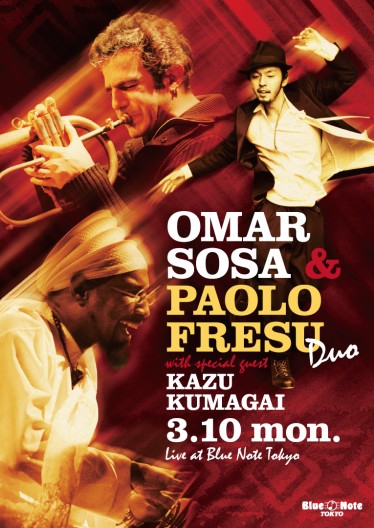
omar02

How to stay serene amid the busyness of business

"I tour a lot...Japan, Singapore. This month, I’m going to Milan. When I’m in Japan, I go to my studio [KAZ Tap Studio] everyday and practice and teach classes. Here in New York, I go to American Tap Dance Center and practice. But before I do, I take my daughter to school, and that becomes my ritual–an everyday morning walk with her. It gives me a peaceful moment. So many things I can learn from my daughter.

"She dances a lot. She was in my most recent performance. The last night (of a three-night performance), I wanted her to be on stage somehow, because I was showing my life. I just wanted her to walk around, but she started dancing!" Kumagai chuckles at the memory. "It was real nice!"

Perhaps she'll join in again when he finally manifests his next big dream, an evening-length show for New York, his first--to which I say:

Right on, S-O-L-E brother! It's time!


SPECIAL UPDATE

I have just received the following announcement from Traci Mann, Co-Chair of The New York Committee to Celebrate National Tap Dance Day:

The New York Committee to Celebrate National Tap Dance Day is proud to Honor Kazu for his talent and his contribution to the health and welfare of his tap community in Japan. Much like the late great Bill Bojangles Robinson, Kazu is helping people with his talent. He is helping them to over come the Fukashima Disaster with his tap dancing and teaching. I can't think of a more noble thing to do on his part and we hope that he gets the recognition he needs as it will up build what he has accomplished and continues to work at. 

Norman Thomas Auditorium
Park Avenue
New York City
May 24th, 2014
7 pm - 9 pm

BIO

Kazu Kumagai was born in Sendai City, Japan. He started tap dancing at the age of 15 and came to NY at the age of 19. He trained in FUNK UNIVERSITY, the training workshop for the big hit Broadway musical Bring in da' Noise, Bring in 'da Funk. He studied with Ted Levy, Buster Brown, Gregory Hines, Barbara Duffy, and Derick K. Grant.

Since then, he has performed in many New York City downtown clubs, such as The Knitting Factory, Tonic, and the Puppet Jazz Club.

From 2002 to 2010, he performed in Tony Waag’s Tap City, the New York City Tap Festival nine times and was dubbed by The Village Voice as the "Japanese Gregory Hines." In 2006, he was selected as one of Dance Magazine's "25 to Watch."

After Kaz went back to Japan in 2002, he made numerous solo appearances all over the country and collaborated with many artists and musicians, and appeared in several television commercials, such as SONY CYBERSHOT. He also performed in a MIHARAYASUHIRO fashion show in Milan, Italy, where he succeeded in opening up a new field of the arts. In 2008, he opened his first tap dance studio--KAZ TAP STUDIO--in Japan, and has subsequently taught throughout Japan including in his hometown of Sendai City, site of severe damage in the 2011 earthquake and tsunami.

Kaz dedicates his passion and love for the art of tap dance to the great masters such as his mentor Buster Brown, Jimmy Slyde, Gregory Hines and others, as well as to the people of Sendai and the Tohoku region where his family and friends live.

Visit Kazu Kumagai's Web site here.

Wednesday, April 9, 2014

Play the floor: ATDF's "Rhythm in Motion"

Well, Tony Waag did say that American Tap Dance Foundation's spring series, Rhythm in Motion--at least, Program A of it--would be edgy. And edgy, it was. Also, the rest of what he said: "hopeful, passionate, experimental, lovely...."

"[Tap dancing] can take us somewhere we don't expect," he said. "It's no longer nostal-gyah--though we do love that."
ATDF's Tony Waag at Tap It Out 2012
(c)2012, Eva Yaa Asantewaa
At the modest Theater at the 14th Street Y, the first performance of Program A opened with a clever behind-the-scenes film by Waag, featuring a montage of breathless, high-powered tapping overlaid with "Synchronicity" by The Police. That led to an hour or more of all-the-way live tap designed with 21st Century tastes in mind--works by Nicholas YoungMichelle DorranceChloe ArnoldJason Samuels SmithLisa La Touche and Derick K. Grant, each making a case for tap's continued relevance as hardcore skill and art.

You might mistake Young, a tall, strapping Texan, for a country-western star, but he's a tapper through and through and, as shown here, an emerging choreographer of growing confidence. Thank you Forest, dedicated to the sound technology inventor, employs an array of tap surfaces wired for sound as he and an all-women crew--Elizabeth Burke, Michela Marino Lerman, Carson Murphy, Demi Remick and Samara Seligsohn--fire up the feet to play the floor with impressive accuracy, speed, force and assertive design.

Dorrance's bluesy improvisatory solo with guitarist Darwin Deez, Deez and Deez, is pure magic in all the little framed moments of wonder. The dancer holding firm as she drags the silver blade of her heel against the floor; catching the guitar's spare lines of sound at odd angles and whipping her lines all around and around them; pulsing waves of movement through the length of her lanky body; dazzling us with her killer feet then looking straight at the guitarist as if to say, "What you got now?" As an ensemble choreographer and director, too, she's the genuine article, able to transfer what's great about her personal style--loose, earthy, full-bodied insouciance--onto others with no artificial aftertaste. Last night's superb cast of She's Alright included Burke, Murphy, Remick, Young, Megan Bartula and Caleb Teicher, and you can tell she has inspired them.

Arnold's two pieces for her exuberant troupe Apt 33 emphasized hard-charging, tight arrangements to popular urban music ("So Fine" by Jamaican reggae star Sean Paul and "Not Afraid" by Eminem). Samuels Smith's solo + ensemble, Acasmellyah--its title, a tapper's play on the word acapella--is so masterfully sharp, finely complex, roaring in sound and mesmeric in effect that it's hard to believe that Rhythm in Motion wouldn't just stop there and let us stagger home.
Derick K. Grant
(c)2012, Eva Yaa Asantewaa
But there was more to come. La Touche with musical collaborator/dancer Sean Jackson and fellow dancers Brittany DeStefano and Karissa Royster brought We Used to Hold, partly set to an Erykah Badu song, innovative in staging and sound and with occasional subtlety and sexiness. Grant's Buzzcut Season, using the Lorde song, scatters a roiling mess of dancers in school uniforms around the space. Now and again, the galloping, spinning crowd briefly, ingeniously parts to throw focus on one or a few of its members in a floating narrative of high school life and love.

Program B will include works by Gregory Hines (staged by Barbara Duffy), Brenda Bufalino, Cartier Williams, Michela Marino Lerman, Max PollakSusan Hebach, and the capoeira-inspired Fuga by Felipe Galganni.

Rhythm in Motion continues through Saturday. Remaining shows include tonight (Program A at 7pm and 9:30pm), Thursday (Program A at 7pm), Thursday (Program B at 9:30pm), Friday (Program B at 7pm and 9:30pm) and Saturday (Program B at 3pm with a Tap Talk Back and 7pm).

For Rhythm in Motion tickets, click here.

For information on Sunday's Celebrating Gregory! fundraiser with guest host Bill Irwin, click here.

The Theater at 14th Street Y
344 East 14th Street (at 1st Avenue), Manhattan
(map/directions)

Tuesday, February 4, 2014

A birthday valentine to tap legend Gregory Hines

Gregory Hines (1946-2003)
(photo by Greg Gorman)
Join the American Tap Dance Foundation (ATDF) at the American Tap Dance Center for Happy Birthday, Gregory! on Valentine's Day, Friday, February 14 (7:30-9pm), which would have been the tap master’s 68th birthday.  

Happy Birthday Gregory!--hosted by Tony Waag, ATDF artistic/executive director--will feature film clips and discussion reflecting on Hines’ life and talent.

$5 admission. Free to ATDF members. For information on this program and other features of ATDF's Winter Intensive, click here.

154 Christopher Street, 2B (at Washington Street), Manhattan

Tuesday, November 19, 2013

Let's talk about TAP, baby!

American Tap Dance Foundation welcomes you to a special roundtable/think tank moderated by Jane Penn (Director of Development, Studio Museum in Harlem) 

American Tap Dance Center
Friday, November 22 (7:30pm)

A lively, candid and dynamic laboratory for tap dancers, students, historians, teachers, presenters, choreographers and audience members to meet and "TALK" about Audiences! Who is our audience? What do they need? Where can we find tomorrows audience today? Dance studios, commercial projects, on-line? What currently drives the ticket-buyer? and does that need to change and/or grow? Snacks and refreshments will be served.
All photos: Cartier Williams at Tap It Out!
(c)2012, Eva Yaa Asantewaa
Admission: $5 in advance by calling 646-230-9564 or at the door
FREE to ATDF members!

American Tap Dance Foundation
154 Christopher Street #2B (near Washington Street), Manhattan

Friday, July 12, 2013

Celebrating a world of tap in New York

The world is a stage. 
The stage is a world of entertainment.

Arthur Schwartz/Howard Dietz, "That's Entertainment"
Tony Waag, mayor of Tap City
at last year's Tap It Out event at Battery Park City
(photo by Eva Yaa Asantewaa)
Thanks to Tony Waag's week-long Tap City summer fest, New Yorkers get to see and hear what a world of artists has made of the great American art of tap dance. The festival's "Tap Internationals" performance program--showcasing performers from the four winds and local talent working out to global rhythms--has long been my favorite Tap City feature. I only regret that we get but one chance per year to see it.

Last evening's show at Symphony Space has come and gone, taking with it these most engaging experiences:

Tembang Alit: a gem of a solo for Claudia Rahardjanoto (Chinese-Indonesian native of Germany), who played clear, discrete steps like tinkling bells against Cicilia Yudha's equally spare and delicate piano work

Kazu Kumagai
(photo by Leslie Kee)
Journey to the Soundscape: a solo for Japan's arresting Kazu Kumagai, an all-time favorite of mine, who channels dissonance and passion, taking tap to a stormy place beyond the familiar sunshine

Confirmation: another solo, this time splashed across space by Corey Hutchins (from Connecticut), a bold, original stylist with variegated musicality

Tap en Clave: crackling rumba riding atop taps by wiry live-wire Jaime Moran of Cuba

Not to forget El Guararey de Pastora, a handsome arrangement of song, body percussion and tap created by Max Pollak for his Rumba Tap ensemble, looking and sounding better than ever

And more:

Carson Murphy aglow, a model of confident ease and flow in the cast of Nicholas Young's Environments

Brenda Bufalino
(photo by Lois Greenfield)

Brenda Bufalino, master performer/educator at her best here, laying out fluttery, skimming tuneful steps and showing the kids how it's done

Speaking of kids, Susan Hebach and Tamii Sakurai have done a magnificent job of staging Molutsi Mogami's Izzici (Stomping Feet) for seventeen teen dancers from Tap City Youth Ensemble. The youngsters demonstrated high discipline and coordination--as individuals and as a group--in this demanding South African boot dance.

Which brings me to Tap Future. There is one. Watch American Tap Dance Foundation's students do their thing tonight at 8pm. Check in here, and hurry! Tickets go quickly.

But if you don't make it tonight, you don't even need tickets for tomorrow afternoon's Tap It Out extravaganza. Just head to Father Duffy Square in Times Square (map/directions) tomorrow (Saturday) afternoon to see a huge ensemble--160 dancers in all, at last count--performing 20-minute shows at noon, 1pm and 2pm.

For more about the American Tap Dance Foundation, click here.

Tuesday, June 25, 2013

A world on tap

Cartier Williams at "Tap It Out" (c)2012, Eva Yaa Asantewaa
Get ready to get tap happy when, once again, New York City becomes Tony Waag's Tap City (July 6-13).

My favorite part of American Tap Dance Foundation's legendary summer extravaganza has always been TAP INTERNATIONALS, an evening that luxuriates in the worldwide, cross-cultural phenomenon that tap dance has become. Enjoy the latest edition on Thursday, July 11 (7:30pm) at Symphony Space:
A global community of artists that  include international soloists, contemporary tap ensembles, raw talent and leading tap masters, will combine tap dance with world music, body percussion, gumboot, funk, swing, step dance, vocals, film, and storytelling.
Brenda Bufalino (US)
Flavia Costa (Brazil)
Felipe Galganni (Brazil)
Corey Hutchins (US)
Chikako Iwahori (Japan)
Ryan Johnson (US)
Kazu Kumagai (Japan)
Lisa La Touche (Canada)
Winston Morrison (Australia)
Claudia Rahardjanoto (Germany/Indonesia)
Rumba Tap (Cuba)
Lynn Schwab (US)
Tap City Youth Ensemble (Africa/US)
Nicholas Young (US)

Get complete information and tickets for Tap Internationals here.

For comprehensive information on the 2013 Tap City festival, click here.

Peter J. Sharp Theatre
Symphony Space
Broadway at 95th Street, Manhattan
(map/directions)

Thursday, February 7, 2013

Get rhythm!

presents


Friday, March 22 and Saturday, March 23
Two shows each night: 7pm and 9:30pm

Sunday, March 24, 3pm
An evening of new work by New Yorks finest tap dancers and choreographers including Brenda Bufalino, Michelle Dorrance, Derick K. Grant, Kazu Kumagai, Max Pollak, Lynn Schwab, the Tap City Youth Ensemble and Cartier Williams, directed and curated by Tony Waag
Ticket information

The Theater at the 14th Street Y

344 East 14th Street (between 1st and 2nd Avenues), Manhattan
(map/directions)

Friday, July 13, 2012

Tap City 2012: Tapping at the marina

Max Pollak

Tap It Out
at World Financial Center marina
Friday, July 13, 2012
American Tap Dance Foundation's Tap City 2012 
ATDF Artistic/Executive Director, Tony Waag

all photos (c)2012, Eva Yaa Asantewaa

To see more photos from this set, click here.

Tap It Out
Tony Waag, conducting
Tap It Out
Tony Waag
Tony Waag
Cartier Williams
Cartier Williams
Lynn Schwab
Lynn Schwab
Lynn Schwab
Tony Waag

All photos (c)2012, Eva Yaa Asantewaa
To see more photos from this set, click here.

Thursday, July 12, 2012

Tap City 2011-2012 Awards

Last year, the American Tap Dance Foundation missed the chance to give out its annual tap community awards (given since 2002). It made up for that lapse by doubling up the awardees last evening at a fun and often moving ceremony at the New York Public Library for the Performing Arts.

The program commenced with ATDF head Tony Waag's slide montage of past winners of the Tap Preservation Award and Hoofer Award as well as inductees to the International Tap Dance Hall of Fame. The fourth honor afforded ATDF recipients is known as the Toe Knee Award--a play on Waag's name, his sometimes nickname and that little Broadway thing--which recognizes stalwart supporters. Waag surprised his two sisters--Stephanie Waag Blackmon (who was on hand) and Cindy Roush, as well as Boston-based tap instructor/producer Thelma Goldberg, with the coveted Toe Knee.
Two of the vaudevillian Whitman Sisters, including Alberta "Bert" Whitman in male drag

A video or slide show or music and dance performances prefaced each of the other awards. Highlights were many, including Sally Sommer's loving tribute to Hall-of-Famer Charles "Cholly" Atkins (1913-2003), notable not only for the cool wit of his performing but also his expert dance coaching of many of Motown's hottest acts; a dramatic slide show tracing the history of vaudeville's remarkable Whitman Sisters act, about whom, regrettably, there is no film documentation; Michela Marino Lerman gifting jazz and tap show producer Cobi Narita (Cobi's Place), a Tap Preservation Award winner, with a shimmering solo; and Max Pollak's Rumba Tap ensemble serving up a vivacious new Afro-Cuban voice-and-dance number before longtime dancer/colleague Chikako Iwahori, presenting Pollak's Hoofer Award, spoke of his formidable intensity and generosity. A momentarily overwhelmed Pollak recovered enough to quip, "Being the only Austrian who has ever gotten this award makes me want to have a beer with you all."

A trio of angels--"Charlie's Angels," from Jason Samuels Smith's recent Joyce Theater show--dropped in to rock the house, praise their champion and hand him a well-deserved Hoofer Award. It was a treat to see Chloé Arnold, Michelle Dorrance and Dormeshia Sumbry-Edwards in action again so soon after the Joyce gig and to hear their stories. (Arnold on meeting Samuels Smith for the first time: JSS: "You tap?" CA: "Yeah, I tap." JSS: "We'll see.")

For more information on ATDF's remaining Tap City 2012 events (through July 13), click here.
TAP CITY 2011-2012 AWARDEES

2011 International Tap Dance Hall of Fame
Cholly Atkins

2012 International Tap Dance Hall of Fame
The Whitman Sisters Legacy

2011 Toe Knee Award
Stephanie Waag Blackmon and Cindy Roush

2012 Toe Knee Award
Thelma Goldberg

2011 Tap Preservation Award
Jacqui Malone

2012 Tap Preservation Award
Cobi Narita

2011 Hoofer Award
Max Pollak

2012 Hoofer Award
Jason Samuels Smith

Monday, June 25, 2012

Great launch for CDWNM with "Writing on Tap"

Brenda Bufalino

Derick K. Grant
Bufalino with Michelle Dorrance

All photos (c)2012, Eva Yaa Asantewaa

I kept wanting someone to pinch me. Was I really in a studio with Brenda Bufalino, Derick K. Grant and Michelle Dorrance? See the photos above for evidence that this wasn't just a dream.

And after this intrepid trio--plus tap historian/author Constance Valis Hill and renowned pianist/arranger Frank Owens--schooled a congenial group of dance writers, tap dancers, other kinds of dancers and tap fans about issues in the journalistic coverage of tap, they quickly broke out their tap shoes and showed us why us writers really need to step up our game.

I guess when you spend a few months focusing on the minutiae of an event--in this case, a collaboration between Tony Waag's venerable American Tap Dance Foundation and my new Collective for Dance Writing and New Media--it's easy to lose sight of the larger picture. This, ladies and gentlemen, turned out to be a momentous occasion.

And not just because of our stellar guests and their dancing.

Writing on Tap succeeded because it offered a place for writers and artists to meet, share information and learn from one another in an atmosphere of respect and fun. Tap dancers have many grievances with dance critics--everything from our lack of expertise in music (after all, tap dancers are musicians) to our inability to recognize tap-historical allusions in contemporary tap choreography to just plain indifference to the form and dismissal of it as an art. The tap field hasn't had the cohesion necessary to act in its own behalf and, if necessary, raise a ruckus. But what we saw on Saturday afternoon was the beginning of an important dialogue that could make a difference--particularly in the future work of today's up-and-coming dance writers.

More and more, I want to facilitate and participate in spaces like this one and efforts like this.

And that's a good thing, since our host, our guests and our participants are all clamoring for more of them.

So Collective for Dance Writing and New Media will find a way to keep them coming. Keep in touch with us through our site. Like us on Facebook, follow @CollectiveDWNM on Twitter and put us in your Google+ circles. In coming months, we will be inviting you to get involved in our activities and help this organization grow and do more excellent work.

We hope you'll join us!

Eva Yaa Asantewaa
Founder
Member, Executive Committee
Collective for Dance Writing and New Media

Thursday, June 7, 2012

Michelle Dorrance and Frank Owens join "Writing on Tap"

Hot off the taps: I'm pleased and honored to announce that jazz pianist Frank Owens and Bessie Award-winning dancer-choreographer Michelle Dorrance will be joining the stellar lineup of tap experts for Writing on Tap on June 23. And reservations are going fast!
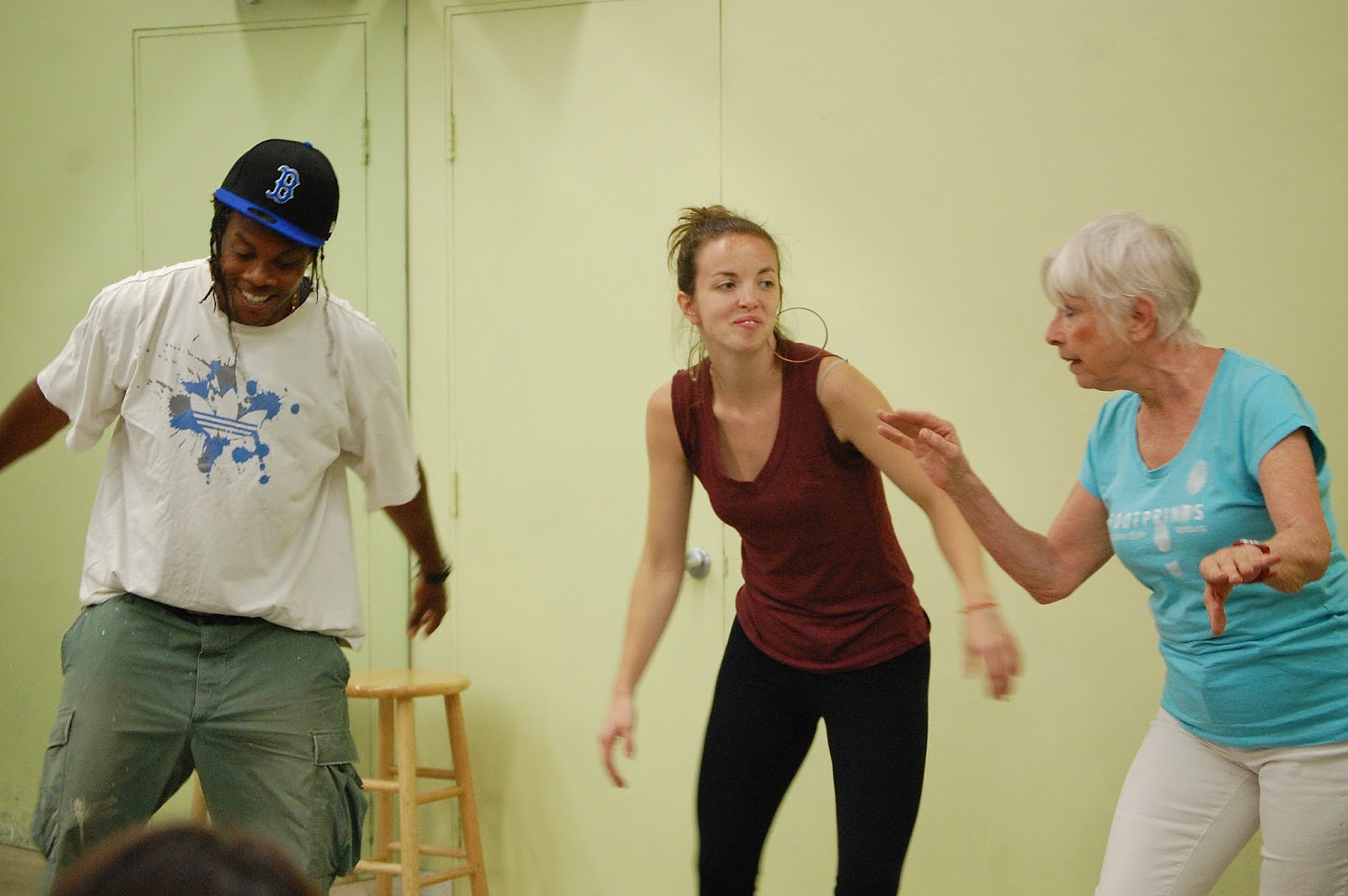
It doesn't get much better than this. Join us at American Tap Dance Center on June 23!

Information

RSVP (required)

Tap tap tap tap tap...Tap City!

It's the 25th Anniversary of the remarkable American Tap Dance Foundation. As expected, there's so much to tap impresario Tony Waag's annual Tap City fest in New York--classes for all ages and levels of experience, performances, film screenings, a boat ride--that a tap lover's head can swim. Just pop over to this link and start your journey.

A couple of new things I'm looking forward to:

TAP CITY - TAP CHALLENGE
Tuesday, July 10 (7pm)
The Tap City Tap Competitions is the first of its kind that specializes in the many diverse styles, modes, grooves, and musical time signatures of tap dance. The Tap City Tap Competitions will focus on three different styles to be announced early enough for the dancers, teachers and choreographers to prepare. Because our interests lie in the advancement of this art form, we aim to further the perception and the presentation of Tap Dance in a comprehensive manner by demanding only excellence in execution, interpretation, musicality and choreography. Each participant will critiqued by an expert panel of judges.
Click here to register.

TAP IT OUT
Friday, July 13 (Three showings: 12pm, 1pm and 2pm)
A free, public and outdoor event performed downtown at the World Financial Center Marina as part of the acclaimed River to River Festival. Tap City participants will join local professionals in celebration of the 25th anniversary of the American Tap Dance Foundation.
Click here for details.

ATDF partners with 
Collective for Dance Writing and New Media

And don't forget that ATDF and the new Collective for Dance Writing and New Media are co-sponsoring Writing on Tap: Everything You Always Wanted to Know About Tap But Were Afraid to Ask on Saturday, June 23 at American Tap Dance Center--open to dance writers, dance artists and the general public.

Come join us and meet Constance Valis Hill (author of Tap Dancing America, A Cultural History) and three award-winning, fantabulous dance artists--Brenda Bufalino, Derick K. Grant and Michelle Dorrance.

For complete information and (required) reservation, please click here!

Friday, May 4, 2012

Love tap dance? Join CDWNM & ATDF on 6/23

Love tap dance?

Hold this date:
Saturday, June 23 (Noon to 4pm)

Here’s your chance to hear more about the international tap dance phenomenon directly from its top professionals and experts!

Collective for Dance Writing and New Media and American Tap Dance Foundation invite you to Writing on Tap: Everything You Always Wanted To Know About Tap But Were Afraid to Ask on Saturday, June 23, Noon to 4pm.

Hosted by Tony Waag’s ATDF at New York’s American Tap Dance Center, Writing on Tap will offer a provocative, interactive forum featuring talks by Constance Valis Hill, dancer and author of the essential and lively tap history, Tap Dancing America, A Cultural History, and the multitalented Brenda Bufalino, internationally acclaimed for her singular style and innovation in dance and choreography, among other special guests to be named later. Fans, performers and dance writers are all warmly welcome to this afternoon of informative talks and small group discussions on issues in tap.

American Tap Dance Center
154 Christopher Street, #2B, Manhattan
(between Greenwich and Washington Streets)

Admission: $10 (cash at door). Space is limited. Reservations are required. Please RSVP to collectiveDWNM@gmail.com.

For more information, download a copy of our Writing on Tap press release here.

You will find Collective for Dance Writing and New Media on:

Twitter

Facebook

Google+

Copyright notice

Copyright © 2007-2023 Eva Yaa Asantewaa
All Rights Reserved

Popular Posts

Labels