Wednesday, April 26, 2023

Friday, April 7, 2023
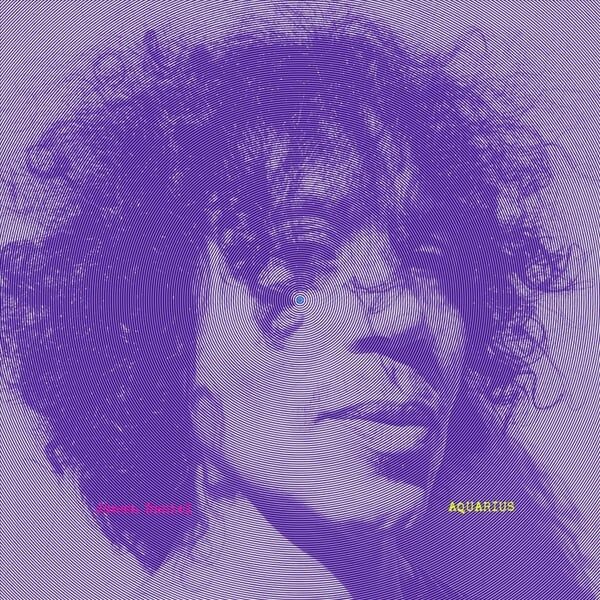
It's the Age of Daniel Alexander Jones' "Aquarius"
Wednesday, December 29, 2021
InfiniteBody Honor Roll 2021
InfiniteBody Honor Roll 2021
Eva Yaa Asantewaa
As always, this is not a Best-Of list, certainly, but a kind of memory palace of remarkable arts events and resources I connected with in 2021 during the continued pandemic. Given how things went this year, it was not a very dance-focused time for me, except where dancing was streamable, but it was great for catching up with streaming series I might have missed otherwise or books I now had more time to read.
2022 looks like it will start out pretty much the same. I send you, your loved ones, and your community best wishes for a safe, healthy, artful, and wonderful New Year!
 |
| Michaela Coel's I May Destroy You (HBO) |
 |
| Omar Sy starring in Lupin (Netflix) |
I Hate It Here: Stories from the End of the Old World, written and directed by Ike Holter, world premiere, Studio Theatre, streaming from December 10, 2020 through March 7, 2021
Lupin (Part 1), directed by Marcela Said, Ludovic Bernard and Louis Leterrier, starring Omar Sy, Netflix, streaming from January 8
New Sounds Presents: ETHEL with John Schaefer, The Greene Space and WNYC and WQXR, YouTube, from January 14
 |
| Regina King, director, One Night in Miami (photo: Evan Agostini) |
 |
| Regina King in The Harder They Fall (photo: YouTube) |
 |
| One Night in Miami (Amazon Prime Video) |
One Night in Miami, directed by Regina King, Amazon Prime Video, streaming from January 15
I May Destroy You, created by and starring Michaela Coel, directed by Sam Miller and Michaela Coel, HBO Max, streaming from June 7, 2020
Kapaemahu, directed by Hinaleimoana Wong-Kalu, Dean Hamer and Joe Wilson; animation director, Daniel Sousa; 2020; viewed February 2021
Black Art: In the Absence of Light, directed by Sam Pollard, HBO Max, streaming from February 13
Nomadland, directed by Chloé Zhao, Hulu, streaming from February 19
Mr. SOUL!, directed by Melissa Haizlip and Sam Pollard, released August 28, 2020; streaming on PBS from February 28
I Care A Lot, directed by J Blakeman, Netflix, streaming from September 12, 2020
Mank, directed by David Fincher, Netflix, streaming from December 4, 2020
Sound of Metal, directed by Darius Marder, Amazon Prime Video, streaming from December 4, 2020
 |
| Megan Thee Stallion on Legendary (HBO Max) |
 |
| Cast of HBO Max's A Black Lady Sketch Show |
Radiant Rest: Yoga Nidra for Deep Relaxation and Awakened Clarity, by Tracee Stanley, Shambala, 2021
Tina, directed by Daniel Lindsay and T.J. Martin, HBO Max, streaming from March 27
Twyla Moves, directed by Steve Cantor, American Masters, PBS, streaming from March 26
All In: The Fight for Democracy, directed by Liz Garbus and Lisa Cortés, Amazon Prime Video, streaming from September 9, 2020
All the Rage, by Rosamond S. King, Nightboat Books, 2021
Chasing Magic, by Ayodele Casel, streaming on The Joyce Theater website, beginning April 8
Conversation without Walls: Alice Sheppard and iele paloumpis, YouTube, April 9
Legendary (Season 1), directed by Rik Reinholdtsen, HBO Max, streaming from May 27, 2020
Legendary (Season 2), directed by Rik Reinholdtsen, HBO Max, streaming from May 6, 2021
Romeo and Juliet, National Theatre, directed by Simon Godwin, PBS Great Performances, April 23-May 21
A Black Lady Sketch Show, created by Robin Thede, directors Dime Davis (Season 1); Lacey Duke and Brittany Scott Smith (Season 2) HBO Max, streaming from 2019-2021
A Body in Fukushima, by Eiko Otake and William Johnston, Wesleyan University Press, May 2021
DanceAfrica 2021, BAM, streaming May 29 through June 10
In Treatment (all four seasons), various directors, HBO Max
The Flight Attendant, HBO Max, streaming from November 26, 2020
 |
| Author Clint Smith (photo: Carletta Girma) |

 |
| Author Annette Gordon-Reed (photo: Stephanie Mitchell) |

Culture Strike: Art and Museums in an Age of Protest, by Laura Raicovich, 2021
How the Word is Passed, by Clint Smith, Little, Brown & Co., 2021
Naomi Osaka, directed by Garrett Bradley, Netflix, streaming from July 16
In Our Mothers' Gardens, directed by Shantrelle P. Lewis, Netflix, streaming from 2020
Transcendant Kingdom, by Yaa Gyasi, Alfred A. Knopf, 2021
Mary J. Blige's My Life, directed by Vanessa Roth, Amazon Prime Video, 2021
Poet Warrior: A Memoir, by Joy Harjo, 2021
Surrealism Beyond Borders, Metropolitan Museum of Art, October 11, 2021 through January 30, 2022
The Harder They Fall, directed by Jeymes Samuel, Netflix, streaming from November 3
 |
| Bo Burnham in Inside (Netflix) |
 |
| Cast of Call My Agent! (Netflix) |
King Richard, directed by Reinaldo Marcus Green, HBO Max, streaming from November 19
Read Until You Understand: The Profound Wisdom of Black Life and Literature, by Farah Jasmine Griffin, W.W. Norton & Company, 2021
Succession, created by Jesse Armstrong, HBO Max, streaming from 2018
Inside, by Bo Burnham, Netflix, streaming from May 2021
On Juneteenth, by Annette Gordon-Reed, Liveright Publishing Corporation, 2021
Call My Agent!, Netflix, streaming from 2015
Wednesday, May 27, 2020
Artists Reach Out: Monstah Black
Monstah Black
 |
| Monstah Black (photo: Lia Clay for the 2018 Queer|Art Community Portrait) |
Monstah began his career as a performance artist with an emphasis on dance, costume design and music composition. He received an MFA in New Media Arts and Performance from Long Island University. He is currently one half (with his husband) of the electronic duo The Illustrious Blacks. Together they write, produce, record and perform internationally their original music.
Awards include Open Call The Shed NYC recipient, The Tom Murrin Performance Award, Franklin Furnace Fund, Lower Manhattan Cultural Council, American Music Center Live Music for Dance and NYSCA. He has garnered support from New York organizations including Joe’s Pub at The Public Theater, The Field, Movement Research and New York Live Arts. Publications include New York Magazine, Billboard Magazine, Paper Magazine and The New York Times.
Monstah is a Queer Arts Mentorship and Yaddo fellow as well as a Long Island University New Media Art and Performance, MFA.
theillustriousblacks.com
Do you have a current or planned project whose progress is affected by the pandemic?
The Illustriousblacks (Monstah and Manchildblack) have had to readjust and remix most of our plans for projects in 2020. The quarantine has allowed us to take a deeper focus.
A residency project that was a year long at Jamaica Center for Arts and Learning (JCAL) in Queens experienced a complete remix due to COVID-19. Survival mode became re-imagining original ideas and remixing what was in our immediate surroundings. It caused me to reach beyond comfortable boundaries I’d created for myself (sound, visual and movement qualities). This is how our “Walk-in Closet” was born as a venue for Back In The Closet w/ Monstah Black.
It gave me, and continues to give me, a platform in which to share steps in the process as we build on new ideas. For JCAL, it became a direct opportunity as a marketing strategy to promote my film Cotton, screening in June.
Briefly, tell me about how you got involved in the arts and in your particular practice.
When I was a child, my parents encouraged me to practice and study all the things I showed skill in. They’re responsible for dance classes and church choir; most of my creative interests are inspired by them. Other responsible culprits would be Prince, Michael Jackson, Stevie Wonder, Marvin Gaye, Donny Hathaway, Sylvester, Flip Wilson, Lola Falana, Cher and Parliament Funkadelic.
The choice to go to undergrad for Choreography/Performance at Virginia Commonwealth University sealed my destiny for becoming and staying an interdisciplinary artist.
In a more specific way, what are you practicing? And what are you envisioning?
I am currently practicing bringing attention back to my rib cage and everything below it. For several years now, I’ve built tons of material and improvised structures based on my upper body, arms, fingers, facial expressions and spine articulation. The quarantine is bringing me back to a place of being more grounded, and that, ultimately, is affecting my vocal quality as well as my body.
I’m currently envisioning a life of streaming/film and television. I love performing for the camera.
How does your practice and your visioning align with what you most care about?
I care most about being able to influence and inspire younger generations to love themselves no matter how much they may feel marginalized and been told otherwise. My practice has been to reach beyond the boundaries and limitations that were put before me. I continue to do that in hopes that it inspires others to do the same.
How does your practice function within the world?
My practice (as well as The Illustriousblacks) flourishes in the idea of togetherness and joy. This is most apparent in environments where music, dance and visuals meet harmoniously (dance parties). That’s a language that is fluent in all cultures. Through music, dance and visuals our goal is to spread the idea of love and unity.
Briefly share one self-care tip that has special meaning to you now.
Morning Movement Meditation and squats. Sorry that’s two lol.
******
DISCLAIMER: In addition to my work on InfiniteBody, I serve as Senior Curatorial Director of Gibney. The postings on this site are my own and do not necessarily reflect the views, strategies or opinions of Gibney.
******
 Subscribe in a reader
Thursday, April 30, 2020
Artists Reach Out: Peter Sciscioli
Peter Sciscioli
 |
| Peter Sciscioli (photos: Anna M. Maynard) |

Peter Sciscioli is a Brooklyn-based interdisciplinary performer, creator, educator and producer whose work encompasses dance, music, theater and film. Since 1997, he has been creating performance works through a choreographic lens with a wide variety of collaborators in venues around the world. In 2012, Peter founded the International Interdisciplinary Artists Consortium (IIAC), a network of artists and producers working across disciplines and cultures, designed to share resources. As a performer, he has worked closely with Jane Comfort and Daria Faïn, and with Meredith Monk in various capacities. Peter has taught his approach to Voice as Movement in Central and North America, co-initiated The Sounding Body workshop series at Movement Research (MR) and currently offers private lessons online. He has received recent support of his work and initiatives from MR’s Global Practice Sharing (GPS) program and the U.S. Embassy Tegucigalpa, Honduras. Each summer Peter also serves as facilitator for a IIAC residency and Moving Arts Lab, a festival meeting ground for interdisciplinary exploration, at Earthdance in Western Massachusetts. www.petersciscioli.com
 |
| La Voz Como Movimiento |
Do you have a current or planned project whose progress is affected by the pandemic?
For the last two years I’ve been engaged in a group process intended to deepen my research and practice of an approach to the voice and body I call “Voice as Movement.” Initially, I invited a few colleagues to explore some ideas and inquiries, and that process has evolved into creating a work that can eventually be shared with others.
We’d intended to move to a next-stage this spring, but instead have continued meeting once a week online. In some ways, living through this pandemic has allowed us to deepen our process, allowing something to unfold in its own time and in connection to the now, and acknowledging that the process itself has inherent value. Those have been some of the gifts. Much gratitude goes to Sara Galassini, Luisa Muhr and Petra van Noort for continuing to share their wisdom, care and curiosity so generously.
Briefly, tell me about how you got involved in the arts and in your particular practice.
“Voice as Movement” is informed by years of engaging in music, theater, movement and energy work, and has evolved over the last ten years or so. As a child, I studied Western classical violin and performed in musical theater and operas. I later acted in plays and began formal dance training in college. After graduating, I moved to Chicago where I was fortunate to join Chicago Moving Company under the tutelage of Nana Shineflug, one of the city’s matriarchs of modern dance who specialized in activating the chi-body. I also performed, taught, choreographed and was an administrator for Hedwig Dances, directed by Jan Bartoszek.
After moving to New York in 2002 I started working with Meredith Monk, from whom, along with members of her Vocal Ensemble, I’ve learned immeasurably. Later performing with Jane Comfort and Company and Daria Faïn allowed me to grow in both a dance theater practice and in energetic work, respectively.
In a more specific way, what are you practicing? And what are you envisioning?
In a large sense, I think what I’m practicing is integration. The group process combines somatic practices, voice and violin, while drawing inspiration from a theatrical source as well as a companion planting method and a connection with nature (Three Sisters). My ongoing teaching encourages a deepening into the connections between breathing, movement and the voice. This extends to a personal practice of checking in daily on how I’m feeling, using similar practices I share with others, and trying to nurture myself through a variety of means. While a mantra for me during the pandemic has been “one day at a time”, I’m trusting a continuation of these practices and I would like to envision physical spaces that we can return to, in order to experience direct connection, sharing, and learning with others in the near and safer future.
How does your practice and your visioning align with what you most care about?
I’ve always been interested in and curious about what makes us feel more alive. While engaging in the arts from a young age was exciting and liberating, I later discovered and was able to identify an emergent value system underlying all of these practices. While self-expression is a way of sharing ourselves with the world, I’ve found that ego can often get in the way. One of the things I value most is the ability to attune to oneself and others at the same time. These practices have helped me learn how to listen, to trust in intuition, to be vulnerable, to be strong, to feel connection and a sense of community, and to learn how to communicate through the wisdom of the body. Being able to engage in them with others erases boundaries so that we can connect more on a soul level, expanding our perception beyond ourselves. Kindness, care and compassion feel like deepening presences along the way.
How does your practice function within the world we have now?
While I’m very grateful to be able to continue with these practices right now, the shape of them has changed. Nothing can replace in-person-ness, direct exchanges of energy, the sense of touch and being physically affected by being in the same time and place as other people. The shift to teaching online sometimes impedes my ability to perceive what is happening physically in a person’s body, both visually and aurally, though a good deal is still possible, and I think, is of use. In the group practice, we can’t all sing at the same time and hear each other, nor can we obviously explore what’s physically possible between us. There are distinct limitations. At the same time, the fact that this technology is out there is amazing. I also try to remember the simple fact that we are all living in a body and that it’s through the body that we perceive the world. I continue to be humbled by the ability, abundance of inquiry, contemplation and knowledge that is available to me.
******
DISCLAIMER: In addition to my work on InfiniteBody, I serve as Senior Curatorial Director of Gibney. The postings on this site are my own and do not necessarily reflect the views, strategies or opinions of Gibney.
******
Subscribe in a reader
Tuesday, April 28, 2020
Artists Reach Out: Dorothy Lawson
 |
| ETHEL from left, Corin Lee, Dorothy Lawson, Ralph Farris, Kip Jones (photo: Matthew Murphy) |
Dorothy Lawson is the founding cellist and co-artistic director of the string quartet known as ETHEL. Established in New York City in 1998, ETHEL quickly earned a reputation as one of America’s most adventurous quartets. More than 20 years later, the band continues to set the standard for contemporary concert music. Known for its enlivened playing, blending uptown, conservatory musicianship with downtown genre-crossing, ETHEL has been described as “indefatigable and eclectic” (The New York Times), “vital and brilliant” (The New Yorker), and “infectiously visceral” (Pitchfork). Since its inception, ETHEL has released nine feature recordings (one of them nominated for a Native American Music Award), performed as guests on 40+ albums, premiered 225 new works, won a GRAMMY® with jazz legend Kurt Elling, and performed in 14 countries, 45 states, and 250 cities.
Do you have a current or planned project whose progress is affected by the pandemic?
The pandemic hit just as ETHEL (www.ethelcentral.org) had gone into rapid development of a new multimedia program for the Summer Nostos Festival, in Athens, Greece. Ideated last summer, it had been pushed dramatically forward after a panel conversation with theater director, William Kentridge, at the Brooklyn Public Library, in December, 2019. It was to be a musical meditation on the impact of Artificial Intelligence on Humanity, a dramatic and rapidly evolving field. We are still tracking it, in this crisis, but are deeply aware that every parameter in our lives is being challenged, and has probably changed irrevocably, so future plans are being held very lightly. We actually cherish these moments, when we’re not in the throws of delivering a project, with time to observe where we really are.
Briefly, tell me about how you got involved in the arts and in your particular practice.
My parents were both passionate about classical music, and our house was full of it from morning to night. My mother was a very fine pianist with very good training, although she assumed her first role should be keeping a house and raising children, which she also did brilliantly. I remember her showing me some basic piano skills when I was about 3, but my parents never pushed me to take lessons. I was lucky that our public school system had a traveling group of music teachers, and that the school, itself, kept a small orchestra of instruments. I was able to choose music for myself, in the company of my friends, and that made all the difference.
In a more specific way, what are you practicing? And what are you envisioning?
The opportunity to create virtual events for the vast homebound audience moved ETHEL into high gear on learning and applying electronic technologies. We are still operating mostly individually, but getting closer and closer to the production of real quartet collaborations, among ourselves, and with others. Without sophisticated editing, every performance is authentic, and the nuances have to be managed in real time, which means practicing and directing. It is an art form in its own right, and we intend to pursue it seriously from now on, in addition to our live appearances.
How does your practice and your visioning align with what you most care about?
My vision for ETHEL has always focused on the experience our audiences receive, more than on the pedigree of the repertoire we perform. I believe in using music as a vehicle for bringing people into an awareness of shared Humanity, raising their interest in each other and their capacity for compassion. Over the years, we have become more and more precise about designing programs that frame that experience around different themes, and we rejoice in that challenge. I hope to help ETHEL find this, moving forward into the world that has been ravaged by this pandemic.
How does your practice function within the world we have now?
Striving for Open-Heartedness and Compassion, through any practice, is Timeless. It takes effort but functions under stressful conditions just as well as in peaceful ones. Living in the moment, honoring the Now, being Grateful--serve beautifully, for the practitioner, and for their community.
Briefly share one self-care tip that has special meaning to you now.
I have practiced cold showers for three years now, for the energizing experience, anti-inflammatory results, and skin benefits. In the environment of restricted movement at the current time, and of dull, repetitive online activity, the sudden change of state afforded by a cold shower can improve one’s stamina and one’s mood remarkably!
DISCLAIMER: In addition to my work on InfiniteBody, I serve as Senior Curatorial Director of Gibney. The postings on this site are my own and do not necessarily reflect the views, strategies or opinions of Gibney.
******
Subscribe in a reader
Wednesday, April 22, 2020
Artists Reach Out: Pamela Sneed
Pamela Sneed
 |
| Pamela Sneed (photo courtesy of the artist) |
Pamela Sneed is a New York-based poet, writer, performer and visual artist, author of Imagine Being More Afraid of Freedom than Slavery, KONG and Other Works, Sweet Dreams and two chaplets, Gift by Belladonna and Black Panther. She has been featured in The New York Times Magazine, The New Yorker, Art Forum, Hyperallergic and on the cover of New York Magazine. She is online faculty in SAIC’s low-res MFA teaching Human Rights and Writing Art and has also been a Visiting Artist at SAIC in the program for four consecutive years. She has performed at the Whitney Museum, Brooklyn Museum, Poetry Project , MCA, The High Line, New Museum and Toronto Biennale. She delivered the closing keynote for Artist, Designers, Citizens Conference/a North American component of the Venice Biennale at SAIC. She appears in Nikki Giovanni’s, The 100 Best African American Poems. In 2018, she was nominated for two PushCart Prizes in poetry. She will publish a poetry and prose manuscript, Funeral Diva, with City Lights in Fall 2020.
Do you have a current or planned project whose progress is affected by the pandemic?
I am working on my first musical performance which is a tribute to Big Mama Thornton. I received a commission from Denniston Hill through the Exodus Project in collaboration with Triangle Arts, Dumbo. I was doing vocal training and everything. The show was supposed to premiere this month on April 27. Because of the pandemic, it has been pushed to early November when Triangle reopens.
Briefly, tell me about how you got involved in the arts and in your particular practice.
It's hard for me to think back to how I became an artist as I feel now that it’s part of my DNA. I attended the New School /Lang College in the late 1980’s. Their campus was really the West and East Village. I trained as a writer there and got involved in poetry and performance through the East Village scene at the time.
In a more specific way, what are you practicing? And what are you envisioning?
At present I am writing, performing, teaching and making visual art. I have a book coming out in the fall Oct 2020 with City Lights. It’s titled Funeral Diva, and it’s about coming of age during the AIDS era in New York and the impact on POC and LGBTQI communities. I am trying to document an important community and legacy. It’s poetry and prose. I hope to create more literature/more visual art and have more opportunities to perform on larger stages and share my political vision which is about revolution/at least that’s what my students tell me/I’m interested in social justice through the arts and interdisciplinary modes of working and thinking.
How does your practice and your visioning align with what you most care about?
I believe many things--one, that my artistic practice is also a spiritual practice, one that keeps me whole and sane and working toward not just my own good but society's good as well. I also believe teaching is a spiritual practice and my job is to empower people to speak and express their truths through the arts. I also try to engage my students politically believing deeply the personal is political. All of my work reflects that. I also believe during this pandemic artists are on the frontlines and are also essential workers teaching people how to survive, transform and endure. My practices always reflect this. Funeral Diva is a personal and political book. My Big Mama Thornton performance project is to pay tribute to a Black woman who is known to have been a lesbian, possibly trans and was foundational to Rock and Roll.
How does your practice function within the world we have now?
I described in a talk that I did recently for an art school in Vienna that I consider myself to be both a pioneer in terms of poetry and interdisciplinary forms and topics such as Black lesbian working class experience but, in duality, I also see myself as a late bloomer. I've started painting in the last five years, and this is my first year singing professionally. I am ever growing and believe I am just hurting my stride as an artist.
All of my work has been described as important in the world's landscape. I read to some students yesterday and they said my work inspired them to change and fight for social justice. I think that’s where you can locate me in the landscape.
******
DISCLAIMER: In addition to my work on InfiniteBody, I serve as Senior Curatorial Director of Gibney. The postings on this site are my own and do not necessarily reflect the views, strategies or opinions of Gibney.
******
Subscribe in a reader
Saturday, April 18, 2020
Artists Reach Out: Greg Purnell and Tendayi Kuumba
Greg Purnell and Tendayi Kuumba
 |
| Greg Purnell (photo: AngieMLV Photography) |
 |
| Tendayi Kuumba (photo: Hayim Heron Photography) |
Greg Purnell is a Brooklyn-born and -bred barber, visual artist, writer and all around creative. He has cultivated and refined his multi-medium artistry and sense of vision through barbering, which has provided a beautiful reservoir of inspiration and people from vastly different walks of life and cultural backgrounds. Greg has been featured in the 2015 BRIC Stoop Series Barbershop Stories: it's all about hair and BRIC TV's Brooklyn Made series. Other features include Afropunk, BAM, OkayAfrica and Nike collaborations, and webseries feature in I Don't Camouflage by Aiko Tanaka. He embodies various practices such as sound designer, lighting designer, director and music creator for various solo and collaborative works. Past choreographic/creative works include collaborations with Tendayi Kuumba, Courtney Cook, Urban Bush Women, The Illustrious Blacks, and MVMNT PHLSPY.
Currently, Greg is the Founder and primary visionary of artistic lab/creation space The Golden Ratio Project, where he has developed his own brand of barbering utilizing aesthetics, art, music and storytelling to create a personable therapeutic experience. He recently self-produced the art exhibition 33, commemorating his 33 years of barbering in collaboration with his visual artistry. Greg Purnell believes all forms of art and expression are united by our dreams, and it is through technique and passion that our dreams become realities.
International singer, songwriter, and choreographer Tendayi Kuumba is a Spelman College graduate with a BA in Drama with a Dance Concentration. Her training as a youth ranges from Buffalo Inner City Ballet, Ballethnic, Callanwolde Fine Arts, and Moving in the Spirit. As a Brooklyn transplant, her choreographic roots embody a long throughline of musical exploration, vocal portals, response of the body and storytelling. Her past choreographic works have been on multiple platforms including Danspace, HiArts, Harlem Stage and BRICLab.
Frequent collaborators include Greg Purnell and Courtney Cook. She has worked with choreographers Marjani Forté-Saunders, ASÉ Dance Theater Collective, Nathan Trice/ Rituals Performance Project, Jim Findlay's "Electric Lucifer" workshop and Philadelphia Operas’ We Shall Not be Moved, directed by Bill T. Jones. In 2018, she toured as one of two backup singer/dancers on the American Utopia World Tour of the Talking Heads leading man and Grammy Nominated singer/songwriter/recording artist David Byrne and has gone on to make her debut in David Byrne's America Utopia on Broadway.
In other spaces, she's generating and co-creating artistic collaborations and spaces such as The Golden Ratio Project, in Brooklyn, NY alongside Greg Purnell. Recent projects include U.F.O (Unidentified Fly Objects): Stardust Melanin under the Gibney New Voices: Spotlight residency Spring 2020 and Danspace Project's Platform 2020: Utterances from the Chorus in collaboration with Greg Purnell. As well as being a mindful member of the Voice/Body Danspace platform, a creator within 100 Years/100 Women with Urban Bush Women, and a practitioner in Okwui Okpokwasili and Peter Borns’ Sitting on a Man’s Head. She gives thanks and blessings for life, love, breath, and the pursuit of happiness through creativity.
 |
| Kuumba and Purnell in collaboration (photo: AngieMLV Photography) |
Do you have a current or planned project whose progress is affected by the pandemic?
Yes, we were a part of other productions at Danspace that were canceled. We ended up turning our production that was set to premiere at Gibney into a digital sharing instead. Also Greg's scheduled art exhibition in Soho was canceled.
Briefly, tell me about how you got involved in the arts and in your particular practice.
Greg's beginning as a barber from age 12 opened many other artistic outlets. His particular practices include as visual art, writing, and music.
Tendayi has performed as a dancer from age 3 and vocalist from age 7. Various dance schools, performing art schools, and mentorships have informed her practices.
In a more specific way, what are you practicing? And what are you envisioning?
Collectively, we are diving into different art forms and practices to create a multimedia experience--specifically looking at how dance, music, storytelling, visual art, mixed media, and technology intersect. We're envisioning a more full-bodied experience that can translate across multiple platforms. Also, how we can create these experiences and stories with the social and technological changes occurring in today's world?
How does your practice and your visioning align with what you most care about?
We most care about the healing of our people and community. Our practices consist of questioning the what and whys of the world we live in. They represent ways of addressing voids that exist and broadening perspectives and connections.
How does your practice function within the world we have now?
We are remaining open to different forms of artistic expression. Our practices give us ways to adapt in the ever so changing climate we're in. We are immersing ourselves in learning and understating our connecting to technology and how we can use it to push deeper into our art making.
******
DISCLAIMER: In addition to my work on InfiniteBody, I serve as Senior Curatorial Director of Gibney. The postings on this site are my own and do not necessarily reflect the views, strategies or opinions of Gibney.
******
Subscribe in a reader
Wednesday, December 4, 2019
Dormeshia and friends swing out at The Joyce
 |
| Dormeshia (photo: Eduardo Patino) |
And Still You Must Swing
by Dormeshia
at The Joyce Theater
December 3-8
No hype. Dormeshia has been crowned Queen of Tap and, while some might find the notion of regal hierarchy in the arts a bit distasteful, there's no denying the evidence of one's eyes and ears. Mastery is mastery. Moreover, the refined ability of this artist to make and switch up minute mental/physical calculations with every passing microsecond qualifies her for superstardom. Go see And Still You Must Swing, one of Aaron Mattocks' great tap presentations at The Joyce this season. All hail the Queen.
Dormeshia's show, which premiered in Summer 2016 at Jacob's Pillow Dance Festival, teams her with veteran dancers and frequent running buddies, Derick K. Grant and Jason Samuels Smith, of whom we can never ever see enough. The tap firepower is strong with this endearing trio, as we've come to expect. But look who's also in the house: Camille A. Brown, top-notch performer and in-demand choreographer of contemporary and Broadway dance. Her unmatched embodiment of Black culture and legacy adds a distinct, dedicated underpinning of wokeness/awareness to this seamlessly entertaining show.
 |
| From left to right: Derick K. Grant, Dormeshia, Camille A. Brown and Jason Samuels Smith (photo: Christopher Duggan) |
 |
| Jason Samuels Smith (photo: Christopher Duggan) |
And Still You Must Swing, a 75-minute suite of dances and musical interludes, has a tight, intermission-less structure with generous fun but no time for fluff. Choreographed and "improvographed" solos, duos, trios and quartets each aim, jump and achieve high spots you think can't possibly be topped, all supported by a vivacious jazz band as sumptuously warm as it is driven--musical director and pianist Carmen Staaf, drummer Winard Harper, bassist Noah Garabedian and percussionist Gabriel Roxbury. And the linkage between the lush, expressive fluidity of swing in dance and swing in music--and the roots of all this in Black experience and sensibility--comes across clearly without being forced. If you can't imagine why a djembe, the iconic West African drum, deserves to get a highlighted moment in the middle of a tap show, no one will get up and tell you. But just wait for Brown's solos; she channels the innovations of enslaved African taking back the power of intense vibration and rhythm, preserving and expressing this freedom through the body. Drums, you see, were forbidden to a stolen people but never truly silenced.
Brown adds outrageous gutsiness and quirk to Dormeshia's lineup. The charming bros--often bookending sleek, slithery Dormeshia--add hoofericious heft while dazzling us with the possibly limitless variety of ways heels, toes and sides of feet can ring changes on the meeting of metal and wood. Legs and feet fly like the digits of a 75 wpm typist.
Breathless, you eventually stop thinking How'd they do that? and surrender to your own connection to the music.
Good. They got ya.
Original music: Allison Miller and Dormeshia
Lighting design: Sue Samuels/Divine Rhythm Prod./Event Systems & Design Inc.
Costume design: Javier Pedroza
And Still You Must Swing continues through Sunday, December 8 (Wednesday, 7:30; Thursday and Friday, 8pm; Saturday and Sunday 2pm and 8pm). If any tickets remain--and that's chancy--grab them here. In the event of sold-out shows, there will be a ticket line for hopefuls starting one hour before curtain time.
******
DISCLAIMER: In addition to my work on InfiniteBody, I serve as Senior Curatorial Director of Gibney. The postings on this site are my own and do not necessarily reflect the views, strategies or opinions of Gibney.
******
Subscribe in a reader
Saturday, November 16, 2019
Tiffany Mills premieres "Not then, not yet" at The Flea

 |
| Top: Kenneth Olguin Bottom: left, Mei Yamanaka; right, Jordan Morley in Tiffany Mills' Not then, not yet at The Flea Theater (photos: Robert Altman) |
Not then, not yet
Tiffany Mills Company
The Flea
November 13-16
Making themselves at home in one's subconscious are all manner of energies and drives eluding conscious control. This is the disquieting atmosphere of Not then, not yet, a work by dance artist Tiffany Mills with Puerto Rican composer Angélica Negrón and French vocalist/composer Muriel Louveau, now in world premiere at The Flea Theater in Tribeca.
The first sight of a few toppled metal chairs--with toppled dancers crumpled beside them--hints that this chair dance, led off by Jordan Morley, will surely go in a dark direction. Indeed, a kind of "musical chairs" game breaks out. But...no game, folks. The dancers--each dressed in Pei-Chi Su's costumes that bind together clothing details assigned along binary gender lines--don't play. Not at all. Their wary, tense actions around the chairs are cutthroat, life or death, driving towards a passage in which Morley obsessively arranges four chairs in a row that, nevertheless, ends up off-kilter. Negrón's music, including vocals by Louveau, invokes the relentlessness pace of time, pressure and complexity.
Inspired by novelist Mary Shelley's writing, the piece locates humanity in a place of precarious transition, the possibility that our inherent potential for monstrosity might consume us all. Is there a way out? Surely, the condition of life in these times raises this unsettling question every single day.
Strongly directed, the performers display physical vibrancy and vivid expressiveness--traits I've come to expect from Mills ensembles. Besides Morley and Mills herself, they are Kenneth Olguin, Nicholas Owens, Emily Pope and Mei Yamanaka, and Mills is fortunate to have every one of them.
Dramaturgy: Kay Cummings
Lighting design: Chris Hudacs
The Flea
20 Thomas Street (near Broadway), Manhattan
(map/directions)
******
DISCLAIMER: In addition to my work on InfiniteBody, I serve as Senior Curatorial Director of Gibney. The postings on this site are my own and do not necessarily reflect the views, strategies or opinions of Gibney.
******
Subscribe in a reader
Wednesday, November 13, 2019
can you can you: Jerron Herman and Molly Joyce at Danspace Project
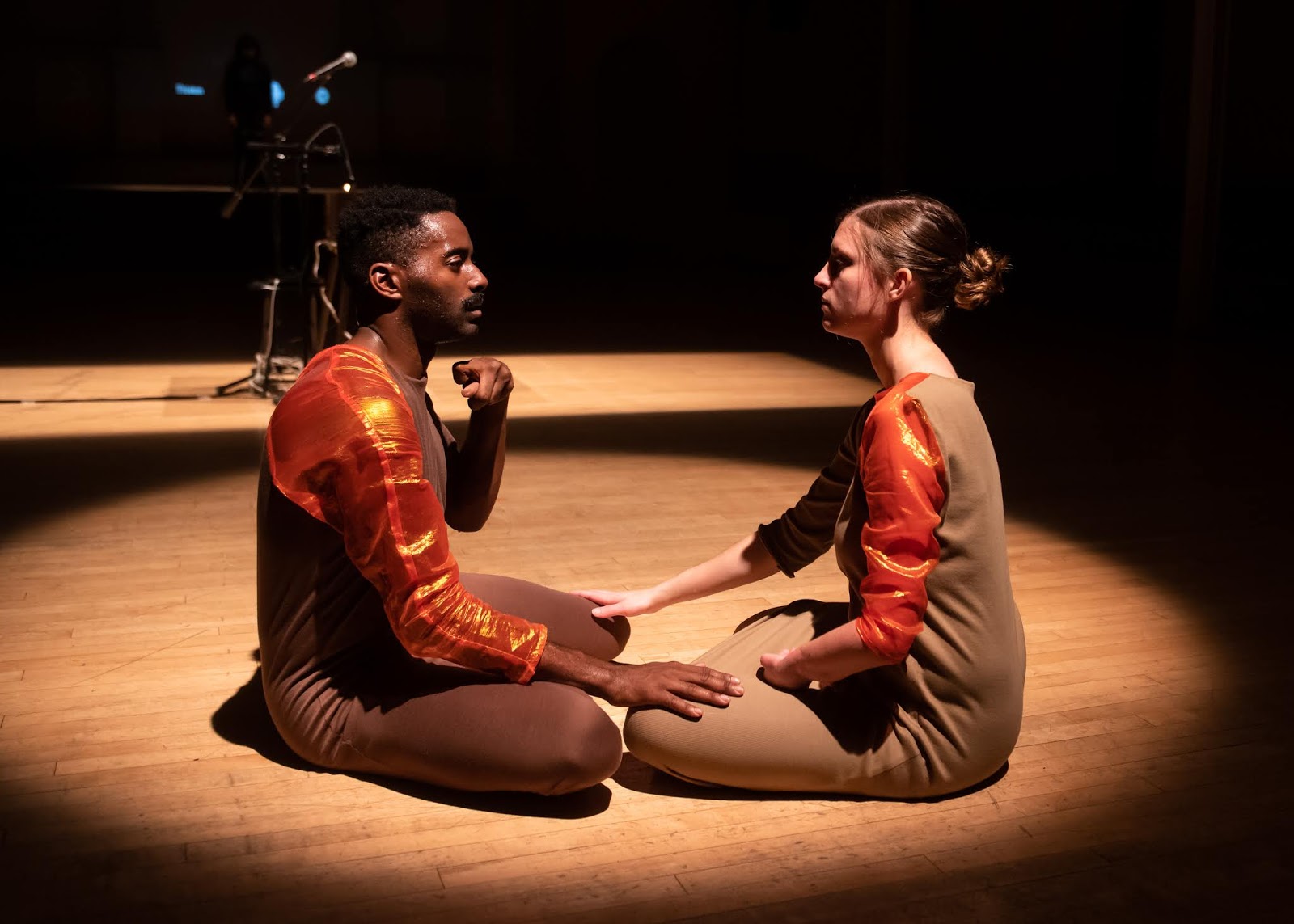 |
| Jerron Herman and Molly Joyce in Breaking and Entering at Danspace Project In deep background below: ASL Interpreter Kathleen D.Taylor (photos: Ian Douglas) |

Breaking and Entering
by Jerron Herman and Molly Joyce
at Danspace Project
November 12, 15-16
Breaking and Entering, a collaboration between two well-regarded disabled artists--Jerron Herman and Molly Joyce--creates an intriguing relationship among its players and with its audience. Early on, we're introduced to American Sign Language Interpreter Kathleen D. Taylor whose signing rings with a robust, dancer-ly flow.
Uh-oh, I thought at first sight of her hands in motion, knowing all too well my tendency to gaze long at ASL interpreters whose particular style draws me in. What if I look at Taylor and miss important things that Herman might be doing?
No chance of that, really, since Herman is not exactly someone you can miss. Moreover--and curiously--Taylor soon gets relegated to deep backdrop, removed to the upper reaches of St. Mark's Church's altar steps for the rest of the piece. Thinking back on that now, I realize that distancing, blurring any initial, vivid connection to Taylor, might be by complicating design.
The words accompanying the work's three movements--entitled "Compliance," "Defiance" and "Emergence"--suggest a negotiated relationship with others, perhaps with viewers, perhaps with parts of the performers' own bodies.
Herman, who bills himself as "an interdisciplinary artist, primarily working in dance," is a snazzy performer with hemiplegic cerebral palsy which has caused him to devise ways to work balance and propulsion differently. His energy in the space is wrenching, surprising and always thrilling. Composer/musician Joyce, disabled in an accident, often moves with Herman, sings high and sweet, and plays a vintage toy piano set up in the middle distance between far-off Taylor and the audience. Their textures are so different, they make me think of their performance space as a painting canvas generous enough to make room, at once, for the roughest impasto and a silky brush.
The evening ends in an invitation to the audience to join the artists on the floor and dance to a DJ's fifteen-minute set. Disability activist and scholar Kevin Gotkin dj'ed last evening; Michael Hammond and JIJI will do the honors on Friday and Saturday, respectively.
Text: Marco Grosse, Molly Joyce, Jerron Herman
Sound: Michael Hammon
Costumes: Gerald and Cynthia Herman
Breaking and Entering continues with performances this Friday, November 15, and Saturday, November 16, at 8pm. Besides ASL interpretation, audio description is also provide for each performance. Each concludes with a fifteen-minute dance party for the artists and audience. For information and tickets, click here.
Danspace Project
131 East 10th Street (and Second Avenue), Manhattan
DISCLAIMER: In addition to my work on InfiniteBody, I serve as Senior Curatorial Director of Gibney. The postings on this site are my own and do not necessarily reflect the views, strategies or opinions of Gibney.
******
Subscribe in a reader
Sunday, October 27, 2019
"THE DAY" arrives

 |
| Cellist Maya Beiser with Wendy Whelan performing The Day (photos: Hayim Heron, courtesy of Jacob's Pillow) |
THE DAY
In all honesty, when I hear that the events of September 11, 2001 inspired a piece of art, I note and then turn away from that detail, hoping for an alternative reason to connect. The excellence of THE DAY's principal collaborators--cellist Maya Beiser, dancer Wendy Whelan, choreographer Lucinda Childs and composer David Lang--drew me to The Joyce this week for this work's New York premiere. (I went, in particular, for Beiser, and please hurry to her site's video page and share my new obsession.) Thinking back now, I find myself drifting between certainty that THE DAY reflects a moment in our history and, at the very same time, wavering certainty about what my eyes and ears testified as I gazed from my seat in the audience. Thus, for me, it might be the perfect evocation of the experience of witnessing 9/11.
Performed without intermission, the interdisciplinary work consists of two parts--The Day and World To Come, named for music previously composed by Lang for Beiser--and contemplates the aftermath of a soul's separation from its body. The width and height of the Joyce stage, backed by Joshua Higgason's video projection, contribute to THE DAY's monumentality and hallucinatory depth of field and dreamy elusiveness.
In the opening part, Beiser and Whelan occupy separate, opposing territories--cellist and cello crowning a translucent incline; white-draped ballerina starting off artfully perched on a stool as if posing for a fashion shoot. Sara Brown's minimalist, abstract set--angled lines suggest subtle demarcation--works in tandem with the strength, and severity, that Childs' ideas bring out in Whelan's deft improvisations which, at times, evoke an iconic rendering of the architectural proportions of the human body. She creates, and exists within, pristine, divine abstractions.
Lang crafted the voiceover text for Part 1, Beiser writes in her program notes, out of numerous statements crowd-sourced from the Internet, each phrase completing his own phrase "I remember the day I...." Each statement is separated from the next by six seconds, giving the text a hypnotic rhythm, like a prayerful litany, and I found it fascinating to find that he had carefully alphabetized the statements.
I stopped speaking. I stumbled. I switched. I talked. I talked to myself sternly.
Each statement, taken out of context, could sound as if it captured a mundane moment in time. But, in fact, Lang intends each to mark a significant turning point in a person's life. Carefully strung on a silver thread of breath, each statement takes its moment to shimmer in light before giving way to the next. So, in a way, each is extraordinary but no one surpasses any other. Each stands in as a symbol of human consciousness, symbol of human experience--and, it is painful to remember, a single loss out of many.
Some of the sonic and visual atmospherics of THE DAY tease the audience while also being unsubtle--a long, muffled, engine-like roar; two white lengths of fabric suspended from the stage's fly space suddenly rippling to the floor; the video speeding bodies into spectral visitations blurred across an interior space; Whelan increasingly wrapped by shroud-like fabric as her body rolls down the incline.
But the music. Beiser's strong, exacting control of her instrument; the energies generated and invoked in her playing. This mastery at the core of THE DAY anchors everything, gives everything else here a reason for being.
Sound design: Dave Cook
******
DISCLAIMER: In addition to my work on InfiniteBody, I serve as Senior Curatorial Director of Gibney. The postings on this site are my own and do not necessarily reflect the views, strategies or opinions of Gibney.
******
Subscribe in a reader
Popular Posts
-
 Eva Yaa Asantewaa (photo: Axel Jenson) No One Can Teach You How to Write About Dance by Eva Yaa Asantewaa ...at least, not...
 -
Congo in Harlem 4 (October 12-21) is the fourth annual series of Congo-related films and events at the Maysles Cinema in New York’s h...
-
 Roland Lane (left), Alana Raquel Bowers (bottom center), Michael Oloyede (top center) and Tanyamaria (right). the main cast members of S...
 -
Are you a playwright of color with little or no production experience? A new weekly or bimonthly playwriting unit of 4-6 writers is formin...
-
 Dance artist Jazelynn Goudy (photo: Kenzo Matese) This black-and-white photo portrait shows dance artist Jazelynn Goudy, a Black woman wea...
 -
 Petra Kuppers (photo: Tamara Wade) Petra Kuppers, a white queer disabled cis woman of size with yellow glasses, shaved head, pink lipstick a...
 -
 Eva Yaa Asantewaa (photo: selfie) A smiling Black woman wearing headphones and a turtleneck sweater sits in front of a bookcase (partial vie...
 -
 Katrina Reid (photo: Kiya Marie Schnorr) The headshot of Katrina Reid, a dark-skinned Black woman with very short and very blonde hair, is o...
 -
 InfiniteBody Honor Roll 2024 Eva Yaa Asantewaa Cynthia Erivo, Ariana Grande, Wicked You know who this is. Kali Reis, True Detective...

