Search This Blog

Showing posts with label Writing on Dance. Show all posts

Tuesday, April 9, 2013

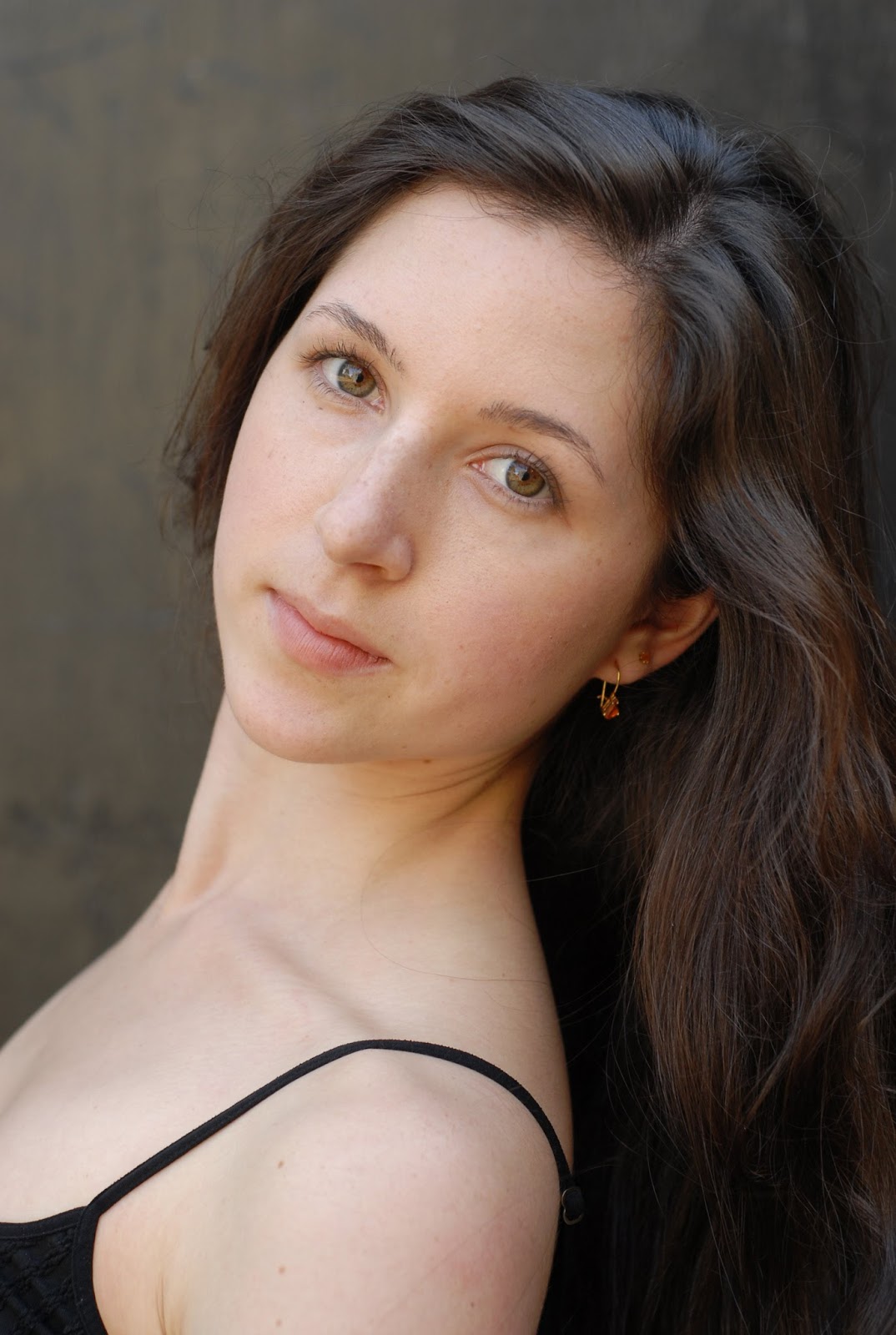
Where in the world is Eva Yaa Asantewaa?

Eva Yaa Asantewaa (photo by Deborah Feller)
Well, back home in New York City, for one thing!

But also look for me at...

This. Witness Relocation's Eterniday at La MaMa. Info/tickets here.

Bebe Miller Company: A History--co-presented by 651 Arts and New York Live Arts at Brooklyn's Kumble Theater for the Performing Arts at LIU. I'll be moderating a "Stay Late" post-performance sit-down with Bebe and collaborators this Friday, April 12. For program and ticket information, click here and here.

I hope to attend Deirdre Towers' film screening and salute to the producers, artists and educators of the US flamenco community. Monday, April 15, 6pm, at Bruno Walter Auditorium, New York Public Library for the Performing Arts. ​For information on this free event and the library's exhibit, 100 Years of Flamenco in New York, click here.

My project-driven Writing on Dance 2013 takes off at New York Live Arts next Wednesday afternoon with a full house of new students. Also, I'll pretty much be living at New York Live Arts on Wednesday for the opening of that visionary series, Live Ideas: The Worlds of Oliver Sacks ("A five-day festival of arts and ideas exploring the mind-body connection through the works of the acclaimed neurologist"). My first WOD session will be sandwiched between the panel on "Disembodiedness: Body Image & Proprioperception" and the evening keynote with two of my heroes--Dr. Sacks and Bill T. Jones. And the following day, I cannot afford to miss "Minding the Dancing Body" with Jones, Miguel Gutierrez, Colin McGinn, Alva Noë and Gwen Welliver, followed by the performance of RE: Awakenings by Donna Uchizono Company. While that's probably all I'll get to, that's not all that's happening. For details on the full series of special events here.

Speaking of Writing on Dance: Last year, I was delighted to have the accomplished, Argentinian dance artist and educator Anabella Lenzu in my workshop, and she will be returning for this year's series. Anabella has just self-published a book about her life and career--Unveiling Motion and Emotion--which includes her forthright thoughts on dance education, dance community and more (as well as some striking photography by her husband, Todd Carroll). So, you'll also find me dipping into this, now and then. Presented in English and in Spanish, her writing is just like her: warm and sincere with an underlying tenacity born of a drive to become the best she can be, as artist and as communicator, in the service of dance and dancers. For information on her book, click here.

I look forward to Miami-based choreographer Rosie Herrera's New York premiere of Dining Alone at Baryshnikov Arts Center (a surreal work of "immersive dance theater," somehow involving food and an opera singer...hmmm). It's running April 18-19, and a new show has been added. Find out more here.

My Image and Psyche workshops on Tarot and psychic development continue at our wonderful East Village location. On Saturday, April 27 (Image and Psyche, Part 2), we'll experiment with dynamic layouts and the intriguingly varied, Trickster-ish reversed cards. On Saturday, May 4, I plan to repeat Part 1. For complete information and to register for a place in these fun and enlightening workshops, see my listings on Facebook for April 27 and May 4.

On May 21, artists Larissa Velez-Jackson, iele paloumpis, Katy Pyle and others at Lobby Talks (New York Live Arts--in the lobby, natch) for "Identity Matters: Persona and Politics," curated by Marissa L. Perel ("Choreographers, directors, and critics discuss contemporary issues in identity politics, and how these issues shape perceptions of persona and embodiment.") Free. Just show up for the 7:30 start time and grab a chair.

Oh, there's bound to be more. But--whew!--that's enough news for now. See you around town!

Thursday, March 7, 2013

Students selected for "Writing on Dance 2013"

Large View

The application period for my upcoming, eight-week Writing on Dance workshop series at New York Live Arts has officially closed. Thanks to everyone who applied this year!

I could not be more delighted to accept a group of eleven super-talented, accomplished students from diverse backgrounds. We're going to have lots of fun sharing what we know, what we love and, I believe, making great strides in the effort to document and represent this art through in-depth profiles of many of its remarkable performers.

If you did not get in on Writing on Dance this time, please keep watch for future opportunities to get involved with our work!

Monday, June 25, 2012

New York Live Arts writing students' projects

Ashley Thursby
Melissa West
(Photo: Anjola Toro)
Anabella Lenzu
Sofia Strempek
(Weiferd Watts Photography)

New York Live Arts students 
from my Spring 2012 Writing on Dance series
present their final projects

This season of Writing on Dance, I challenged a group of nine students--all women, all dance or performance artists--to explore questions and experiments designed to complicate, expand and enrich the way they engage with and write about the art of dance. How do we come to know a dance, connect with its ideas and energy and turn on energy in our own writing? How can we allow dance to discover us as we watch it? How can we worry less about form and formality in our writing and simply start anywhere that feels intriguing, delicious and powerful? How can we identify--and defy--the barriers to freedom in our writing? How do we, as writers, curate experience for our readers and open the multi-verse of dance to their enjoyment?

These questions have no set answers, but they launch individual and rewarding journeys.
It was the age of questions, not knowing what you wanted, knowing what you didn't want. -- Agnès Varda (Les plages d'Agnès)
For this teacher, the eight-week series proved to be an exercise in flying without a net--focusing less on dance writing as formal arts journalism; sharing some strategies I use in teaching intuitive development and working with Tarot and sacred symbolism. The students were encouraged to take these mind games and materials wherever their experiences led them and, with the group's gentle support, analyze their own results. For these talented and accomplished women, the program provided community as they followed their own curiosity and questions to the next challenge and the next and the next. Now that they have a stronger sense of the "more" that awaits them as writers, I'm confident that you'll want to keep up with their developing work.
EmmaGrace Skove-Epes
Kate Ladenheim
Philippa Crowne


Jessica Parks
Katrina De Wees


Big thanks, as always, to the folks at New York Live Arts--especially Ben Kimitch, who coordinates Writing on Dance--for extraordinary enthusiasm and support.

Please follow the links provided below to the writers' individual blogs or cloud sites to learn more about them and read their final Writing on Dance projects.

*****

People walking in the same direction
by Anabella Lenzu

A Latina /European choreographer exploring the New York City dance scene

Dance for your ego. Is dance inclusive or exclusive? I hear myself -and other choreographers- say they want their work to be accessible to the audience, but in reality the material that we put forth is just for an elite sector of the audience. There is a thin line between what you want to create and what you want to offer to the people. The words "service in dance" is in decay.
Read more.

Originally from Argentina, Anabella Lenzu is a dancer, choreographer and teacher with over 20 years experience working in Argentina, Chile, Italy and the USA.  Lenzu draws on her diverse background to create thought-provoking and socially-conscious dance-theatre in the interest of improving our human condition. She is also a published author for various dance and arts magazines. http://www.AnabellaLenzu.com

Dear Arts—Deal with it…
by Ashley Thursby

Louisville, Kentucky has a strong arts scene, but for how much longer? After the Mayor’s recent budget proposal cutting the Louisville Ballet by 80%, the board members are faced with another roadblock. Having ended the fiscal year in the black for the first time in years, the ballet company felt on track, yet doing everything right has not paid off for this arts organization. Read more.

My name is Ashley, artist, dance teacher, writer, Pilates instructor; the usual combo-career of sorts that allows me to do what I love 30 weeks out of the year—ballet. Although blogging is new to me, I intend for it to be an outlet for my voice as an artist. I consider myself a living, breathing advocate for the sustainability of arts both in general and for my current home in Louisville, Kentucky. http://ashleythursby.wordpress.com

by Kate Ladenheim

A response to Lightsey Darst's The Poorest Art: Dance and Money (The Huffington Post, June 1 and June 4, 2012). Read more. 

Kate Ladenheim is a freelance dancer and the artistic director and choreographer for her dance company The People Movers. Kate also writes a personal blog and teaches yoga. http://kateladenheim.com/

yvonne rainer at dia:beacon
by Melissa West

yvonne rainer at dia:beacon is a brief textual analysis of Ms. Rainer's recent concert at Dia:Beacon. Melissa West closely interprets the work as it was performed and discusses Rainer's work in the larger context of performance and media studies. Read more.

Melissa West is an independent mover/choreographer/poet and hooper based in Staten Island, NY. She is a recipient of the 2012 Premier and Excellence in the Arts grants from the Council for Arts and Humanities on Staten Island.

An Easy Bloom
by Philippa Crowne

An investigation of John Jasperse's re-staging and re-thinking of his 2001 piece, Fort Blossom revisited.
Read more.

Philippa Crowne
started writing about dance in high school in the HighFive Trac class at Dance Theater Workshop with Brian McCormick. Under the direction of Leah Cox and Maria Simspon, she recently completed her senior thesis at Bard College on the legacies and repertoire of Merce Cunningham and José Limón. Philippa continues to write and see dance in New York City.

Moving Portraits
by Sofia Strempek

Company Stephanie Batten Bland’s recent performance at the Baryshnikov Arts Center was a voluptuous, visually compelling showcase of two of her works, Terra Firma and A Place of Sun. Read more.

Sofia Strempek graduated from the University of Utah about a month ago with a BFA in modern dance and a minor in English Literature. Her work has been published in the dance journal/blog loveDANCEmore and in the Daily Utah Chronicle. All of Sofia’s writing and graphic design can be found at informalfloor.blogspot.com.

Uptown, downtown...another town
by Jessica Parks

Uptown, downtown...another town is a descriptive commentary piece about Gallim Dance's recent performance of Sit, Kneel, Stand at the Joyce Theater. Parks uses colorful language that stimulates the imagination and provides the reader with verbal imagery of the work. Read more.

Jessica Parks is a New York City based dance artist working in the realms of choreography, dance writing, teaching and performance. She is co-artistic director of The Umbrella Co., author of the blog So She Danced and a member of Urban Dance Collective and Heather N. Seagraves and Dancers. Through her work Jessica hopes to share dance with as many people as possible and inspire and continue to be inspired by those around her.

A Conversation with Larissa Velez-Jackson
by EmmaGrace Skove-Epes

A Conversation with Larissa Velez-Jackson is an excerpt of a transcribed conversation I had with multimedia dance and performance artist Larissa Velez-Jackson, after being introduced to her work through her piece Star Crap in Progress (the solo). In the conversation, Larissa and I discuss audiences and our expectations of them, feminism, dragging, queer art, affect, and performance. Read more. 

EmmaGrace Skove-Epes is a Brooklyn-born choreographer, dancer, and sometimes singer. She currently dances for choreographers Jesse Phillips-Fein, Dana Salisbury, and Nadia Tykulsker/Spark(edIt) Arts. Her own choreography has been shown at HERE Arts Center, Judson Memorial Church, the Paradise Theater, Spoke the Hub’s Gowanus Arts building, and Triskelion Arts.

TRANSPORT MY MIND THROUGH TIME, THROUGH IDEAS, THROUGH SHAPE, SIZE, RHYME: a response in three parts
by Katrina De Wees

On Thursday May 17th I attended A Matter of Practice, curated by Lydia Bell a recent graduate of the Institute for Curatorial Practice in Performance. The evening was a part of Food for Thought at Danspace Project, a benefit series supporting the St. Marks Church food program. The exchange was glorious, emerging curators, food for the hungry and live performance! Read more.

Katrina De Wees is a multimedia performance artist, educator and emerging curator based in Brooklyn, NY. She currently works as a museum educator and arts administrator at the Studio Museum in Harlem. Her dance inspired, and art reflective writings may be viewed at www.leftovermakeup.com.

Sunday, March 11, 2012

Deadline reminder: "Writing on Dance" workshops

[photo (c)Deborah Feller]
Once again, I'm delighted to be facilitating the Writing on Dance workshop series at New York Live Arts. We'll be meeting this Spring on eight Wednesdays, from May 2 through June 20, 5-7pm.

This season, I hope to welcome not only prospective professional dance writers but also anyone who might enjoy playing with creative approaches to getting closer to dance, understanding and enjoying it more. This workshop welcomes anyone open to disrupting habits of perception, thought and written response.

Please check out all the details and application directions (deadline: March 26, 5pm EST) on NYLA's workshop page here.

Kindly link to this announcement and help me spread the word.

I'm looking forward to exploring dance with you!

Friday, February 17, 2012

Once again, Writing on Dance at NYLA!

Once again, I'm delighted to be facilitating the Writing on Dance workshop series at New York Live Arts. We'll be meeting this Spring on eight Wednesdays, from May 2 through June 20, 5-7pm.

This season, I hope to welcome not only prospective professional dance writers but also anyone who might enjoy playing with creative approaches to getting closer to dance, understanding and enjoying it more. This workshop welcomes anyone open to disrupting habits of perception, thought and written response.

Please check out all the details and application directions (deadline: March 26, 5pm EST) on NYLA's workshop page here.

I'm looking forward to exploring dance with you!

Wednesday, June 8, 2011

danceINTUIT blog launches!

Yesterday, I told you about a new quarterly, The Dance JOT, launched by students from my Dance Theater Workshop/New York Live Arts' Writing on Dance series as one of their final projects. They have also created a fresh new dance blog, and I'm delighted to announce that danceINTUIT is live! Go visit, subscribe, enjoy!

Tuesday, June 7, 2011

The Dance JOT debuts!

I'm thrilled and proud to announce the publication of The Dance JOT, a new quarterly journal created by students from my Spring 2011 Writing on Dance workshop at Dance Theater Workshop (New York Live Arts). As a final project for the course, the participants formed a collective to create The Dance JOT as a venue "for investigating and discussing the art form of dance as well as reflecting on the unique challenge of capturing dance in words."

Click to view the full digital publication online
Read The Dance JOT
Digital Publishing with YUDU

Check it out free online at YUDU (click here). And please consider making a donation to DTW's scholarship fund to help make future Writing on Dance workshops accessible to more students. To donate, visit this link. Thank you!

Saturday, March 5, 2011

Reminder: DTW Writing on Dance application deadline

Here's a quick reminder that the deadline for applying for my Writing on Dance series at Dance Theater Workshop is Friday, March 18! Details below.

photo by Deborah Feller

I'm honored to be facilitating a new session of Writing on Dance (Spring 2011) for Dance Theater Workshop, beginning March 30!

This series will be an informal, supportive lab for discovery of your self as writer; for lively engagement with art; for celebration of your unique voice and creative response.

We share this lab with others who are also questioning: Why do I write? Who am I as perceiver and witness of art? How do I relate and respond to dance? Why write about dance? What is my role? Who is my reader? What is the larger context in which art is made, presented, experienced and interpreted for the public? How can I, as writer, make something new, meaningful and useful in this time of disruption and transition?

Please note: Although I will encourage participants to attend, contemplate and write about dance performances during this course, our work will not focus on the nuts and bolts of dance criticism or dance journalism, and our group need not be limited to students who wish to pursue a professional career in dance criticism.

APPLICATION DEADLINE: March 18

For Writing on Dance's complete schedule and application details, please click here.

Tuesday, February 22, 2011

Apply now for DTW's new "Writing on Dance"

I'm honored to be facilitating a new session of Writing on Dance (Spring 2011) for Dance Theater Workshop, beginning March 30!

This series will be an informal, supportive lab for discovery of your self as writer; for lively engagement with art; for celebration of your unique voice and creative response.

We share this lab with others who are also questioning: Why do I write? Who am I as perceiver and witness of art? How do I relate and respond to dance? Why write about dance? What is my role? Who is my reader? What is the larger context in which art is made, presented, experienced and interpreted for the public? How can I, as writer, make something new, meaningful and useful in this time of disruption and transition?

Please note: Although I will encourage participants to attend, contemplate and write about dance performances during this course, our work will not focus on the nuts and bolts of dance criticism or dance journalism, and our group need not be limited to students who wish to pursue a professional career in dance criticism.

APPLICATION DEADLINE: March 11

For Writing on Dance's complete schedule and application details, please click here.

Sunday, January 13, 2008

The Drag is Dancing

Editor's Note: Ennis Smith is another talented writer from my Spring '07 Writing on Dance group at Dance Theater Workshop, and I'm very pleased that he sent me the following review of a performance we attended together back last October. This piece has been published in the January 2008 issue of Attitude: The Dancer's Magazine, and you'll find more of Ennis's excellent writing there. (Click here to discover more about Attitude!) You can enjoy Ennis's blogging at Smokin' Room and Botticelli Black Boy.

********************************************

The Drag is Dancing

by Ennis Smith
Attitude: The Dancer's Magazine, January 2008


The East is Red
by The Legendary House of Ninja
at Dance Theater Workshop, New York, October 4-5, 2007

Concept - Benny Ninja
Written - Paris Ninja
Stage Direction - Paris Ninja
Videography/Graphics – Angel eyes Ninja
Music – Chip-Chop Ninja
Choreography – Benny Ninja and The House of Ninja
Props – George
Costumes – House of Ninja
Voice Over - Archie Ninja, Eileen Ninja, Benny Ninja, Paris Ninja
Stage Assistant – Mikey Ninja

It made perfect sense to shante, not walk, to your seat at the first performance of the Legendary House of Ninja’s The East is Red, a presentation of Dance Theater Workshop’s Studio Series on November 5, 2007; to a sinuous techno throb, one young patron earned cheers from the audience when she threw a few voguing moves in the direction of her friends. DTW asked us to check our shoes at the door, a move designed to preserve the floor but one that always loosens one’s reserve (and summons the trauma of countless high school sock-hops). Here, one’s stocking feet created another conduit for the beat as the bass coursed from our toes to our expectant hearts.

Welcome to the drag ball by way of Chelsea, where the ghosts of our youth weren’t the only ones being conjured. As the multi-generational audience leaned against the studio-length barre or seated themselves, some cross-legged on the floor, I wondered if they pondered a tradition reaching back to the 1920s: across the country, in spaces clandestine (basement bars) and mundane (convention centers and Shriner’s halls, ironically, under the protection of local law enforcement) gay men and women dolled up like Vegas Cinderellas or in traditional formal attire, found a haven where they could be their out-and-proud selves as they danced and swayed until dawn’s early hours. After the ball the assemblage of bank presidents, milkmen and secretaries returned to closeted American lives where fear of exposure, blackmail and ostracism tempered the previous night’s high spirits like bills in the mail.

Cut to the hyper-glitzed 1980s, and a drag ball culture populated almost exclusively by ethnic gay males who helped usher a dance craze as galvanic as the twist. Voguing, a semaphoric explosion of dance culled from street acrobatics and fashion runways, proved the perfect metaphor for a Reagan-era Me-Decade brimming with aspiration, glamour and conspicuous consumption. Those of us just off the bus at Port Authority could get a healthy dose of live fabulousness a few blocks north at grottos like Sally’s Hideaway on 43rd Street, Washington Square Park, the West Village piers or a plethora of drag venues stretching up to Harlem, a phenomenon that reached its apotheosis with the release of Jenny Livingston’s 1987 documentary Paris is Burning, and the popularity of a little ditty called “Vogue” by you-know-who.

Dance still fuels the houses, but more altruistic goals (mentoring of young gays, STD prevention and transgender awareness) occupy equal prominence as they strive to endure. The East is Red opened with a tribute to the late Willie Ninja, the star dancer whose appearances in music videos (Malcolm McLaren’s “Deep in Vogue”), and with major dance companies (Karole Armitage, Doug Elkins and David Neuman, among others) helped catapult the vogue into a larger arena; such evocations tap into the emotional history of queerness, since the vogue’s ascendance paralleled an era shrouded by the deaths of many from AIDS.

A whisk of red curtains transported us to the Orient and a procession of young geishas whose unison dance oozed with placid submission that turned out to be a ruse; with the words, “now bring it,” Isis Ninja (in a role suggesting the knowing court eunuch) prompted each to spread the largesse of their special gifts, a command the young women embraced by treating the audience to dazzling displays of the vogue’s many modes—runway, breakdancing and freestyle.

When the men, or sensei, entered, the plot thickened: in this court, the only way to squelch rogue factions intent on overthrowing this fictitious House of Ninja was through battle. In an artfully comic sequence that was one part Peking Opera, nine parts cheesy Kung Fu western, dancers paired off for a series of duels, some making real-time body contact in traditional martial arts fashion, while others assayed a slow motion style loaded with subtler physical attacks. Here, a look loaded with “shade” (meant to convey insult through indifference) did as much damage as a chop to the jaw; a deftly pointed foot or lightning whip of the head showed the enemy who the real men were with style and attitude.

The work’s potential was apparent. The tropes found in Asian theater have natural counterparts in house movement (butch/femme equals samurai/geisha), and the notion of one ethnic group taking on the cultural traits of another is an intriguing one. When it worked, the payoffs were golden: a giant red dragon pulsed through the proceedings, and the use of prerecorded dialogue recreated the off-kilter sensation of watching a Bruce Lee movie riddled with bad dubbing. When it didn’t (at the beginning, the quartet of dancing women lacked the necessary precision, though that could have been opening night nerves), the Asian trappings felt tacked on despite the late Ninja’s citing the Far East as his initial inspiration. Underneath the yards of silk and brocade beat hearts struggling to shake their big city roots, and why should they? This homemade art form has a vitality all its own; such dance doesn’t need a makeover to loan it legitimacy.

Still, glints of what a deeper exploration of multi-ethnic identity might yield could be seen in some of the performances. Current house head Benny Ninja is a slithery snake reincarnated as a dancer, with shoulder isolations that reminded me of that great bit of dialogue from Fred Astaire’s The Bandwagon: “She came at me in sections.” Whether pouring himself across the floor or disseminating wonderful business with a freakishly long Fu Manchu moustache, this performer embodied an eerie otherness that taunted and amused. Playing a pair of precocious twins, Pito and Javier Ninja (by now you’ve noted all members of the house share the same surname) made a spectacular late impression with fluid splits, extensions and fingers so well articulated they could be spied a city block away—all to the accompaniment of Chip Chop Ninja’s hysterical remix of Peggy Lee’s “We are Siamese” from Disney’s The Lady and the Tramp.

DTW is to be commended for its help in developing this work. But the studio’s fluorescent lights and pristine floors felt anathema to that which cried out for a touch of slightly soiled inscrutability. Keeping up with the times is tricky business, but as The Legendary House of Ninja searches for ways to propel drag ball culture and the idiosyncratic dance that springs from it to new heights, it mustn’t forget all the previous eras from which the tradition sprang. As The East is Red develops, let’s hope it draws from more of its resonant all-American history, one that might perfume the air like stolen kisses in the dark.

(c)2007, Ennis Smith

Ennis Smith is a MFA graduate of The New School. His work there won him a National Arts Club’s Literary Scholarship in Nonfiction. He earned his BA at Empire State College, where he was the recipient of a Richard Porter Leach Fellowship. His nonfiction piece, "The Man with the Toy Face," was published on the website Mr. Beller’s Neighborhood; his memoir piece, "The Rapunzel Effect," was recognized as an outstanding work of nonfiction by In Our Own Write. Other published work: dance criticism in Attitude: The Dancer’s Magazine.

As an actor, Ennis has appeared at the Cincinnati Playhouse in the Park, Kennedy Center, The Great Lakes Shakespeare Festival and the New Jersey Shakespeare Festival, in plays ranging from Arthur Miller to Shakespeare to Fats Waller. Through his work in cabaret and pop music, he’s played engagements at Joe’s Pub, Fez, Danny’s Skylight Room, Cornelia Street Café, The Triad, Odette’s in New Hope, PA and New York’s Town Hall at the Sixth and Seventh Annual Cabaret Conventions.

For his volunteer work with Lifebeat’s Hearts and Voices (Musicians Against AIDS) in 2000, Ennis was the featured subject on PBS's In The Life.

Saturday, December 1, 2007

This Woman's Work: Ellis Wood by Tara O'Con

Editor's Note: Besides being an accomplished performer, Tara O'Con is a talented young writer who participated in my first Writing on Dance group this spring at Dance Theater Workshop. She contributes this piece, an appreciation of dancer-choreographer Ellis Wood.


(Ellis Wood, leading her company in Flat Affect,
Dance New Amsterdam, April 2007. Photo: Steven Schreiber)


This Woman’s Work:
Reflections on a conversation with Ellis Wood, Artistic Director of Ellis Wood Dance

By Tara O’Con

To inhabit the world that Ellis Wood creates through dance is to experience the complexities of life--its struggles, confrontations and celebrations, governed only by the senses. The porous line between pleasure and pain, sexy and grotesque, tenderness and violence, is blurred; pushed just beyond the reaches of cognition. This world is navigable only by one’s gut and piloted by the body. According to Wood, this is her work at its most pure and desired state. Like a drug, to move in such an honest, primal and unabashed way is a high. For herself, and for her dancers, communicating from within this hyper-real, hyper-physical ecosystem allows them to get euphorically close to their true selves. For audience members, should they choose to accept the invitation, a profound visceral experience awaits.

Visually, that which informs Wood’s creations is articulated by riding the fine line between control and freedom in movement. Wood however, is quick to explain that her goal is not to blindly explode and express. This may have been the case years ago, when at 3AM, she would find herself dancing around her apartment alone to crazy music in order to satiate the bubbling urge for uninhibited raw self-expression. Now, twelve years into directing her accomplished dance company--she is a 2007 recipient of the coveted BUILD grant, awarded to dance companies by the New York Foundation for the Arts for infrastructure development--that same potent creative expression is honed by a constant self-awareness session comprised of three artistic goals: take personal risks, stay true to herself and examine the way each work is crafted in order to best serve the clear articulation of her ideas. Each goal comes with its own set of struggles, confrontations and celebrations--the criteria of which have been, and will continue to, change over time. For instance, what was once a personal risk at age 30 is no longer a risk at age 42. Such is life. Consequently, such is the mirror through which this woman’s work is reflected.

The need for assessment and re-assessment of these goals comes head to head with the id of creative expression--a scenario Wood likens to a never-ending drama that occupies every part of life and synonymously, ever part of dance. Why put does she put herself through this daily grind? (Feel free to stop here and re-read the first paragraph to this article.) The pure exhilaration and endless possibilities sparked by sheer physical intensity serves as both bedrock for ultimate personal truth, and the enticement to keep going. As Wood puts it, “the body drives the work.” From a director’s standpoint, when Wood is on the outside looking at her work and feels what is happening is not genuine, she will step in, next to her dancers, and live in it for herself until it gets it to that raw place.

Everyone has their element--something that they can live in and, for that moment, feel completely at home with themselves; their infectious energy in some way touching everyone around them. For some people it could be finance, cooking, teaching, etc. For Ellis Wood, it's dance.

(c) Tara O'Con, 2007

Wednesday, November 7, 2007

More DTW blogging

Richert Schnorr--a dancer, filmmaker and another one of my talented DTW Writing on Dance graduates--has posted his final project on DTW's new blog: interview with choreographer Neil Greenberg.

Wednesday, August 1, 2007

Kids take on the greats

[Editor's Note: In addition to being a dancer and choreographer, Tara O'Con is a graduate of my Spring 2007 Writing on Dance course at Dance Theater Workshop. Here's a snippet of her feature piece about Kids Company, a project of Diane Jacobowitz's Dancewave, just published in the Brooklyn Eagle. Click here for the complete article.]

from "A Modern Dance Tree Grows in Brooklyn" by Tara O'Con

Make no mistake, the terrain of the teenage years is nothing short of a battlefield. However, if adolescence is such a battle, then time spent with Dancewave’s Kids Company can be thought of as a cease-fire. Quite simply, when ambitious and talented teenage dancers, ages 12-18, are put into a room with a renowned professional dance artist, a transformation happens.

Tuesday, July 17, 2007

Writing on Dance deadline extended

Please note new application deadline: Monday, July 23
----------------------------------------------------------

Writing on Dance
with Eva Yaa Asantewaa
Tuesdays, 5:30pm - 7:30pm, September 4 – October 9
at Dance Theater Workshop

By application only
Fee: $110 Dance Theater Workshop members / $130 non-members

Description: As a participant in this writing salon guided by Eva Yaa Asantewaa, of the InfiniteBody dance blog, you will share supportive space for deepening your engagement with dance and performance. You will discover ways to enhance your perception, receptivity and empathy so that your dialogue with the art witnessed will become in itself a gift of art. While developing confidence in your ability to describe and evaluate what you have seen, you will also find the courage to redefine writing about dance and performance as a personal act of human response with room for questioning, passion, humor, anger, wisdom and transformation. All are welcome, experienced and prospective arts journalists as well as anyone interested in exploring the power of dance and writing.

To apply, submit a one-page letter (350 word maximum) via email to Richert Schnorr (richert@dtw.org) by July 23, 2007 detailing why you want to take this course. Please place the letter in the body of the email and include all of your contact information.

Monday, June 25, 2007

New fall series for DTW's "Writing on Dance" course

Writing on Dance
with Eva Yaa Asantewaa
Tuesdays, 5:30pm - 7:30pm, September 4 – October 9
at Dance Theater Workshop

By application only
Fee: $110 Dance Theater Workshop members / $130 non-members

Description: As a participant in this writing salon guided by Eva Yaa Asantewaa, of the InfiniteBody dance blog, you will share supportive space for deepening your engagement with dance and performance. You will discover ways to enhance your perception, receptivity and empathy so that your dialogue with the art witnessed will become in itself a gift of art. While developing confidence in your ability to describe and evaluate what you have seen, you will also find the courage to redefine writing about dance and performance as a personal act of human response with room for questioning, passion, humor, anger, wisdom and transformation. All are welcome, experienced and prospective arts journalists as well as anyone interested in exploring the power of dance and writing.

To apply, submit a one-page letter (350 word maximum) via email to Richert Schnorr (richert@dtw.org) by July 16, 2007 detailing why you want to take this course. Please place the letter in the body of the email and include all of your contact information.

Copyright notice

Copyright © 2007-2023 Eva Yaa Asantewaa
All Rights Reserved

Popular Posts

Labels