Search This Blog

Showing posts with label Christopher Williams. Show all posts

Tuesday, March 31, 2020

Artists Reach Out: Christopher Williams

Dear friends,

Welcome to Artists Reach Out: reflections in a time of isolation. I dreamed this series of interviews out of grief for my work both as a documenting arts writer and curator of live performance. In this time of social distancing, we are called to responsibly do all we can to safeguard ourselves and our neighbors. It is, literally, a matter of life and death.

But there's no distancing around what we still can share with one another--our experiences, thoughts, wisdom, humor, hearts and spirit. In some ways, there are more opportunities to do so as we pull back from everyday busyness out in the world and have time to honor the call of our inner lives.

So, let me introduce you to some artists I find interesting. I'm glad they're part of our beautiful community, and I'm eager to engage with them again (or for the first time) in years to come.

--Eva Yaa AsantewaaInfiniteBody


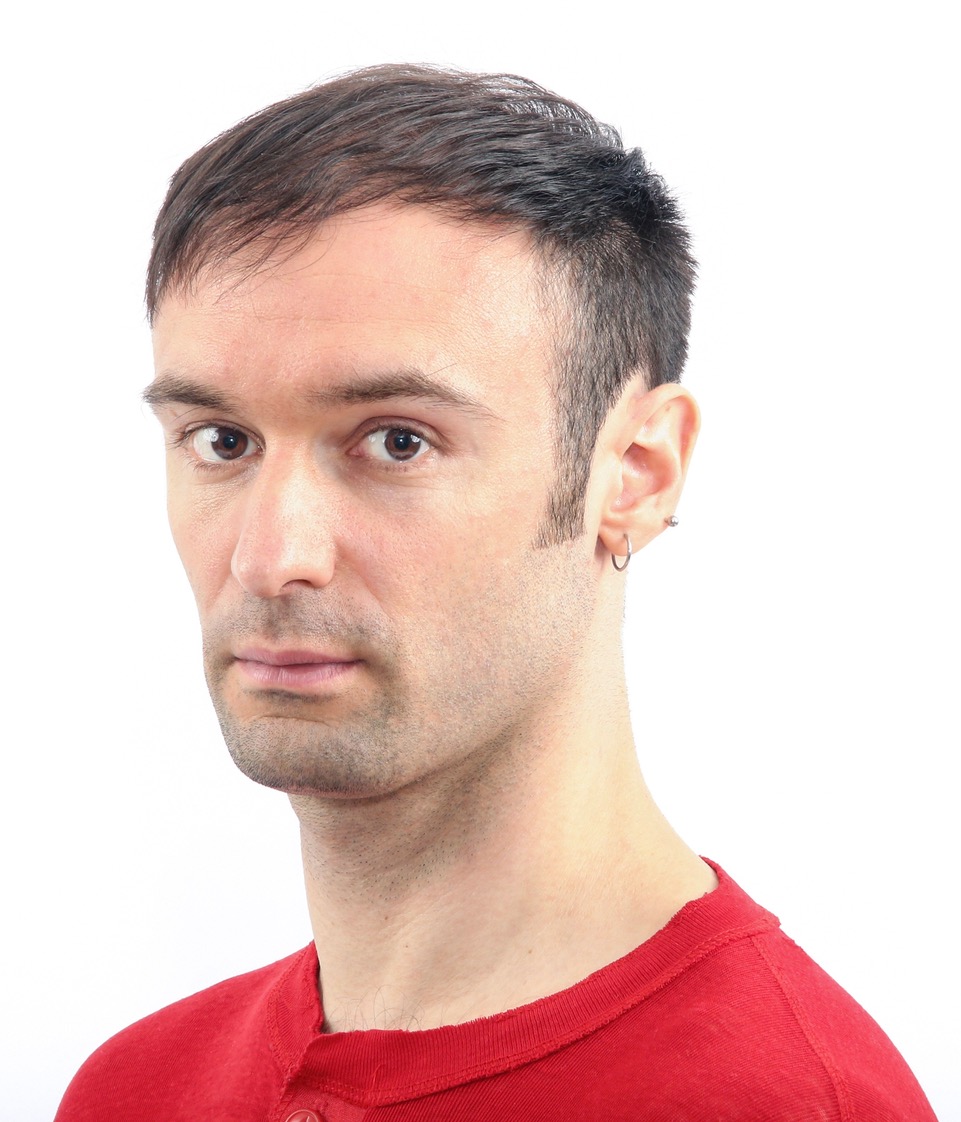
Christopher Williams

Christopher Williams
(photo: Andrew Jordan)

Christopher Williams is a critically-acclaimed choreographer, dancer, and puppet artist working in New York City and abroad since 1999. His works have been presented internationally in France, England, Italy, Colombia, Holland, Spain, Malawi, and Russia as well as nationally at in Philadelphia, Pittsburgh, Los Angeles, and at Jacob’s Pillow, and in local venues including Lincoln Center, City Center, Dance Theater Workshop, Danspace Project, PS 122, La Mama, and the 92nd Street Y. His commissioners include The Joyce Theater, New York Live Arts, Danspace Project, Opéra National de Bordeaux, English National Opera, Perm Opera & Ballet Theater, Interlochen Center for the Arts, NYU’s Tisch School of the Arts, Princeton University, Philadelphia Dance Projects, Dickinson College, and HERE Arts Center’s Dream Music Puppetry Program. His awards include a 2005 New York Dance & Performance “Bessie” Award and fellowships from The Foundation for Contemporary Arts, the New York Foundation for the Arts, the Center for Ballet and the Arts, and Bogliasco Foundation. He has also been awarded residencies via Harvard University’s Center for Hellenic Studies, the Robert Rauschenberg Foundation, Robert Wilson's Watermill Center, The Liguria Study Center for Arts & Humanities, Bethany Arts Community, the Anderson Center, Movement Research, Kaatsbaan International Dance Center, Bates Dance Festival, Djerassi, Yaddo, The Yard, and the Tyrone Guthrie Center in Ireland. He holds degrees from Sarah Lawrence College and the École Internationale de Théâtre Jacques Lecoq, and has performed for Douglas Dunn, Tere O’Connor, Rebecca Lazier, Yoshiko Chuma, John Kelly, and Basil Twist, among others. http://www.christopherwilliamsdance.org


Three werewolf cubs in Wolf-in-Skins,
a dance-opera co-created by Christopher Williams
composer Gregory Spears and visual designer Andrew Jordan
(photo: Andrew Jordan)


Do you have a current or planned project whose progress is affected by the pandemic?

Indeed. 2020 was to be an unprecedented “two-show” year for me with commissions from both The Joyce Theater for their Pride Festival at the end of June and from New York Live Arts (where I am currently--and now in theory--a Live Feed Resident Artist). A dream and recent project of mine has been to re-imagine a series of celebrated works from the Ballets Russes era in my own queer choreographic idiom. As part of my preparations to present New York premières of my all-male versions of The Afternoon of a Faun and Les Sylphides at the Joyce, I managed to squeeze in an initial rehearsal intensive with New York City Ballet principal dancer Taylor Stanley, Corps de Ballet member Davide Riccardo, and an outstanding group of contemporary dancers (Brandon Collwes, Charles Gowin, Casey Hess, Justin Lynch, Alexander Olivieri, Logan Pedon, Mac Twining, and Carlo Antonio Villanueva) just before the necessity to isolate became apparent. It remains to be seen whether or not the shows will happen, and I am grappling with how to prepare for them if they do.

Briefly, tell me about how you got involved in the arts and in your particular practice.

As a “noticeably artistic” boy who loved all things magical and mythological, I couldn’t simply draw a unicorn, or sculpt the Pegasus in plasticine, for example. I had to get up snort, stomp, and prance around the house, don faux wings, toss my imaginary mane, and leap off the couch in an effort to embody the mystical essence of such untouchable beings.

My exasperated parents tried putting me in gymnastics. After seeing my neighbor’s local ballet recital (in which I saw dance for the first time as a form of supernatural transformation) I decided that I wanted to be her.

I started classes. I stopped because I was teased by peers. I later found and threw myself into theater in high school. I started contemporary dance in college under the late dame Viola Farber and knew I had come home. I continued my education at the École Internationale de Théâtre Jacques Lecoq in Paris, and returned from Europe knowing that I was to be a choreographer.

In a more specific way, what are you practicing? And what are you envisioning? How does your practice function within the world we have now?

During my imposed “home residency” I’ve been afforded the opportunity to practice a “broader picture” viewpoint with regards to the pieces I’ve currently got in the works. A day or two ago I began thinking again about the six-part dance opera cycle I started working on years ago but have had to keep on the back burner because of the especially limited arts funding climate in our country.

As we find ourselves suddenly bereft of live collective cultural experiences, there is an outcry for them. With the outpouring of performance being made available online to answer that call (including Wagner’s entire Ring Cycle thanks to the Met Opera’s recent free live streaming, the watching of which rekindled thought on my own epic work), it is clear to me just how much we’ve always needed them.

I’m having visions once again of commingling art forms that have become codified and disparate over time but that share a common primordial ancestry. I’m tasking myself with further honing this “Gesamtkunstwerk-style” performance genre that will be able to serve my community just as ritualized performance guided society in ancient Greece, or as far back as the Paleolithic, when the distinct function of performed rituals was to ensure the survival and good health of humankind.

How does your practice and your visioning align with what you most care about?

At this moment in my artistic life, I find myself caring most about discovering as much as we can about the origins of humanity, fostering speculation about our evolution, and generating meaningful new cultural experiences while we continue to exist on this planet. All these things--our origins, our future, and meaning in our current existence-- have been poetically addressed from time immemorial in the mythology and folklore of our many cultures. I guess that’s why I’m obsessed with making movement-based performance centering around mythic or folkloric themes. If such themes have survived and evolved for so long (shapeshifting many times over and recurring in a multitude of cultures), there must be something to them--something of innate value to humanity. My artistic practice, a means to flesh out mythopoetic visions from my own contemporary queer perspective, simply aims to further the conversation about the meaning and value of that certain something today.

******

DISCLAIMER: In addition to my work on InfiniteBody, I serve as Senior Curatorial Director of Gibney. The postings on this site are my own and do not necessarily reflect the views, strategies or opinions of Gibney.

******

Subscribe in a reader

Thursday, August 5, 2010

Williams and a touch of Eire

Detail of Irish Hunger Memorial, Battery Park City 
(c)2010, Eva Yaa Asantewaa

Everyone knows that when you follow a faerie or other ethereal denizen of the Nether World into its otherworldly space, you risk never coming back. Everyone knows that, right? You've all read the old tales, heard the legends? So why follow one of these creatures into the decidely un-Manhattan terrain of the Irish Hunger Memorial at Battery Park City--and under a blazing hot sun to boot? Yet batches of people have been willing to do precisely that for choreographer Christopher Williams all this week and will do so again today at 12:30pm.


The Voyage of Garbhglas
(excerpt)
by Christopher Williams
all photos (c)2010, Eva Yaa Asantewaa


And now I will risk shocking you all by saying that, in this instance, I strongly agree with Times man Alastair Macaulay, who wrote: "You want Mr. Williams's work to be wonderful because it's so wacky."

Maybe something more than that, Alastair. I'd like Williams's work to be more effective because I like the course of his searching and talented mind, and I'm tickled by his idiosyncratic, determinedly retro trend in all things theatrical. He's a different kind of fellow. But I'll agree that the results, in terms of choreography and storytelling, can leave me unsatisfied.

Sydney Skybetter in The Voyage of Garbhglas

Sopranos Amanda Gregory and Amanda Kelly
all photos (c)2010, Eva Yaa Asantewaa

Detail from Irish Hunger Memorial inner wall

There's also the issue of the memorial's inner wall... 
Walking through that tunnel is not exactly an experience of wackiness. The memorial is a wondrous site--a collaboration by artist Brian Tolle, landscape architect Gail Wittwer-Laird and 1110 Architect--and is genuinely made up of stone, soil and vegetation from The Old Sod. Williams's production utilizes this for visual effect but feels not just flimsy as art but also disconnected from the larger meaning of the memorial itself.

The Voyage of Garbhlas (excerpt)
Today at 12:30pm -- free
Irish Hunger Memorial
Vesey Street and North End Avenue, Battery Park City, Manhattan

Friday, June 4, 2010

Christopher Williams descends the roots

The prospect of seeing a new Christopher Williams piece fills me with childlike eagerness. I’m jazzed by his imagination, which seems to belong to not just one wildly intelligent man but to a multitude. I’m dazzled by his productions which always seem much larger than the space they inhabit and definitely not of this era. Watching his work feels like falling into a big storybook with gilt-edged pages, embroidered satin bookmarks, fanciful characters whose heightened strangeness only partly masks their more elusive familiarity.

Like a Joseph Campbell with all of theater’s tools and magical possibilities at his command, Williams divines and opens portals between cultures, bidding us follow wherever curiosity has led him. In Hen’s Teeth—given its world premiere last night at Dance New Amsterdam--that curious terrain is the intersection of old Brittany, ancient Greece and the medieval Roman Catholic church. Heads should swim but, oddly, I managed to keep mine firmly in balance. I wondered what was preventing me from being swept away this time.

This work has Williams’s signature richness of imagination and his polish, complete with lighting by Amanda K. Ringger, costumes by Andy Jordan and Gregory Spears’s appealing original score, a requiem played and sung live in Breton, Middle French and Latin. For the Breton tale’s ensemble of mysterious bird-women—Storme Sundberg, Jennifer Lafferty, Kira Blazek, Hope Davis, Emily Stone, Ursula Eagly—Williams has provided old-fashioned dancey-dance architecture. That’s rare as hen’s teeth in New York’s “downtown dance” venues but fits this choreographer's mythic, ritualistic purposes just fine. The bird-womens's opening number is performed with enchanting physical presence and convincing vocal skill. Their delicate costumes—filmy, feathery skins that eventually “molt” from bare shoulders and bosoms—are totally lovely.

The actual Breton narrative remains vague—on purpose, most likely—but there is a lone male character (Adam H. Weinert) who woos one of the bird-women. The avian ladies lift him and his love high, swirling them around in the air so they appear to be flying. These swoony passages resemble a romantic ballet rendered in animation—artificial with a sincere underpinning, sincere with an overlay of the artificial. I think, for Williams, this is the very essence of doing ritual, of doing theater.

At some point, though, you might begin to wonder what all of this has to do with the Holy Roman lux aeterna and Agnus Dei. I believe that Williams must know but, as a watcher, not having some clue can be a barrier. The entrance of three bulbous, grotesquely-costumed characters--played by Alison Granucci, Joan Arnold and Grazia Dell-Terza—compound the confusion. It’s possible that these beings are introducing an apocalyptic note, but neither their existence nor their movement effectively connects to what came before or advances the narrative.

So, we have a dreamy opening ensemble that enjoys the work’s only distinctive movement; a soaring love fantasia; and finally, the arrival of a depressed and depressing trio of ugly trolls. Rather than a coherent accomplishment, Hen’s Teeth feels like patches out of a much larger ballet where potent ancestral motifs might speak to us of the perennial challenges of the human journey.

Christopher Williams’s Hen’s Teeth and Gobbledygook (a work in progress featuring Weinert and Eikazu Nakamura) continue tonight and Saturday at 8pm and Sunday at 3pm.

Dance New Amsterdam, 280 Broadway (entrance on Chambers Street). Information and tickets

Saturday, January 30, 2010

Kinzel's responsible

Jon Kinzel's Responsible Ballet And What We Need is a Bench to Put Books On--curated by Sarah Michelson for The Kitchen--is a tasty bit for lovers of contemporary dance and its star performers. Vicky Shick, recovering from a fall, did not appear last night, but Kinzel, Hilary Clark, Jodi Melnick, Christopher Williams and promising newcomer Jeremy Pheiffer held everything together--not one of these folks duplicate any of the others or, for that matter, can anyone else in the dance-iverse duplicate them.

There aren't wings at the sides of The Kitchen's performance space, just one, smallish and dark partition--part of Kinzel's visual design--hanging in space. The piece begins when dancers scatter from behind this screen; when dancer return during the course of the piece, it amusingly hides everything but their legs. The bare, WYSIWYG space contains one other clever design element--a few long strips of masking tape. Yep. That's basically it. But really, it's fun when Williams rips the strips from the black wall and turns them three-dimensional. A little effort, a little act of down-to-earth alchemy. 

Responsible Ballet--free of overwhelming multimedia distractions--exposes its dancers and the arbitrary-seeming quirks of its movement. Kinzel favors spongey, stretchy, sometimes bizarrely distorted moves that shift and slither through positions that are unusually, continuously alive. This dancing writes across open space in an unknown or forgotten language--postmodern hieroglyphics.

In Kinzel's solos and duets, each dancer carries an elusive story of sorts. Melnick (with the big, intact valentine on her holey shirt) and especially Pheiffer carry the most distinct, resonant ones. Pheiffer's springy gyrations have a viscerally disturbing quality--like the first stirrings of seasickness--but I think something about him brings out the squirmy, sloshy-iness running through Responsible Ballet as a whole.

Clark, who has been more interestingly deployed, makes out less well than any of her colleagues here where it seems she serves merely as a blunt, undefined physical contrast. To be fair, that might not have been Kinzel's intention, but that is the effect. If Pheiffer writes with a fine Rapidograf, Clark wields a luxurious sable brush, but her hieroglyphics look all slash, splash and babble. And Kinzel has not added anything fresh to Williams' excellent track record.

Even so, these highly responsible and responsive dancers are well worth our venturing out to The Kitchen on some of this winter's coldest nights. But there's only one show left--tonight. Click here for ticketing.

Wednesday, May 13, 2009

Williams's saints go marching in

Do not, do not, do not miss Christopher Williams's The Golden Legend, running now through Saturday at Dance Theater Workshop. Do you need me to say it one more time? Do not!

Sell something, if necessary, and buy a ticket, if you can still snare one.

But be well-prepared for an unusually long, ritualistic night: three hours (including intermission), of which the first half is, without question, the more necessary and the more miraculous. And be prepared for something a lot more like opera than "downtown" dance: high pageantry, larger-than-life characters, lush, imaginative costuming, sacred music and song, performed live to thrill the ear, program notes with almost the size and heft--and contents--of a hymnal. And, of course--as befits a ceremony of martyred Christian saints--simmering eroticism and rampaging violence.

I will fault Williams only for this: falling so in love with the 13th Century legends of his host of male saints that he can't let go of some of them for the sake of the rest. There are a couple of these guys whose sections are winning solely for the sweetness of the puppets (St. Giles's nurturing doe, St. Jerome's injured lion) literally trotted out to interact with them. The second half of the show included too many longish segments that made me glance at the gradually dwindling number of not-yet-occupied saints chairs at the side of the performance space and note that that dwindling number wasn't dwindling nearly fast enough. But, all that aside, there's much to enjoy about this work, and I was knocked out by the large, generous vision of it.

Williams has a cast of often legendary performers to kill for who, naturally, keep getting killed off, one legendary way or another. (You can read the complete list--and much, much, much more--in the program notes. In fact, forget conversing with your friend; you'll need time to study up.) For now, let me just tip my cap to a handful of noteworthy among the saintly company: David Parker, a chipper, childlike St. Thomas of Canterbury dancing among a chorus of executioners; John Kelly, as the anchorite St. Anthony Abbot, beset by tiny, hellish puppets and swishing his hips to the pealing of a bell like some Orientalist's vision of a bellydancer; Jonah Bokaer, handsome St. Sebastian, staggering with a back full of arrows yet nobly pushing back against crotch-rubbing killers who pelt him with words like "cunt" and "sissyboy." These expert players conspire with Williams to bring an affecting humanity to their legendary characters.

Tonight, Dan Hurlin will moderate a post-show talk with the artists. On Thursday, dance critic Nancy Dalva will welcome early-comers to a pre-show Coffee and Conversation at 6:30pm.

Get more information and those all-important tickets here.

Thursday, September 25, 2008

O'Connor's "Rammed Earth"

I relished the chance to return to Tere O'Connor's Rammed Earth (2007)--which I'd first experienced at The Chocolate Factory last autumn--with its dozens of chairs that, for the initial section, spread audience members throughout the performance space, each chair facing this way or that, set in its own eccentric inclination. Against the ushers' gentle suggestions, I kept my well-stuffed messenger bag (on my lap, where it would not get in the way of any dancer). And in accord with a (perhaps not so gentle) suggestion that O'Connor once offered dance critics some time ago--a suggestion I clicked with straightaway--I left my notebook and pen stowed deep in the recesses of that bag where they would not get in my way.

I remembered what it felt like to inhabit the same space as Rammed Earth, with its high-pitched, mysterious poetics and its wide-open possibilities of meaning, and these masterful dancers--Hilary Clark, Heather Olson, Matthew Rogers and Christopher Williams--so weirdly good they make my skin crawl. This time, in the Howard Gilman Performance Space at Baryshnikov Arts Center, it felt as if we, the audience, were being buffeted and shaped by those four powerful bodies and intelligences.  Make that five, not four; of course, O'Connor shapes us, too, as architectural elements in his environment and as nervous systems that cannot help but fire up in such a charged setting.  

More than any other, this dance explicitly reminds me that a work of dance seen more than once is never the same, that it alters and is altered by the giver and by the receiver, and that there's always more there than can be grasped on first glance or easily told. I cherish this dance without needing to figure it all out. And even those things I think I do know about it are things that I'm just as happy to silently nod at and leave alone.

See Tere O'Connor Dance in Rammed Earth, now through Sunday, with two shows per evening: 7pm and 9pm; no late seating.

450 West 37th Street (between 9th and 10th Avenues), Manhattan
Ticketing at Ticket Central or 212-279-4200

Copyright notice

Copyright © 2007-2023 Eva Yaa Asantewaa
All Rights Reserved

Popular Posts

Labels