Search This Blog

Showing posts with label nudity. Show all posts

Saturday, October 20, 2018

luciana achugar: the body in power and joy

Choreographer luciana achugar
(photo: Scott Shaw)

Brujx, a world premiere, ritualizes the labor of the dancers, exposing and transcending it to unearth the powerful and primal magic brujx within them. As in all of achugar’s [sic] work it proposes DANCE as the necessary transformational healing for our time. Brujx resists western assumptions of beauty and hierarchical order, freeing the dancers both of their role as worker in the power structure within the creative project and of the universal shame of being animal-sexual-powerful-instinctive creatures. -- from publicity for luciana achugar's Brujx

As part of senior director and curator Jay Wegman's two-week Karl Marx Festival: On Your Marx at NYU Skirball, luciana achugar's Brujx embeds her audience in the flow of the work, instantly transforming most of these "viewers" into performative, even scenic objects to be gazed upon far more than the official dancers. In her somewhat nervous pre-show welcome on Skirball's grand staircase, achugar offered each of us a choice: Either stand or sit onstage, or take a regular seat in the theater's rows.

As it turned out, if you sat facing the stage, as I chose to do for most of the 90+ minutes of Brujx--think bruja, Spanish for witch, but  gender-busting--you'd have to work to catch as much as could be seen from there. Sometimes you'd lean to one side or the other to glimpse dancers through a sliver of space in the crowd. Or, guided by the percussion of bodies slapping the floor or walls, use your imagination. Imagining the scene onstage behind a tightly-packed semicircle of people was not so hard, actually. A lot of Brujx happens through consistent, monotonous kinetic and sonic repetition with a blend of the organic, the industrial and the sexual. See enough, and you can make a good enough guess about the rest.

These aspects--organic, industrial, sexual--never separate in our minds as we observe. Instead of fixating on one notion of what we're seeing and hearing, we fluctuate even as the dancers stay steady in many of their actions. Their evoked nature ranges from insect-like to human, from animal to machine. One of the most indelible, brilliantly conceived and executed images is of a languid, cattle-like walk with each of the dancers on all fours, their haunches exposed and the luminous focus of everyone's attention.

achugar, curiously, is the only performer identified in NYU Skirball publicity, and no program notes, that might identify the others, were issued. Perhaps this anonymity has something to do with the significant partial nudity and behavior of the dancers throughout the piece. I was unnerved to see one man approach the stage with a cellphone and train his videocam on one dancer's upended, pumping backside.

It was not until late in the game that the most of those of us in the seats had mounted the stage to watch the three half-naked witches gyrate to electronic polyrhythms produced by an ingenious sound sculpture. I often think achugar aims to bring back the Sixties, which part of me, remembering the Sixties, finds a bit hokey. Also hokey, having dancers climb to the top of the audience seating and then, row by row, clamber down over the backs of seats. This makes both parts of the audience have to shift their gaze for a while, but to little purpose, and perhaps tells us what we already know about these witches. Yes, they are wild, unruly things. And hasn't the fourth wall been breached already--and more creatively?

Still, looking around as I stood with other on the stage, I noticed the audience's bodies were noticeably relaxed, their faces softened, as the dancers' liberated spirit seeped out into everyone. One woman, absorbed in herself and not even gazing towards the performers, kept up a serpentine undulation in response. As I took my leave, the dancing and gawking continued, the audience now almost completely merged and submerged.

Brujx concludes this evening with a performance at 7:30pm. For information and reservations*, click here.

NYU Skirball's Karl Marx Festival: On Your Marx--*all free with an RSVP and a donation, if you desire--continues through October 28. For information, click here.

NYU Skirball
566 LaGuardia Place (between West 4th and West 3rd Streets), Manhattan
(map/directions)

Subscribe in a reader

Tuesday, August 15, 2017

Antonio Ramos: For love of the body

L-r: Antonio Ramos, Darrin Wright and Alvaro Gonzalez
in Almodóvar Dystopia, premiering next month at Dixon Place
Below: l-r, Wright, Gonzalez, Luke Miller and Ramos
(photos: Peter Yesley)


When I read about Antonio Ramos and The Gangbangers planning a world-premiere Dixon Place commission described as "part Latinx-flavored 'asstravaganza,' part humorous celebration of queer culture, and part an outrageous political statement against the body-negative and repressed nature of the world we live in" and, btw, "the work is performed in the nude," I must admit I thought: 'Great. Queer. Check. POC. Check. Nude and body positive. Check and check. Dixon Place. But, of course." I envisioned the delightfully Tricksterish Ramos bringing coals to Newcastle or...whatever would be the appropriate metaphor in this case. The famously-inclusive, provocative Dixon Place is not exactly enemy territory for any of the communities or sensibilities Ramos represents.

The work's title, Almodóvar Dystopia, references Spanish film director Pedro Almodóvar with whom Ramos feels creative kinship. Award-winning playwright/director/actor David Drake is onboard as dramaturg, and Ramos is joined in performance by Luke Miller, Darrin Wright, Alvaro Gonzalez Dupuy, Angie PittmanSarah White-Ayóand Awilda Rodriguez Lora--a diverse cast who "cull exaggerated personae from their personal backgrounds, exploring the challenges, anxieties, and neuroses entailed in the process of dance-making."

I asked Ramos, the self-identified "Queer-Puerto-Rican-Cha-Cha-Heels-Shaman," to share more about the mission and vulnerability behind the new work and how he hopes to relate to his audiences. Here are some excerpts from his remarks.
******
I wish an audience that is not used to seeing this kind of work would come to see it. I really want people to understand the importance of body respect and that, in my work, all bodies are beautiful. Right now, in society, there’s this whole thing about how the body should look and how the body should be. That’s affecting us on so many levels, even in the queer community. We call each other names, and I have a problem with that.

I’m actually doing a lot of work on genitals in Almodóvar Dystopia, about how society views genitals as disgusting, taboo, that we constantly have to cover them. It’s an issue I deal with myself: why, if we are made beautiful, we have to cover, and we treat people like they are perverts. To me, that’s the perversity–finding the nude body disgusting and sinful.

It has also been hard for me to find dancers who have that sense of freedom and to deal with photographers who have strict limits on what they can show in their photographs. They don’t have to be rude about it, though. If you’re a photographer, you should find a way to work with the nudity. Their discomfort can be funny, but it’s also offensive to me. Again, it’s the issue of how we deal with genitals in this country. For me, the body is sacred. This is the real thing. We’re real people who sweat. We’re real people who shit and fart.
I am grateful for my dancers' courage, for being vulnerable and naked with me, and for believing in the work.
When you look at Almodóvar’s work, I think he’s always been interested in Hollywood and how to copy Hollywood. I’m not interested in that. I’m more interested in his process and how that process of creating is very similar to mine. It’s almost like the meta of the meta of the meta. Kind of doing a play that is being recorded or making a film of and, at the same time, you see the inside of the film, and you see the actors showing you the process of making the film. I do that a lot--show you how the work is done. I have a collage of images--things happening right now, things happening to me, things happening in the world, in Latin America. I’m excited to work with David Drake as my dramaturg. He has been really great.

I’m using elements I haven’t used before, like green screen and livestream. My video designer Alex Romania has helped me with that. Live music. I wanted to make it like you’re in the studio making a film, making a dance and trying to make sense of this mess we live in.

I feel like I have to get my voice out there, and this is my practice to deal with how we are treating one another.

In terms of shamanism, it is my spiritual practice, and I’m trying to do it within my dance. It is my way of living, my way of breaking through. It’s not a dogma, not a religion, not a rule, but more things that come through nature. I feel related to that. A lot of the source material comes from my journey, connecting with nature. Some of this is connected to my mother’s illness and death.
I’ve always been interested in herbalism. I’m a massage therapist. I like energy work. I’m very involved with all that. This sustains the work and my practice as a shaman, as a healer. And I go in nature, I get undressed, and I do my little video in the sea, in the mountains. And somehow that material gets filtrated into the dance, and the dancers learn from these improvisations. The process keeps changing, but the process also keeps creating and setting things from that process.
I don't want to give too much away about the piece, but I always have food in my pieces, and it's a symbol of unity and family, getting people together--the warmth of the food, the sweetness of it. It's part of my Latin culture.
In Almodóvar Dystopia, it's a gift to the audience. I'm grateful to the audience for taking this journey with me. Regardless if you see me as dirty, nasty, queer, perverse, there's always the sweetness. 
I hope people laugh and have fun!
******
Antonio Ramos is a dancer, choreographer, and licenced massage therapist / Feldenkrais practitioner from Puerto Rico whose recent work has been presented at American Realness, The Center for Performance Research, JACK, and Museo del Barrio. He is currently a resident artist at Gibney Dance and Danspace Project. Ramos is the artistic director and choreographer for Antonio Ramos & the Gangbangers. As a performer, Antonio has danced with choreographers Mark Dendy, Neil Greenberg, Jeremy Nelson, Stephen Petronio, Merian Soto, Kevin Wynn, Ori Flomin, Donna Uchizono and Larissa Velez-Jackson/YACKEZ, among others.

 The Gangbangers find inspiration in pop music, queer identities,  shiny objects, all forms of dance, and the fabulous way a wig can enhance how one presents themselves to others.

Catch Almodóvar Dystopia at Dixon Place on Fridays and Saturdays, September 15-30 at 7:30pm. For information and ticketing, click here.

Dixon Place
161A Chrystie Street, Manhattan
(map/directions)

Subscribe in a reader

Friday, September 25, 2015

Adrienne Truscott: a fool in the king's court

Dance/performance artist Adrienne Truscott writes that when, in the early stages of exploring stand-up comedy, she booked her fledgling act on a lesbian cruise, she ran into a little trouble. A feminist telling jokes about rape to a staunchly feminist audience? What could possibly go wrong?

"It was an incredibly 'safe' space as a woman and an unpredictably conservative space for a comedian," she writes in her "Creator's Note" for Adrienne Truscott's Asking For It: A One-Lady Rape About Comedy Starring Her Pussy and Little Else.
No comic or anyone else for that matter wants to be told what they can or can't say, nor should they be. It is often a comic's job to utter the unutterable; that doesn't mean that they (we?) are beyond rebuke. Comedy is bold, powerful and supple but not unassailable. There is a difference between a fool and the fool in the king's court....
Now through October 3, you can watch this court fool perform a show that gives new meaning to the word chatterbox, a show where Truscott manages to be, at once, giddy and spot-on.

Hosted by Brooklyn eatery and comedy club The Creek and The Cave, co-presenting with The Chocolate Factory and Performance Space 122, Adrienne Truscott's Asking For It gives Truscott a platform to land important points about rape culture, victim shaming and right-wing hypocrisy while dissolving her audience in laughter. And there's even more educational value! Science nerds will enjoy detailed lessons in duck anatomy and gerbil crisis management. It all works, and while I'm still baffled by the gears in this machine, I'll note that if I told you a single joke out of context, that funniness might fall apart. The wholeness of Truscott's performance is the thing that works.

Truscott's exuberant persona is wildly nonstop, relentless, irresistible and, famously, naked in the netherparts region. Yikes! No wonder she likens this stand-up act to an act of rape!

The most real danger you'll face from Truscott, though, is the likelihood of getting smacked by a denim jacket ripped off and hurled from the stage--my face stung from a slight graze--in one of her acts of divestment. Let's just say, if Trickster Truscott were Salome dancing for Herod, she'd be working 70 veils, not seven.

What she's stripping at, though, is our tendency to avert our eyes and stay silent about things that upset the state of order. (It took a long time for some people to snap out of the Cosby Show trance, didn't it?) But there's absolutely no escaping when pussy's got something to say, damn it, and she will not be denied!

Adrienne Truscott's Asking For It runs tonight at 8pm and this Saturday at 7pm. It continues Wednesday-Saturday, September 30-October 3 at 8pm. For information, visit The Creek and The Cave's Web site here.  To purchase tickets, click here.

The Creek and The Cave
10-93 Jackson Avenue, Long Island City, Queens
(map/directions: scroll to bottom of page)

Wednesday, July 23, 2014

Annual Between the Seas festival explores dance

Between the Seas Festival 2014 offered a "preview performance" of a solo by Nejla Yatkin (Turkey) who has forged a broad international career in dance and choreography. What dreams may come, its title sampled from Hamlet's meditation on death, bears Yatkin's stylish stamp. Even at its most mystifying and overextended, it is inhabited by an expressive performer who grasps the visual power of the stage even when she chooses to leave it for a curious walkabout in audience space.

When she first appears, backed by a cavernous soundscape of amplified exhalations, Yatkin can barely be recognized for the low lighting and the stretchy, jet-black cloth that wraps her upperbody. (We're left to ponder the contradiction of this piece of fabric that evokes an anonymizing chador while its bearer goes barelegged.) She pulls against the fabric, which is attached just beyond a doorway onto the stage, and its shadow and hers expand and loom across the back wall. Sometimes star-like flecks skitter across these inky masses. She writhes, twists, folds to the floor, lunges, bends her spine like a bow, makes wings and snakes of her arms to a gentle flow of Near Eastern-sounding melody. Eventually, she frees herself from the restrictive length of cloth, which snaps back into the doorway. The dervish spins, which soon come, seem pat, but if making a lovely impression is what the incredibly striking Yatkin is after, she succeeds.

Does "preview performance" mean that this solo is a work-in-progress or planned as part of a larger work, or that its premiere will happen elsewhere? That's not clear, but brevity would heighten its impact. The segment where where Yatkin appears to test out some potential dancing partners before twining herself around a few unfortunately seems tacked on, coming late in the piece. These interactions--tentative at first, then more comfortable, and finally generously flowing in a duet with a female dancer obviously planted in the audience--convey feeling and a growing desire to connect and be known.

Italy's ASMED-Balletto Teatro di Sardegna presented the world premiere of ARAGOSTA (Lobster), a trio by the Sardinian-born, London-based choreographer Moreno Salinas. Danced in the nude from start to almost finish by Francesca Assiero Brà, Anna Paola Della Chiesa and Rachele Montis, it's a fashion show, of sorts, introduced as such--which creates a bit of a shock when the first "model" strides out completely bare. The models stroll towards and away from the audience, drawing even more attention to their nakedness with nearly continuous (and increasingly monotonous) polyrhythmic body percussion. Variations include poses, gestural and facial expressions and occasional speech in Italian. Like Yatkin's solo, the piece feels overlong but benefits from its performers' focused strength. Salinas' inspiration, designer Elsa Schiaparelli--she who collaborated with Salvador Dalí on her famous Lobster Dress--would be tickled by their moxie and audacity.

Between the Seas, New York's summer festival of performing arts based in the diverse cultures of the Mediterranean, continues through Sunday at The Wild Project. For a schedule and ticketing information, click here.

The Wild Project
195 East 3rd Street (between Avenues A and B), Manhattan
(map/direction)

Thursday, April 3, 2014

luciana achugar and the uses of the erotic

A day or two before the opening of luciana achugar's OTRO TEATRO at New York Live Arts, I received an email from the theater's publicist, requesting that critics not divulge sensitive information about the "surprises" in the production. Not only will I abide by that request, I'm not going to tell you much at all.

I think it fair, though, that you know the work lasts around three hours without a break, just in case you have, say, a babysitter issue, like a dance artist in last night's audience. But don't worry; you can come and go for pit stops as you please. You can even get up for a drink in the lobby and bring it back to your seat.

Why you'd actually need a drink to sit with something as sense-filling, dizzying and sometimes impactful as OTRO TEATRO, something meant to get you high, is a serious question.

A ritual of shamanic transformation, OTRO TEATRO unfolds as...

solo/network/field

whirling dervish crossed with Sheela na gig

sights and sounds of varying amplitudes

darkness and light

being and performing

Body standing in for body and body standing in for Body

breaking and building

vagina punk and hippie apocalypse

OTRO TEATRO continues nightly through Saturday at 7:30pm. For ticket information, click here.

New York Live Arts
219 West 19th Street (between 7th and 8th Avenues), Manhattan
(map/directions)

Thursday, March 20, 2014

Beautiful, beastly and renegade: Muz and Fraser at Abrons

Julie Atlas Muz as Beauty
At rear, Mat Fraser as The Beast,
flanked by Jonny Dixon (l) and Jess Mabel Jones
(photo by Sin Bozkurt)
Mat Fraser
with puppeteers Dixon and Jones
(photo by Sheila Burnett)
To be sure, the Playhouse stage at Abrons Arts Center is set up for a fairy tale--here, Beauty and the Beast--with an ornate, antique-y, rose-strewn set drenched in crimson light and gently breathing mist. And so, on a rainy evening perfect for storytelling, begins not one but two uncommon love stories. The familiar one we came for--in which a lovely daughter, having staved off family disaster by agreeing to go away to live in a beast-man's castle--gets charmingly, seamlessly interwoven with real-life details about the show's charismatic stars, Julie Atlas Muz and Mat Fraser.

Muz, former beauty queen and a multi-talented artist best-known for neo-burlesque, and Fraser, a British actor, writer and rock musician, are a married couple who met and fell in love when they were Coney Island sideshow performers and married to other people. Fraser, whose mom took Thalidomide for morning sickness, has the congenital deformation phocomelia with, in his case, missing forearms and thumbs. When these two artists dreamed up a collaborative project, "Beauty and the Beast" immediately sprung to mind. But because they are who they are--both kickass provocateurs, one whose visible disability has long been integral to his art--this "Beauty and the Beast" would have to be a "Beauty and the Beast" like no other.

And so it is.

A very sexy "Beauty and the Beast," indeed, with frequent, matter-of-fact nudity, erotic food play and joyous sexual simulation where even paper puppets get it on. And a hilarious "Beauty and the Beast" in which Muz's sharp talent for comedy--along with Jonny Dixon and Jess Mabel Jones's skillful, innovative puppetry--give extra dimension and brightness to every scene. And a tender "Beauty and the Beast" which, without hesitation, welcomes us into the love that this couple shares. I don't believe I have ever seen this much love (genuine love) in a work on stage.

So, if you think all that might be too much to handle, stay home...or, go anyway, take a chance and see if it changes you.

Directed by Phelim McDermott (Satyagraha, Shockheaded Peter) of the British theater troupe, Improbable

Beauty and the Beast runs through March 30. For information and tickets, click here.

The Playhouse
Abrons Arts Center
466 Grand Street (at Pitt Street), Manhattan
(map/direction)

*******

Of related interest

Access All Areas--Live Art & Disability (NYC edition), a free, all-day event looking at some of the radical approaches to the representation of disability by contemporary performance artists.

March 29, 10-6pm at Abrons Arts Center

For information, click here.

Wednesday, July 24, 2013

Wild "Seas" at Wild Project

The annual Between the Seas Festival, directed by Aktina Stathaki, creates opportunities for performing artists from the Mediterranean region to show work as well as connect and collaborate with their counterparts in New York. Now in its third season, the festival runs through Sunday, July 28. On last evening's shared program at a little Lower East Side gallery and performance venue called Wild Project, two dark, intense dance productions made use of the tiny stage space to varying degrees of effectiveness.

D R T or possible other titles!--a world premiere by the Turkish artist Korhan Basarn for Brooklyn's Mari Meade Dance Collective-overcomes its awkward title as well as its copious program notes/manifesto/open letter through fervent performance. One sentence--set off from the rest and rendered in boldface--contains what might be a flash of specific intention: "#brokenangel will be there as an elegy to the ones we recently lost as a victim of violence." This likely alludes to Taksim Square, but audiences must still grapple with the enigma of the dance itself.

D R T opens in silence, with a ritualistic vision: four long-skirted women cupping votive candles close to their hearts, aligned in a row in front of four strapping men in bikini briefs, crouched low with the tops of their heads planted onto the floor. The women advance, carefully stepping off the stage's edge, coming to nestle between the viewers and the stage as they quietly watch the men shamble forward.

The men bear patches of white feathers on their shoulder blades. Streaks of fake blood crust at the base of these vestiges of wings. The men's propulsive movements are heavy, wrenching and torturous. They grapple, sometimes alone, with one another or with a wall. Meade's dancers seize this rough material with eagerness and competence. We might not fully comprehend what's going on here--something about the confinement of embodiment and imperfection, perhaps-- but we understand the dancers' commitment.

The notion of endless struggle gets upended, though, by a reversal of roles and a radical change in tone. The men watch from the edge, and the women regain the stage, the women's interactions leading to frequent catfights and audience amusement. Stranger still is the conclusion--the appearance of an additional wounded man--a dancer not listed in the program but, apparently, the choreographer. His long, spastic thrashings extend an already protracted piece.

Portugal's Pedro Goucha Gomes
(photo courtesy of the artist)

Amongst Millions
Photo by Flavia Zaganelli
By contrast, Pedro Goucha Gomes offers no lengthy manifesto, no compatriots to share the burden. And, in fact, he stands naked before his audience. At the beginning of his solo, he barely moves.

His US premiere work, Amongst Millions, does have strong social justice intent, clearly stated. A few lines of notes refer to Europe's crisis and "feelings of frustration, alienation and fear" among the people of his homeland, Portugal. The notes continue, "The stylized, polite, urban and civilized body is replaced by ...crude expressiveness." True enough, yet that description does not sufficiently convey the extraordinary achievement of this singular and challenging performance.

In everyday life, Gomes has the form, visage and bearing of a knight. He has danced with some of Europe's most notable ballet troupes. Yet the extreme physical tensions in this solo give him the appearance of a man writhing with starvation or suffering torture. His stretchy face grows gaunt. His head morphs into a skeleton's skull with an alternately desperate, manic or lewd grimace of gleaming, terrifying teeth. The soundtrack, starting in a barely perceptible rumble, might issue from inside this frightening head. At times, it blares in volume, complexity and force.

The work, though profoundly disturbing, exerts a hypnotic pull and must be experienced. Gomes performs again on the festival's Thursday performance at 9:30pm, in a program shared with Meade's troupe and Vanessa Tamburi/FLUSSO Dance Project.

For complete program, schedule and ticketing information for Between the Seas, click here.

Wild Project
195 East 3rd Street (between Avenues A and B), Manhattan
(map)

Thursday, June 27, 2013

Antonio Ramos and the Gang Bangers present "Neverland"

Of all the places to present a dance work that, from start to finish, features performers cavorting naked: A little theater in El Museo del Barrio, its walls sweetly decorated with scenes out of fairy tales!

Neverland--the result of Antonio Ramos's year-long residency at the museum--also seems, as a title, packed with provocation. Peter Pan and Michael Jackson zip through the mind.

Ramos's dancers--sometimes wearing wigs of glistening, fluttering Mylar or other minor trinkets and accessories--repeatedly, and repetitively, spill through the aisles or over the equally-bare stage, pumping and prancing around to lengthy dance tunes. Neverland has that certain in-your-face quality--literally: eventually, you do find yourself mooned by a quartet of dancers for what seems like hours--and a feeling of an outrageous and inescapable drug-trip version of a Broadway show. And unlike some nudity in contemporary dance, there's absolutely no attempt to tamp down the sexiness of the human body. Here, sexiness is often the point (and to that I would add, just sheer beauty and style and, sometimes in Ramos himself, a kind of ancient classical heroism). 

This work is clever as hell. Inspired by a magazine story about a homeless lesbian finding hardship and community in New York City--and, by extension, Ramos's own story of moving to this city without a job or a friend--Neverland's tawdriness easily and irreversibly slides into glamour, ritual elevation and radical badass-itude. It reminds us that dancers are the artists who profoundly unnerve and rock the system by putting their bodies front and center all the time, even when fully clothed. So, when they're unclothed (and foregrounding sexuality) in a society with serious issues about the body and embodiment, they're making revolution. 

"Let your whole body talk," sings RuPaul in a song on Neverland's soundtrack.
These dancers demonstrate that, no matter the context or circumstances, we can express ourselves with creative energy and pride.

So, hats off--if nothing else, for the moment--to Ramos and Joey Kipp, Adele Loux-Turner, Saúl Ulerio and Rebecca Wender--for braving this hour+ work and to Amanda K. Ringger for gloriously lighting it. And, while I'm at it, a tip of the hat to Charles Rice-Gonzalez for giving us, for once, the clearest, most helpful answer to that perennial question: "Okay, so, what the heck does a dancemaker's dramaturge do?" This one has done a very good job.

For more information on El Museo del Barrio's exhibitions and programs, click here.

Friday, May 31, 2013

Wondrous Michelle Boulé

Aztec goddess giving birth

A woman, stark naked, bursts in as bright lights and pumping dance music flood the space. You could say she strides, but her forceful, relentless action more closely resembles flight: a rigid wingspan of glistening arms, the same electric tension extending through neck, jaw, constant grimace, upward stare.

She stops, now and then, to rhythmically wave her arms to the music but never looks into the eyes of the people surrounding the performance space on all four sides. Though she eventually also roams and waves behind the audience rows, you never sense that she's aware of other people in the room. For the span of a long, repetitive song, she's just... elsewhere. A figure of human flesh, gleaming under the light, nevertheless she appears to be constructed of steel capable of resisting and deflecting anything projected upon it.

Michelle Boulé's opening to Wonder--her solo, commissioned by Issue Project Room and premiered in the Gallim Dance Studio at Clinton Hill's Church of St. Luke and St. Matthew--could be remembered as this dance season's most stunning and certainly most courageous adventure.

Isadora Duncan
(Arnold Genthe, 1917)
As the song suddenly deflates, though, so does her velocity, her energy, her mood. She retrieves a stash of clothing tucked under a chair, dressing in underwear, a tank top and leggings, before turning back to the space. Her dancing remains expansive and rapturous in its fashion--just different, more human. She moves in every which way, and you feel the weight of her body parts moving her. Like sentences, her twisty phrases often roll to a complete stop where you can sit for a moment, absorbing what you have just "heard."

A little later, when she neatly settles into a yoga pose,  we actually do hear speech--a voice-over monologue about a dancer's life and career and disappointments and killer ambition (Boulé's?). These musings flow a little too rapidly to record or retain, but one line stays with me: "I could have built cities with that power." It feels right for a dancer to say that.

"Shame on me for trying so hard. Shame on me for being afraid." Dance, dance, dance! Keep on dancing!, sings Chic. Boulé spins a hula hoop around her waist, then spins within it with undeniable, if somewhat desperate, virtuosity.

The woman who spins out of that hoop takes up space, makes her footfalls resound, yells her identification and desire (for everthing!) from the core and is not at all afraid to make herself look increasingly ridiculous.

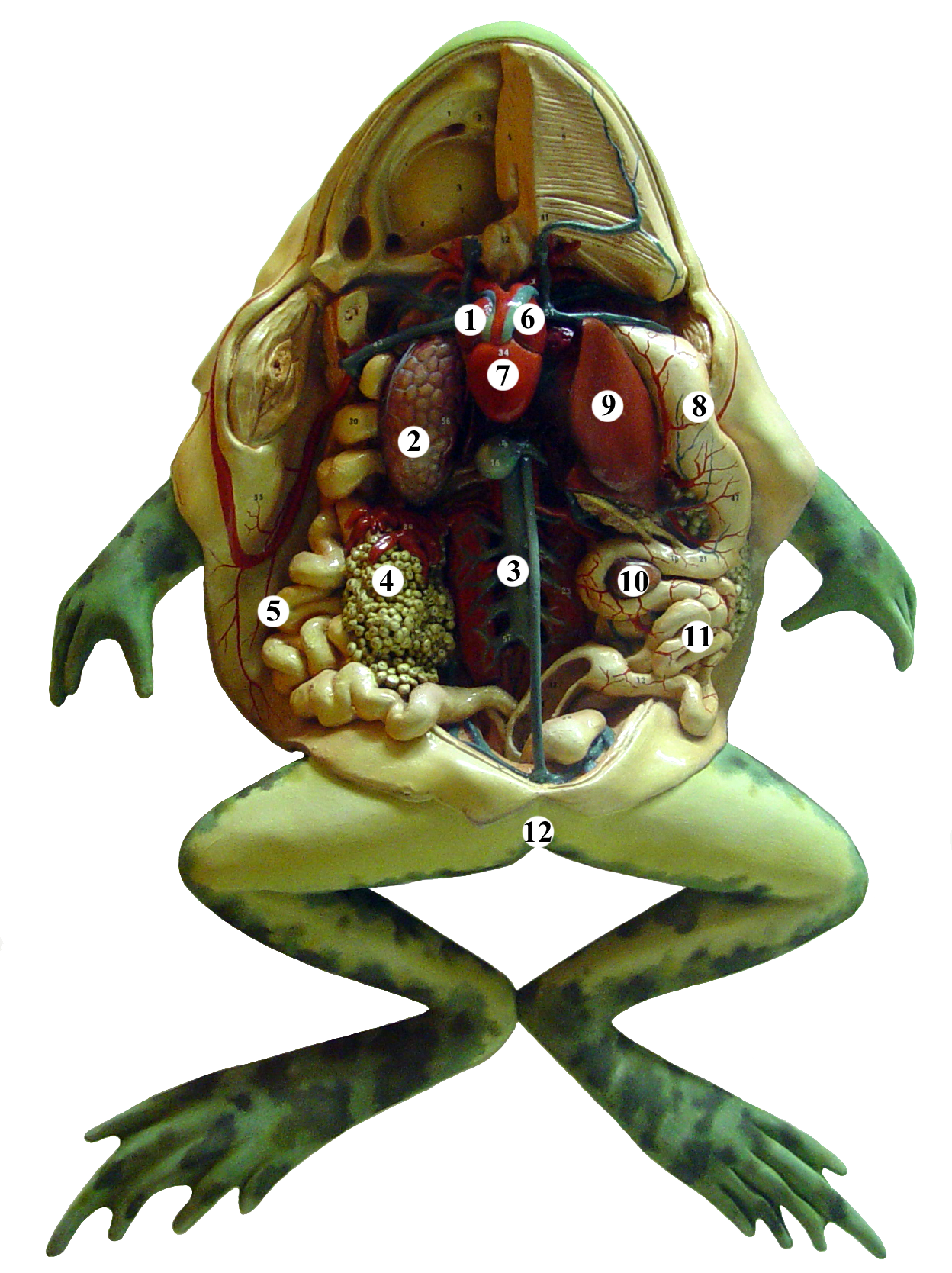
Frog anatomy
Michelle Boulé dances Wonder
(photo by Wah-Ming Chang)


The dance--about forty-five minutes in length--takes an affecting turn towards its conclusion. Boulé gradually makes her way around the room, around the circle of watchers. She lingers in front of one after another, presenting each of many people with what appears to be a dance tailored and perhaps responding to that individual.

Wonder finishes its two-night run this evening with a sold-out performance at 8pm.

For more information about Issue Project Room events, click here.

Boulé blogs at http://michelleboule.wordpress.com/ where she has shared insights that followed a trip to the West Bank city of Ramallah:
At the very least, I can be responsible towards myself and the people I interact with everyday.  It almost feels like a violent act to jump from a conflict-stricken nation to focusing solely on me, myself, and I, but it’s here where I truly have the immediate power to make a difference–to attempt to undo all that I’ve acquired that supports fear, judgement, violence, manipulation, and separation, and to literally turn myself ON to the fierce clarity of love, forgiveness, and growth.  It’s a physical reaction.  If I can pay attention to this simple feeling of when I close down, when my heart literally beats less freely, I can also ask myself in the moment what other choice I can make to support space and movement.
Read more of I'm turning myself ON by Michelle Boulé here.

Tuesday, May 14, 2013

Stapleton and Fitzgerald on nudity in dance

The naked truth about dance
In Greek mythology, the gods were depicted nude to show their higher status, but these days little inflames indignation like the sight of the naked human body. For some artists, and dancers in particular, it’s an essential, everyday part of their work.
Michael Seaver, The Irish Times, May 14, 2013

Thursday, February 21, 2013

Juliana F. May's premiere at New York Live Arts

The three dancers of Juliana F. May/MAYDANCE's new production at New York Live Arts, Commentary = not thing, spend much of their hour with not a stitch on, which makes sense. Subverting cover, artifice and distraction, May exposes more than flesh. She goes for the stark, driven machinery and repetitive, mechanistic action of bodily motion as well as emotion. Here, neither seems under the vigilance of the human intellect although, later in the piece, the rough "machinery" appears to sort itself into somewhat pleasing or, at least, safer-looking, reassuring order and Gregorian-style chanting. The typical viewer's mind wants to follow something logical and not be jerked around or repulsed. Yet, even here and now, there is something suspect.

I see why May's promotion calls this "modern dance opera" because, like opera, it's a story (of the body) rendered in a completely over-the-top way. Rather brave Benjamin Asriel, Kayvon Pourazar and Maggie Thom dance and occasionally vocalize while stark naked for long stretches of time, in odd, often ungainly, alienating locomotion, and with gusts of breath, strangled grunts, gibberish and either hoarse or crystal clear but still inexplicable bickering coming from their mouths. 

The audience sits on the stage, enclosing the dancers' space on three sides. This arrangement heightens the claustrophobic effect of the work to some measure.

With original music by Chris Seeds, lighting by Chloe Z. Brown, set by Brad Kisicki and costumes by Reid Bartelme

Juliana F. May/MAYDANCE continues through Saturday evening with performances at 7:30pm. Seating is limited.

There will be a Come Early Conversation with Sarah Maxfield at 6:30pm this evening and a Stay Late Discussion with Brian Rogers tomorrow.

Ticket information

219 West 19th Street (between 7th and 8th Avenues), Manhattan

Thursday, January 19, 2012

Young Jean Lee and the naked truth

Untitled Feminist Show--created by award-winning director Young Jean Lee, choreographer Faye Driscoll, associate director Morgan Gould and other collaborators--has earned a place on my mental list of favorite dance events of the very young 2012. I know I'm going to have some explaining to do because--as I see here in Lee's program notes--Lee doesn't consider this work to be a dance piece. "Like the performers themselves," she writes, "the show is meant to resist categorization."

So, what am I talking about?

Well, aside from the fact that I would like to be able to claim every damn good thing in the Universe for dance, I'm beginning to get a sense that calling something "theater" (as she calls her company, after all: Young Jean Lee's Theater Company) is fine and dandy, but calling something "dance" is somehow limiting. 

Hmmm....

Seems it was just yesterday that the idea of calling all sorts of wild and crazy (or mild and boring) things "dance" was bold and liberating.

In any case, Lee's six marvelous stars are performing arts of the body, including dance and some incredibly edgy mime, and they are stark naked throughout the hour. I'm calling this one for dance, and I will not be dissuaded.

I also hear tell--because I've been reading some of her interviews--that she doesn't want Untitled Feminist Show to be considered sexy. Oh, please. Nothing wrong with (or un-feminist about) sexy. Bring sexy back. In fact, this show does so--directly and indirectly.

What couldn't be genuinely sexy about six unselfconsciously nude, female-bodied performers, each with a distinct body type and size, defining themselves across a fluid gender spectrum and expressing, almost entirely in iconic and primal physical movement, how it might feel to be free?

Free is sexy.

They are Becca Blackwell, World Famous *BOB*, Amelia Zirin-Brown (aka Lady Rizo), Hilary Clark, Katy Pyle and Regina Rocke, collectively hailing from cabaret, theater, dance and burlesque with some crossovers, all stripped of theatricalizing makeup, hairstyling and, of course, costumes. They make a fabulous team in this fabulous romp, but Blackwell, Zirin-Brown and especially Clark seem to be having the most high-charged and, yes, liberating fun.

Some of them initially enter the space by slowly drifting down the aisles, giving the audience a sense of being represented in the performance space. (They come from us.) We hear their soft and human breathing, which establishes a comforting sense of common humanity. But don't get too comfortable. Although the inhabitants of Lee's feminist utopia sometimes sport frilly pink parasols, they're capable of using these items as weapons, and they'll happily consume their victim. No, you've never seen Marcel Marceau do the kind of mime you'll see in Untitled Feminist Show--at least, not on Ed Sullivan's show.

And check out that acid-trip video projection at the end! Through the Looking Glass, through the black hole you go! What are you going to be when you come out the other side?

With scenic design by David Evans Morris; lighting design by Raquel Davis; sound design by Chris Giarmo and Jamie McElhinney; and projection design by Leah Gelpe.

Untitled Feminist Show is a presentation of Performance Space 122's COIL Festival and runs at the Baryshnikov Arts Center through February 4. For information, schedule and ticketing, click here.

Jerome Robbins Theater
450 West 37th Street (between 9th and 10th Avenues), Manhattan

Saturday, October 8, 2011

So...I won exactly what?

So I went to Fitzgerald & Stapleton's Smell of Want performance at Abrons Arts Center, reviewed here by Claudia La Rocco of The New York Times and worth reading. It's fairly clear from La Rocco's writing that she had no more of a clue about the import of what she experienced than I did. I have nothing to add, and I can only assume that the description you will find on the Abrons site is deliberately intended to subvert thought and deflect understanding rather to support those things.

Oh--sorry, Steve--there actually is one more thing: Despite being assigned to the infamously glittery Winner's Circle, I walked away totally glitter-free--a small disappointment, as it turned out. In fact, it's kind of funny about the apparent formal significance of when you enter the space, where you sit, what that seating section is called and how it's decorated or not decorated. If any of that has any connection to what's going on in F&S's performance in Abrons' wonderful little Experimental Theater, someone please kindly tell me what I missed.

I did like Kryssy Wright's sometimes wavery lighting on the stone walls in this intimate space that suggests a cozy, dimly-lit sauna--Smell of Want's performers do wear, as La Rocco notes, costumes designed by Mother Nature--as well as lightly evoking something more ancient and ritualistic.

With performances by the Irish choreographers Emma Fitzgerald and Aine Stapleton and dancers Deborah Black, Maryanne Chaney, Anastasia Cohen, Carl Harrison, Linda Sue Stein. Although listed in the program, Arturo Vidich has been performing--and quite spectacularly so--this week in Dancer Crush at New York Live Arts.

Sound by Nicholas Santiago

Smell of Want concludes this evening with an 8pm performance. Click here for information and ticketing. Seating is extremely limited. If tickets are still available, you might be able to select your seating area--ticket price adjusted accordingly.

Abrons Arts Center (Experimental Theater)
466 Grand Street (at Pitt Street), Manhattan
(map and directions)

Friday, December 10, 2010

The subversive nude

Removing the Veil
by Barbara Pollack, ArtNews, December 2010

Nudity in contemporary art is tolerated increasingly in countries where it wasn't in the past.

Drawn from life

Nothing Like The Real Thing
by Gail Gregg, ArtNews, December 2010

After decades out of fashion, the practice of drawing from life models is growing in popularity.

Copyright notice

Copyright © 2007-2023 Eva Yaa Asantewaa
All Rights Reserved

Popular Posts

Labels