Search This Blog

Showing posts with label solo shows. Show all posts

Thursday, July 6, 2017

Invisible made visible: Okpokwasili, Rossi present "Bronx Gothic"

"Bronx Gothic is about inhabiting the body of a brown girl
in a world that privileges whiteness."

"I am asking you to see the brown body."

"Maybe Bronx Gothic creates visibility for the invisible."

--Okwui Okpokwasili,
from the film Bronx Gothic, directed by Andrew Rossi

Photos courtesy of Grasshopper Film

Now ask yourself: Are you awake?
--Okwui Okpokwasili, Bronx Gothic


Christians have a gospel story about Jesus, aware of his fate, praying in the garden of Gethsemane on the night before his crucifixion. All around him, his disciples--whom he had asked to merely keep watch with him--sleep deeply, leaving him alone with his agony.

I thought of this scene as I watched Okwui Okpokwasili in the documentary Bronx Gothic (2017, 91 min.), a film with superb direction by Andrew Rossi and killer editing by Andrew Coffman of Bryan Sarkinen and Rossi's daring cinematography. Launching its world premiere theatrical engagement on July 12 at Film Forum, the film provides deep insight into the motivation and process that guided Okpokwasili's magnificent solo performance piece of the same name. It delves into her experiences, thoughts and feelings as she takes the show on its final tour and holds discussions with members of her audience.

As the film opens, Okpokwasili is in mid-performance, dressed in the color of congealed blood, tears pooling and dripping from her luminous eyes as the persona she inhabits recalls life-changing incidents from a Bronx childhood. I was reminded of the frequent, insistent sobbing in Kyle Abraham's ensemble dance, Dearest Home, and also how, like disciples at Gethsemane, not every viewer will necessarily have the will to stay awake--available, vulnerable, connected, "woke"--when Black artists ask for empathetic witness.

Both Dearest Home and Bronx Gothic--denying any demand for performance to stay within narrow, acceptable confines--make messy vulnerability and intense pain visible, in particular Black pain. Both works reach into as well as beyond their makers' personal history of being Black in America to suggest characters and narrative that should move anyone of heart and conscience.

Okpokwasili was raised within a large, middle-class Nigerian-immigrant family in the comfortable Parkchester section of the Bronx in the 1980s. (Her charming parents, whom we meet late in the film, make an indelible impression.) Describing her solo as "semi-autobiographical" allows it to partake of her extraordinary imagination and her empathy for the pre-teen girls she observed in her youth. She remembers them, remembers their pleasures and their struggles, channels them and serves them with intensely committed soul and physicality. The film's audience is spared little of how violently this haunted performance has wrenched its performer's psyche and body.

Having seen two iterations of Bronx Gothic live (Danspace Project, 2012 and 2014), I can tell you that the film, generously sampling the live performance, only slightly misses the electrifying force of Okpokwasili live. There's nothing quite like being in a close, tent-like enclosure with her as she quakes head to toe, shares sexual secrets, scrapes her bare feet and smacks her bones against a punishing floor.

"Black flesh has deep meaning in this culture," Okpokwasili remarks at one point as she discusses her intentions for Bronx Gothic. All the vivid imagery--the dark and the light, the glistening sweat, the luxurious undulations and seizure-like trembling--serves to underscore this uncomfortable, complicated truth.

As she thinks about how her performance confronts and nearly overwhelms her audience, the artist is also both overwhelmed and intrigued. Recalling her experiences in the role, she asks an imaginary watcher, "Is my Blackness getting on you? Am I getting on you? Can you take on the pain?"

Not for nothing is the genre-spanning Okpokwasili one of our most respected artists, a Bessie-winner to boot. I hope Rossi's portrait of her will be seen widely. I rank Bronx Gothic up there with Raoul Peck's I Am Not Your Negro as another urgent, earthshaking documentary that must be seen and must be discussed.

Showings at 12:30, 2:30, 4:40, 7:00 and 9:10
Wednesday, July 12 through Tuesday, July 25

Q&As with Okpokwasili and Rossi at the 7pm shows
Wednesday, July 12, Friday, July 14 and Saturday, July 15

For information and tickets, click here.

Film Forum
209 West Houston Street (west of Sixth Avenue), Manhattan
(map/directions)

Subscribe in a reader

Saturday, July 1, 2017

Closing tonight: solos for and by Chelsea Bonosky at Gibney


Dance artist Chelsea Bonosky
(photos: Justin Ervin)


Tonight, Chelsea Bonosky wraps up LUNA, her show of dance solos at Gibney Dance: Agnes Varis Performing Arts Center. She performs three poetic, sometimes enigmatic works made for her by colleagues Adam Barruch, Pavel Zustiak and Gabrielle Lamb plus one, named LUNA, that she made in collaboration with vocalist Mary Carter.

Barruch (Testimony) brings out something of the Martha Graham in Bonosky. Zustiak, as is his wont, leads her into dark places (Aphar) and throws her way off-kilter and shakes her to her core. In the evening's most visually-satisfying piece (v²=2gh), Lamb deploys Bonosky in a spare but fanciful arrangement of science lab beakers with a suspended globe dripping water--a metaphor for artistic experimentation or, perhaps, something more. Each of the four works engages Bonosky--a fine, disciplined technician and expressive performer--in a process that reaches into and beyond herself, never shrinking from the discordance that she might find on her way to clarity.

LUNA's final performance takes place tonight at 8pm. For information and ticketing, click here.

Gibney Dance: Agnes Varis Performing Arts Center
280 Broadway (enter at 53A Chambers Street), Manhattan

Subscribe in a reader

Friday, August 19, 2016

FRINGE BENEFITS: Emily Carding--and you!--in "Richard III"

Emily Carding as Richard III
in Brite Theater's Richard III (a one-woman show)
at FringeNYC
(photos: Dixie Sheridan)


Instead of paying actors to play Shakespearean roles, Emily Carding gets them to work for free. By that, I mean most of the people in her small audience, each one sporting a lanyard ID--her "Duke of Buckingham," her "Lady Anne"--and occasional looks of uncertainty as Carding's masterful Richard III shares cynical confidences with one or gruffly orders around another. As the tale of bloody power grabs unfolds, condensed to under an hour, no one in attendance--even those without named roles--can fully relax. We know that Carding's Richard might suddenly lock eyes with us, requiring something of us, find us wanting.

We are not safe, Clarence. We are not safe.

What's more, Clarence, we can easily be offed by little more than an arsenal of office supplies.

An anticipated highlight of this summer's FringeNYCBrite Theater's Richard III (a one-woman show) comes to New York bearing awards from the Fringes of Prague and Edinburgh. And, by Richard's will and Carding's skill, it will conquer in its US premiere. The set-up of the new-ish Alpha Omega studio on East 4th Street provides just enough space for Carding to pace or impatiently push off on the wheels of her office chair while maintaining intimacy and a tyrant's grip on her audience.

This Richard's world of scheming and endless violence is our own, where battleground reports come via text message and leaders can instantly document their narcissism with selfies.

The narrow runner of space between two rows of seating--accommodating perhaps 25-30 people--is charged with the energy of Richard's malevolence and excess. Directed by Brite's founder Kolbrun Bjort Sigfusdottir, Carding interprets Shakespeare's Richard--a man of visible disability--with bearing and even speech that I'm greatly tempted to call dance. Dark business suit and skinny red tie askew, her body seems, at once, frozen and propelled in multiple directions even when still. And her speech, if failing in rhythm, moves with varying, unpredictable angles of attack. Deep into the performance, Carding seems to drop into a flow state from which she yields improvised snark--snapping at an unexpectedly stubborn "Lord Grey," Well now I know what you are getting killed for!--or minute, quite convincing facial expressions of fear and disintegration.

Make Richard III (a one-woman show) one of your priority stops along the Fringe. See it today at 4:30pm or tomorrow, Saturday, at 5pm. For information and tickets, click here.

And here's a special note to Fringe veterans and newbies alike: Happily, there's ample AC at Alpha Omega. In fact, you might want to bring a little wrap to throw over your shoulders.

Alpha Omega Theatrical Dance Company
70 East 4th Street (Lower Level), between Bowery and 2nd Avenue, Manhattan
(map/directions)

Wednesday, August 13, 2014

FringeNYC benefits: "Forgetting The Details"

Nicole Maxali (photo: Paciano Triunfo)

Forgetting The Details
Written and performed by Nicole Maxali
Directed by Paul Stein

No, I'm not really picking only solo shows at the Fringe on purpose. But, if you want to see an expert and thoroughly enjoyable one, pick this: Nicole Maxali's Forgetting The Details at Studio 440's White Box. California born-and-raised, this Filipina-American performer gets it all right, quickly dunking us into the flow of things as she draws canny portraits of her family members--divorced mom gleefully knocking back tequilas as she joins Maxali in a San Francisco bar to watch the Giants win World Series 2010; musician dad, with his history of drug addiction, surreptitiously offering her pot so she doesn't experiment out on the street; and, most of all, her adored "Lola" (Tagalog for grandma) endlessly serving up ice cream and meddlesome, loving advice.

So, I'm sure you can tell Forgetting The Details is not innovative, experimental theater. It's a personal performance trading in nostalgia about family and culture and takes you places that you fully expect to go--although not always when you expect to get there. It's like a short visit with a complete stranger who ends up being totally forthcoming, warm and delightfully funny. You will quickly feel that you know Maxali very well.

The show is seamless, polished, well-paced over its 75-minutes and coherent. Maxali renders it with skill and handsome discipline in storytelling and impersonations--voices, body language, gestures, facial expressions and overall energy and physicality every bit as convincing as the subtle, underlying compassion she reveals. In its intricate complexity, her monologue is a feat of prodigious memory, too--an ironic fact, considering that Forgetting The Details largely deals with how she and her family cope with her Lola's mental decline.

Maxali is an unforgettable performer, one I'd be eager to see meet any number of challenges in theater. I'm a believer.

Remaining shows:

Friday, August 15, 9:30pm
Sunday, August 17, 7:45pm
Thursday, August 21, 2pm
Friday, August 22, 5:30pm
Saturday, August 23, 3pm

The White Box
440 Lafayette St, 3rd Floor (Astor Place and East 4th Street), Manhattan


For all things FringeNYC, click below.

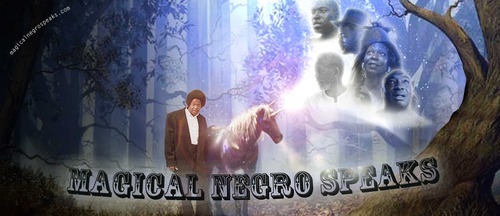
FringeNYC benefits: "Magical Negro Speaks"


Written and performed by Jamil Ellis

No arguing. I'm sending you over to The White Box at 440 Studios to see Magical Negro Speaks, an hour-long performance by comic Jamil Ellis. Structurally, the show's messy, but it's genuinely funny and effectively rips at that Hollywood tradition of casting Black actors in certain archetypal, stereotypical roles that, on the face of things, can seem benign.

Ellis frequently cites Will Smith in The Legend of Bagger Vance, Michael Clark Duncan in The Green Mile, Morgan Freeman in almost anything. You get the picture. These "magical Negro" roles flatten talented artists into two dimensions, making them sidekicks, second fiddles, self-effacing helpmates, mystical wisemen/women, generous healers and--to be blunt--handy props for the white actors who ultimately go on to get the glory.

Ellis knows he's not the entertainment industry's idea of a leading man. Denzel, relax. But he'd certainly like to have Washington's option to play against type. Or to play a role that at least does not embarrass him and will one day inspire his adorable little daughter.

A combination of stand-up, music numbers and clever video clips, Magical Negro Speaks is flawed in a human way. Where Ellis's mind drifts to dispiriting current events, for instance, everything goes slack. By the end of the hour, though, he has more than earned his right to connect the sentimentally personal and the political, and he gets the audience rooting for him.

Remaining shows:

Friday, August 15, 7:45pm
Saturday, August 16, 5:45pm
Sunday, August 17, 1:45pm
Wednesday, August 20, 9:15pm
Sunday, August 24, 5:15pm

The White Box
440 Lafayette St, 3rd Floor (Astor Place and East 4th Street), Manhattan


For all things FringeNYC, click below.

FringeNYC benefits: "No Static At All"

Picture
Alex Knox in No Static At All (photos: Karianne Flaathen)
Picture

Written and performed by Alex Knox
Directed by Becca Woolff

"Have you ever listened to a song and felt like the singer was telling your story?" asks the wiry, energetic Alex Knox near the opening of his one-hour monologue at FringeNYC, No Static At All. Maybe he should ask Roberta Flack, now that I think of it. Her answer, of course, would be, Why, yes--as would most of ours.

It's a banal question that tells you much of what you need to know about Knox's musing on a couple of supposedly parallel and troubled bromances--the first, between the two Steely Dan stars, Donald Fagen and Walter Becker whose song, FM, is the source of this play's title; the second, between Knox and his old school buddy, Josh. This show, like many bite-sized Fringe numbers, doesn't really have room to stretch out, and that puts pressure on Knox to rush his stuffed narrative and try to deliver something engaging and convincing. Despite a few truly funny moments--his argument that a certain rock in northern Israel renders sacred the name of his favorite band comes to mind--Knox doesn't quite make it.

With the exception of a nearly Talmudic exegesis of "Any World (That I'm Welcome To)," we don't learn anything much about the Steely Dan songs that have come to mean a lot to Knox and exactly what they say about the twists in the lives he and Josh have lived together and apart. We have to take all that as a matter of faith--and, in this work, faith turns out to be a very big matter, indeed.

Knox at first seems an ordinary sort, a bit intimidated by the sharper Josh whom he describes as self-assured to the point of arrogance. But he's just as capable of falling heart-first into an all-consuming religious pursuit--in this case, the Church of the Dan where momentary flashes of arrogance alternate with humiliation. 

Remaining shows:

Friday, August 15, 2:30pm
Sunday, August 17, 12pm
Wednesday, August 20, 9:15pm
Sunday, August 24, 4:15PM


The Steve & Marie Sgouros Theatre
115 MacDougal Street, 3rd floor, (between West 3rd Street and Bleecker), Manhattan

For all things FringeNYC, click below.

Copyright notice

Copyright © 2007-2023 Eva Yaa Asantewaa
All Rights Reserved

Popular Posts

Labels