Dance Saved My Life!
compiled by Eva Yaa Asantewaa, InfiniteBody
Yes, dance builds strong, fit bodies. It promotes health, contributes to the economy and certainly entertains us. But can it also save lives?
I asked that question on Facebook and got lots of electronic testifying. A handful of these artists volunteered to tell me more. I called them and recorded their wonderful reflections on lives nourished and saved by dance. Alexandra Shilling wrote in from Munich to add her reflections to the mix and reminds us that saving is an ongoing process that can extend beyond the individual dancer!
 |
Nancy Antenucci
(photo by Jonathan Pavilica) |
Nancy Antenucci started her eclectic dance career as a white horse in the alley. She learned various styles of ballet, era dance and jazz while earning a BA in Dance at Butler University in the 80's. As a professional dancer, she performed with Philadanco, Pittsburgh Dance Alloy and other companies before moving to to Minneapolis/St Paul to choreograph and perform in a number of musicals including HAIR. Since then she has years in an Authentic Movement group and creating a new infusion of dance, theater and tarot with her Pagan Babies Prod co. www.betweenworlds.us
Nancy Antenucci
How did dance save my life? As I read that question, the first thing that crossed my mind was, "Save it from what?"
There were a lot of "whats" when I grew up in a small town in Pennsylvania. The Catholic culture was insular and exact. We didn't have neighborhoods, we had parishes. You didn't mix with Jews or those people who only went to church on Easter or Christmas. Although my tribe was made up of many goodhearted people, no one questioned homophobia or racism. Added to that was my own family dynamic. Mostly there were three forms of expressing emotion: talking to each other through our animals, silence or yelling. Dance was my refuge and release. It became my secret religion.
I would dance in my bedroom nearly every day. It was there that I had my big, beautiful vanity with one huge mirror and two adjustable side ones. It was my three-dimensional world of movement, music and story. My body was my active journal.
There are two distinct memories in that haze of self-preservation. I remember standing in a crib with people all around singing "Happy Birthday." I started to scream and cry. I recall there being a fuzzy feeling that something bad was going to happen. And, to this day, I still think "Happy Birthday" is a really sad song. There's just something off about that song.
The other memory happened during one very cold day during a 3rd grade school recess. We weren't allowed to return inside for another fifteen minutes. I thought I might freeze to death. I decided to move as a white horse--gallop, run, leap and lead the others. Honestly, that small improvisation to keep warm changed my life. It was my first conscious experience of shape-shifting as something besides who everyone thinks I should be. For those fifteen minutes I was a white horse. I had foam, I had a tail, I had hair--and, better yet, I had six horses following me. That changed everything right there. There was no going back.
At our particular grade school, we were asked weekly if we would devote our lives to God by entering the convent or priesthood. That day after my horse dance, I didn't raise my hand. When asked about my sign of dissidence, I said, "No, Sister. I'm going to be a dancer." It didn't go over too well. I remained committed to my true religion.
My mom saw how much sound and music affected me. She enrolled me in the YMCA dance classes. I went to class once a week for years. Often I was summoned from a tree with my brothers to wash up and put my tutu on for class. To this day I still love rainy Saturday mornings because they bring back memories of Miss Berry playing Chopin or Mozart as we dutifully did our barre exercises. With time and training, I grew into a nonverbal storyteller with a soundtrack.
I left my small town to go to Indiana's Butler University. The dance staff was loaded with professionals from Broadway, Ballet Russe de Monte Carlo and the Royal Academy of Ballet, plus one incredible jazz teacher. They exposed me to first-class techniques without breaking my spirit.
My teachers showed me principles for a great life as well as for a great dance path:
--Be you.
--Be large.
--Don't hide mistakes.
--Tell your story.
--Make sure that your transitions are as interesting as the pose you're gonna hit.
I didn't make it into the Major League of dance companies but am pretty proud to have made the Minors. I was a dancer for the Pittsburgh Dance Alloy, Philadanco, Ozone and the Central PA Dance Theater plus various pick-up gigs.
The era dance styles such as vaudeville, flamenco and tap positioned me beautifully as a musical theater choreographer. The money came in handy since concert dancing didn't pay much. I did over 150 musicals including my favorites--
West Side Story and
HAIR.
It's weird to be 55, not in "Olympian" shape, and more in love with movement than ever. I'm infusing it with theater and gestures that I never gave myself permission to do before. I attribute this evolution to my peer Authentic Movement Group that has met every Monday for over 8 years.
 |
Antenucci as Tarot's The World card
(designed by Carrie Paris) |
Last, but not least, dance gifted me with gay friends, club dancing, years of live music, thighs that will never quit, centuries of common folk dances, strong entrepreneurial skills and my own sense of mystery and theater. Terpsichore can certainly be a bitch, but I love her.
 |
Gabri Christa
(photo by Malgorzata Headshot) |
Gabri Christa grew up in Curaçao, Dutch Caribbean, where in high school she started making solo dances and writing. Dance has lead her to the Netherlands (BFA School for New Dance Development), Cuba (Danza Contemporanea and DanzAbierta), Puerto Rico and, in 1993, to the USA.(Bill T. Jones/ M.F.A. UW) Her own choreography and work has gotten her to the places she lived and into the companies she danced in. She considers herself a global citizen with New York her home, always creating dance or something related to dance. www.gabrichrista.com and www.anotherbuilding.com
"I am an artist who likes to make things happen. I produce work that in some way contributes to society, a community or our understanding of history. My media is mostly dance, music and film or a combination of those. I believe in collaboration, cross cultural understanding and dialogue."
Gabri Christa
It's still my lifesaver.
I grew up in Curacao--a small island--and we really didn't have any arts. I had heart disease. I wasn't allowed to do too much until my parents put me on yoga. Yoga led me to dance when I was nine. I started teaching yoga at 14. I'm actually doing a portrait of my yoga teacher, Leo Floridas. He's a dark-skinned local guy. Now I'm looking at all these images of mostly white women on yoga magazine covers, and I realize how incredibly fortunate I've been to meet somebody like him.
Through yoga, I really got in touch with my body. I loved going to the ashram after school while my friends did other things. It was very much a nerdy, uncool thing to do, but it was a good thing for me, also, because I had been teased away from school. I always felt like this outsider. The principal had to call my mom and say, "You have to take her out of class. She's not going to survive." So I was put in another school where things were much better.
There were all sorts of reasons, in retrospect. That I was teased. I was already an artist and a dancer. Since I didn't have that around me a lot, I just didn't know I was.
Recently, I saw a 16mm video that my aunt made of me, and you see this very Caribbean party. You see everybody in their nice, ruffled dresses and their lacquered shoes, and you see me, completely in my own braids, walking and dancing around. I laughed so hard! I said, "Oh, my God! I was always like this!" A space cadet and bare feet with a little t-shirt and no bra and all those things that I used to do--and still do, kind of [laughing].
So yoga led me to dance, then dance became my refuge and got me in touch with my body. Then I met two of my dear friends--Felix de Rooy and Norman de Palm. Two Black men, a gay couple--also, at the time, pretty extraordinary. They embraced me as a teenager and, through them, I started writing, started making solo dances. I had no training. I don't know what I did! Costumes, yoga. I did sort of expressionist half-yoga, half-dance expressions of me, basically. This led me to finding myself and accepting myself and finding a place that I had longed for in this quirky body of mine.
I worked hard in the beginning, without training, starting to perform these solos for local island people. They must have thought I was out of my brain! I was self-conscious...and not self-conscious. I was 15, 16, in the midst of Teenageland. I totally did what I felt. When I would dance these things, and I would write a lot--poetry and short stories--somehow with the dancing and the music I chose, had really made me feel whole, and it didn't hurt that I had the lovely couple, Felix and Norman, that embraced it.
I started performing these things in a theater, and they [other people] killed me, destroyed me: "What are you doing? You have no training! It's weird!" That was painful, but it didn't really stop me.
My dad was very open to theater. He would do theater outside. My parents did take me to yoga as the one thing that I could do for my heart. They took me to class, but they dropped out, and I stayed. I was there four times a week. Started teaching the kids at 14.
The turning point came when I went to study journalism in the Netherlands. We go away to study because we don't really have anything on the island.
Before I left, I did another of these solo dances. There was a woman, Dolly Beckers, who saw it. She had studied in New York. I was accepted to a school for journalism because that's what I did--writing for the school paper. She came to the airport, gave me this piece of paper and said, "When you go to the Netherlands, go and dance, because you're a dancer, and you're a modern dancer."
I didn't know what it was. I really had no clue.
I went to see a performance, and it was Trisha Brown, and I was sold, completely sold.
I was seventeen and by myself in Europe, and my parents were in the Caribbean, and they were not okay with it!
Dance has gotten me through everything in my life that has been hard. Even being here in the States is through dance. Everything in my life has come to me through dancing.
I get really emotional talking about it because, on one level, I feel I have not been grateful enough for all it has given me, particularly in the later years when this thing that you choose, that's your livelihood, becomes increasingly hard to make a living with. Dance is how I express everything of who I am and what I think.
My first piece in the Netherlands was about the difficulty of being from the colonies, being accepted in the Netherlands. It has been my primary voice.
I've grieved over dance--being mid-career, being a female, September 11, funding drying up. It's been such a huge shift in the dance world itself. For a long time, it was like, "How do I make work? How do I still celebrate this thing that I love?"
In the end, it is dance itself that really picked me up again and keeps picking me up and never lets me down.
 |
| Penelope McCourty (courtesy of Spoke the Hub) |
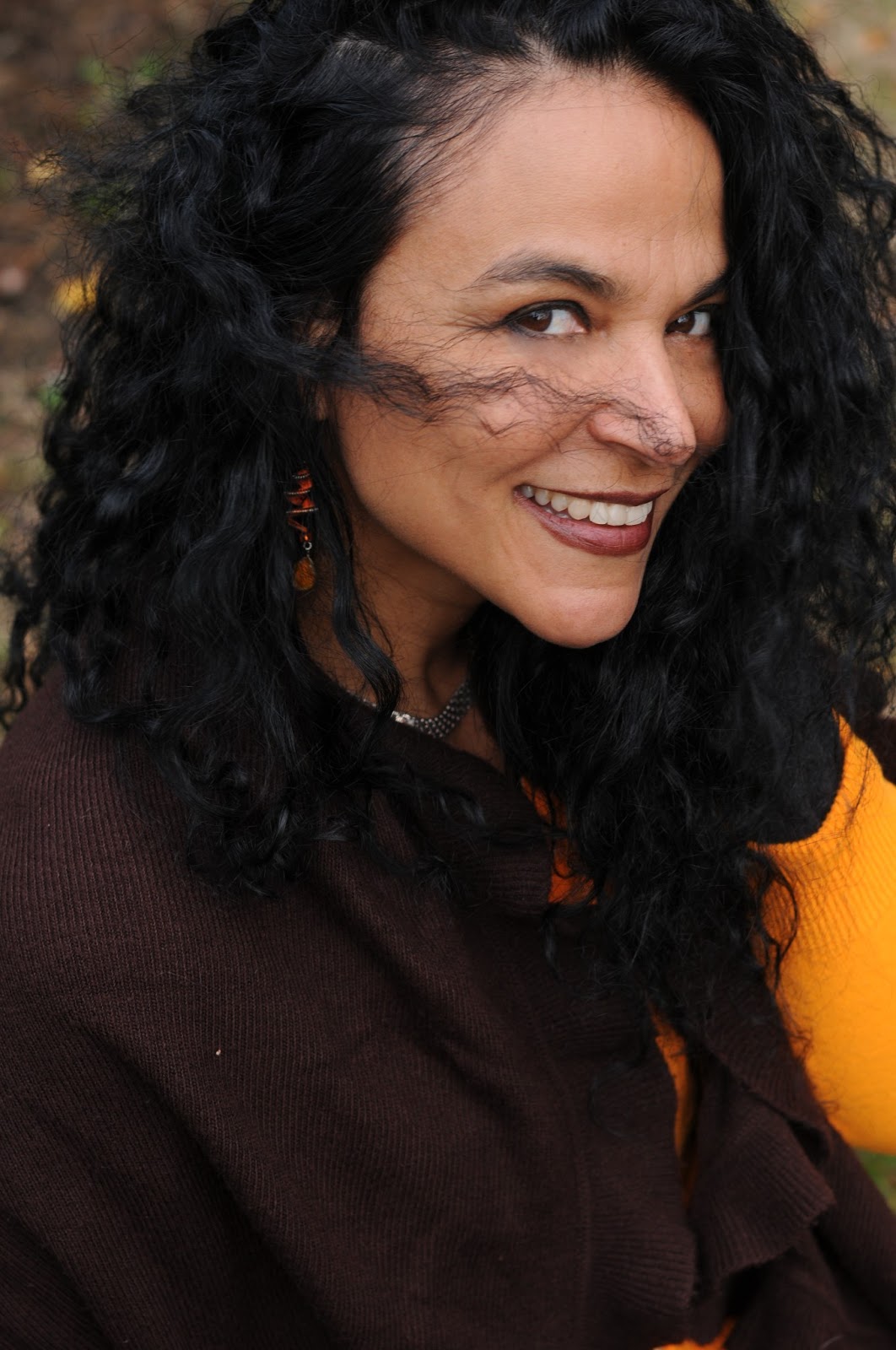
Penelope McCourty is a movement-based arts educator and performer living in NYC. As a performer, she was a member of Marlies Yearby’s Movin’ Spirits Dance Theater (1995-1999), Liz Lerman Dance Exchange (1999-2002), and Reggie Wilson/Fist and Heel Performance Group (2002-2006.) From 2004-2009, she was the Education Director at BAX/Brooklyn Arts Exchange and has served on its board. Penelope is currently the middle and upper school dance teacher at The Berkeley Carroll School in Park Slope and teaches residencies and professional development workshops through New Victory Theater and Park Avenue Armory’s Artist Corps.
Penelope McCourty
I’ve danced most of my life.
Most of my family was not ashamed of dancing or their bodies. So, it was always a part of my life, but when it really counted for me was when I started studying dance at the High School of Performing Arts where it was pretty rigorous.
It got me out of my house, which was not the best place to be at the time: being a girl child in a not female-friendly environment, feeling shame about that, having an opportunity to express myself physically. Also, I didn't talk a lot. So, dance really helped me to articulate what I needed to say and also to articulate boundaries in my life. I think that if I hadn't been directed to dance, I don't know what would have happened to me. It kind of freaks me out to think about it.
There were years in my life when I would stop dancing, and things would be different in my life--the way I saw the world, the way I felt about my body, the way I moved my body through space and time. I was just not the happiest person. Those moments of needing to not move were necessary although painful, but I realize now how important moving my body is.
Not just that but getting out of the idea of being a performer. I spent a good five, six years regaining myself as a mover, owning my own movement and my own body.
It’s true for me, and I see it on the street, too: When you don't have time to move your body with awareness, you're not connecting. And when you do not connect, you think you're this island all your own, and everybody else is vying for your time and space and energy.
When I allow myself to be present in my movement--even if it's walking down Nostrand Avenue--that all shifts: how I see the world, how I am with people. I see myself as dancing with people all the time.
You know, I'm a native New Yorker, so I can get into the place of "Move out of my way! I've gotta go! What are you tourists doing? I don't understand! Move!" But then I let that go, and I say, "Let me walk to the beat of these people in front of me who are trying to take pictures."
What would it be for me to release that and realize that this moment right here, this is the gift right here, for me to walk with these people?
Everything just shifts. I end up being in conversations with people. I have like a good four or five conversations with strangers a day. Or just to sit next to someone and just be with them, just go from there.
I've started to study sacred dance and to understand sacred dances, why we do them, why they're here. And that's a part of it--co-movement, being with each other.
You see it with young people. You say, “Just stand and look at someone,” and they freak out completely. Dance teaches people how to be with one another.
My life is a lot more enriched. I feel happier when I'm conscious of myself moving, and dance gave me that gift.
 |
| Anthony Phillips |
Anthony Phillips has encountered many great teachers and dance artists in his 23 years of dancing in New York City. He was most profoundly impacted by Robin Becker, Yoshiko Chuma, Bill Young, Colleen Thomas, Barbara Mahler, and Bebe Miller. He teaches Pilates and the recovery of proprioceptive awareness, and he is a licensed massage therapist blending several modalites of bodywork in his practice. His studio, SMUSHstudio is in Union Square. Smushstudio.com
Anthony Phillips
Dance saved my life. I've said that many times. When you asked the question, I got a really strong image of an alternate “me” that never encountered dance or any opportunity to explore my body. I had this vision that he either perished in some way, or he was really sad, isolated and disconnected.
Being a dancer has given me the possibility to know what I'm feeling, to notice my response to the world around me, to come into a more authentic dialogue in every aspect of my life. That has benefitted my relationships, my presence in my work and my ability to be in life.
I grew up in the South, in very rural south Georgia, and had the feeling very early on that I landed on the wrong part of the planet [laughing]. My challenge would be to find a path out!
I encountered dance for the first time, in my teens, at a Governor's honors program. I suddenly came in contact with students from all over the state who shared the same energy and intelligence and drive that I did. It confirmed my instinct that there were other people out there!
At eleven years old, I started working with a local theater, thinking I would be an actor but, in college, I found a modern dance improvisation class. I felt, instantly, that I had to continue, although it seemed an absolute impossibility that I could train my body and become a professional dancer. I had very little technique and a lot of physical problems. To have the career that I've had since then seems like a miracle.
Finding really deep, inspiring teachers such as Barbara Mahler and Susan Klein, continuing to trust my instinct and intuition, eventually delivered a body that was healthy and could move and heal itself and open energy pathways that I didn't even know existed. To feel connected to the energy of the Universe as a source that could run through me if allowed it. To feel my body weight--myself in gravity. It's a huge, perceptual shift--not necessarily an inherited sense that everyone lives with.
"Disembodied" means hiding my sexuality, hiding my impulse to love, a childhood experience of learning to disappear. All of those things add up to blockages and numbness and disease. With dance, I've recovered sensation--a process of recovering, in my nervous system, the ability to sense and perceive.
I'd call it a type of intelligence, an access to being in my body that I did not have as a child or a teenager. It was a process of re-embodying myself. I don't know why I was in exile before, but it could have come from my culture.
So I felt in a certain point, particularly in my late teens and early 20s, that I had to continue with this path of dance, though I didn't know where it was going to lead. Each step in my life, I continued to choose the next opportunity. I had deep faith that I would land on my feet and find my life, which needed to unfold from that purpose.
There came a point, in my mid-thirties, where I felt a little deficient, a little adolescent in other areas of my life, about being unable to take care of myself financially. That was a hard transition. So, I had to realize that I had done the dancing that I’d wanted to do, found the beautiful community that I needed, and now I needed to find a way to make my life more balanced, more healthy. That's where I am now--although I’m still dancing and performing and teaching.
When I'm not performing, I forget that dancer part of me. But when I begin to perform again, it's very satisfying because my life doesn't depend upon it anymore.
Back then, I was in class three times a day, performing all the time, traveling as much as I could for opportunities to dance, and now I just choose when I want to do it, and it’s a wonderful, powerful altered state where I get to be in that moment of being out of control and completely lost and completely in control at the same time. The transmission and power of being witnessed, performing with other people, that moment of performance is very energizing, powerful thing that gives me so much.
 |
| Alexandra Shilling (photo by Nguyen Nguyen) |
Alexandra Shilling is fully committed to the infinite investigation of movement and its potential to tell stories and allow us to remember. Her original choreography and experimental films have been presented in New York, Los Angeles, Munich, Chicago, at the American Dance Festival, on MTV's 9/11 Video Postcards, among others, both as Artistic Director of alexx makes dances and ann and alexx make dances, bringing live, multi-media performance to unusual spaces. Shilling co-directs FIELDSHIFT | FURTHER with interdisciplinary artist Quintan Ana Wikswo. She recently completed her MFA in choreography at UCLA's World Arts & Cultures/Dance department. www.AlexxMakesDances.com
Alexandra Shilling
My life has been saved by Gene Kelly. By Bill T. Jones and Arnie Zane. By the dancing performer in The Fantastiks who stepped on my foot and winked at me, mid-performance, never missing a beat. By Bob Fosse’s films. By Gregory Hines and Savion Glover performing live. By my teachers Bill Hastings and Maureen Fleming and too many to mention. By David Byrne’s awkward and ecstatic dancing, by Roxanne D’Orleans Juste, by Renee Robinson, by Richard Rivera, by Laurel Tentindo by Brook Notary by Ariane Anthony by David Storey by Debra Fernandez by Germaine Salsberg by Rosemary and Bob Boross by Carmen de Lavallade by Dan Froot and Vic Marks by Sarah Leddy by Ann Robideaux by Daman Harun, Alberto Denis, by Sara Juli by all the dancers I have ever shared a floor stage warehouse ship museum gallery loft with, by those who make their life the life of the body, of movement, of intention spoken through the body.
These people saved my life by giving me life not only in the sharing of their process and creations but in the day to day, the moment to moment; learning how to live by learning how to move, to breathe, to dance from those who chose this life before me.
To save means to rescue from danger, destruction, loss.
Dance has given me an avenue through which to investigate the loss in my family. The loss of people and of stories, the loss of stability, of trust, of joy, of innocence.
I am writing this from a residency in Munich where I was invited to create and perform new, multi-disciplinary work with as part of a collaborative trio. I am supplying the movement might: the choreography and the performance. As a Jewish woman whose grandparents survived Polish ghettos, labor and concentration camps and fierce fighting in the forests of Eastern Europe, I have come to present my body to the Bavarian public as a way to inquire about and meditate on the complicated, violent and taboo relationship between Germany and the female Jewish body.
What I am actually doing here is asking each day, what can dance do? What can it do here, in this context?
My dancing research has led me toward regenerative techniques, to view dance as potentially healing, to use somatic, imagistic, sensational and improvisational techniques to communicate in an un-cynical but complex way. To question the ways that memory, traumatic memory passed through generations, can be accessed and worked on. To save the body from cycles of trauma, pain, violence. To recognize how much the body can teach us about our past and present when we pay attention to it. To our breath. To the instrument and vessel we share across borders. When we allow it to speak.
Moving puts thought into action, makes intention come alive, forces me to get clearer about my intentions. I fell in love with José Limón and release techniques because of the ongoing play with gravity, a force we are in constant dialogue with. What does it mean, what does it feel like to give in? How far can you go before you are able to catch yourself from falling? What does it take to lift yourself up? To levitate off of the ground? I’ve learned to trust gravity, to trust my bones and tissues, to know myself with subtlety.
To save also means to put aside as a reserve, to accumulate.
While making dances comes with a great deal of pain–the pain of the creative process, of struggling with the critical mind and ego while trying to unknow just what it is that you are birthing–the
practice of dancing daily creates a reserve, fills up the tank, is a form of maintenance, or self-preservation.
In the days and weeks after 9/11, when the city was in a state of semi-paralyzed shock and rehearsals were cancelled due to the toxic smoke blowing over the river and into Brooklyn, I sat in my apartment and wondered how I would dance now.
Why would we go back to making the dances we were making before September 11? Of what relevance are they? Eventually I dug my tap shoes out from under the bed and took the subway to Germaine Salsberg’s class at Broadway Dance Center to accumulate joy from immersing myself in rhythm. To abandon professional goals and get sweaty, fill up the tank, to rescue myself and my city from destruction. And to keep asking the questions this life of the body demands.
The saving of one person is a start. Perhaps it shifts the entire field.
*****
Related:
Speaking of shyness...and dance by Eva Yaa Asantewaa (June 5, 2013)
(c)2013, Eva Yaa Asantewaa, InfiniteBody
http://infinitebody.blogspot.com

 Subscribe in a reader